
Key Takeaways
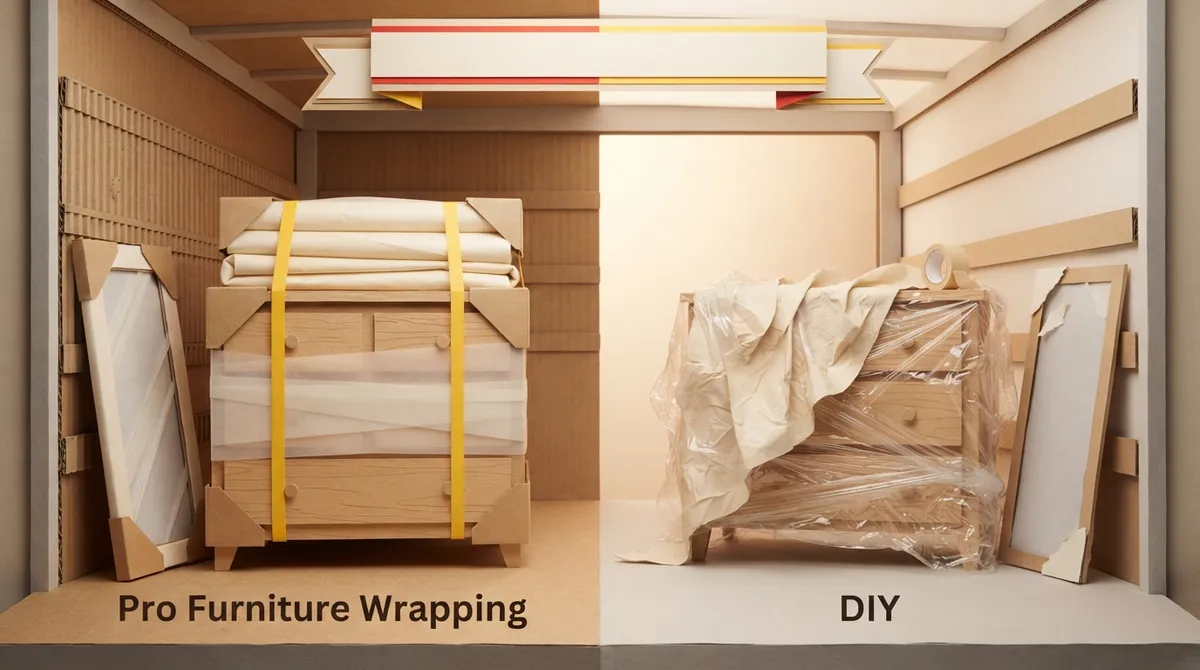
- Professional furniture wrapping combines padded blankets or pads, stretch wrap over the padding, corner guards, and specialty protection for glass and mirrors, but scope varies by mover, so get the included tasks in writing.
- Tape should never touch furniture finishes, and plastic should not sit directly on wood for long periods; always place a blanket or pad between the wrap and the surface.
- DIY wrapping saves money on small moves with sturdy pieces, while professional wrapping saves time, reduces strain, and offers better protection for large, heavy, antique, or high-value items.
- Before booking, ask whether disassembly, reassembly, glass or mirror protection, and oversized-piece fees are included, and clarify the liability and valuation terms if something gets damaged.
- Wrapping reduces scratches and scuffs but cannot guarantee damage-free transport; proper loading order, tie-downs, and careful lifting matter just as much as padding.
- A hybrid approach works well: pack boxes yourself and hire professionals to wrap and protect the large, heavy, or valuable pieces, if your mover offers wrapping as an add-on.
Picture your favorite sofa, the one that has hosted movie nights, birthday parties, and a few too many naps. Now picture it sliding across a truck floor with a fresh scratch down one arm. Not a fun thought, right? That is exactly why the question of wrapping matters so much on moving day.
A furniture wrapping service is a moving-company service that prepares your furniture for handling, loading, transport, and sometimes storage. Pros use padded blankets, stretch wrap, corner guards, and item-specific protection. Doing it yourself can work too, but it takes the right supplies and a little know-how.
So which one wins in 2026? That depends on your furniture, your budget, and your comfort level. Whether you are a Polk County homeowner moving across town, a family leaving a large estate, or a retiree heading to a smaller home, this guide walks you through both options side by side. By the end, you will know exactly what to choose and what to ask before you book.
What a Furniture Wrapping Service Actually Includes
Let's clear up a common mix-up. A furniture wrapping service is not just a few blankets tossed over your couch. It is a planned process that protects each piece based on its shape, finish, and fragility.
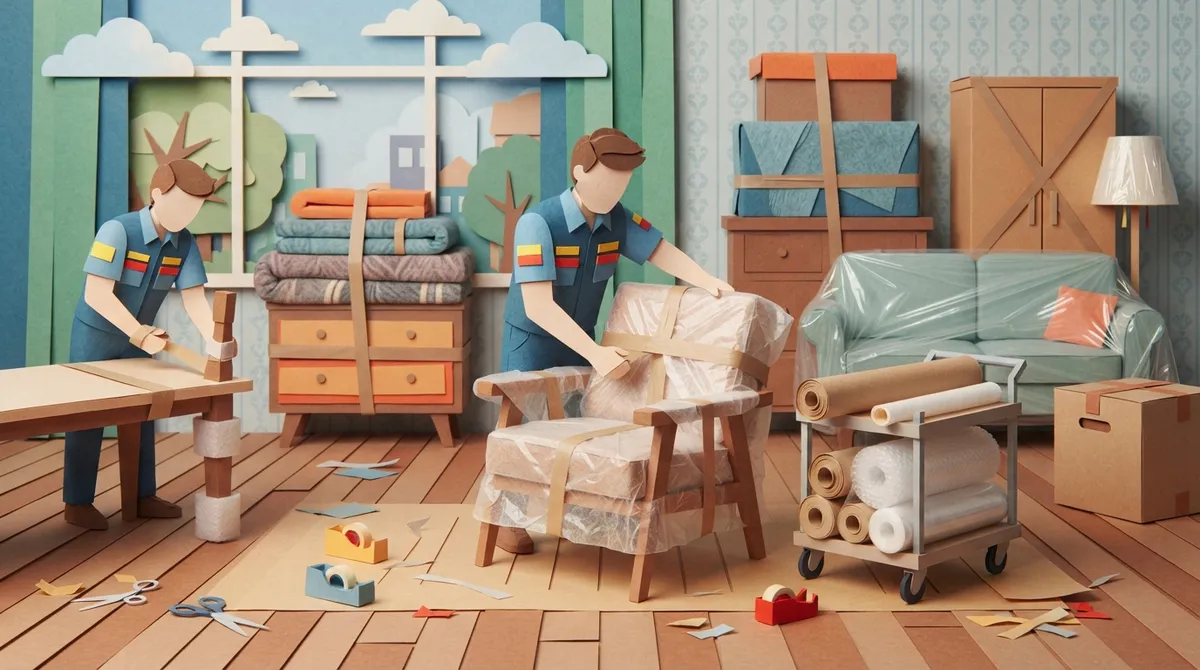
Professional movers commonly combine moving blankets or furniture pads for cushioning with stretch wrap to hold the padding in place. They add corner guards for sharp edges and use paper, bubble wrap, or cardboard for glass and mirrors. Removable legs, shelves, and hardware may be taken off and packed separately.
Scope varies from mover to mover. Some include wrapping in a full-service move. Others offer it as an add-on. Always confirm what your quote covers.
What Is Usually Part of the Service
- Padded blankets or furniture pads on large pieces
- Stretch wrap to secure the pads (not to replace them)
- Corner and edge protection for tables, dressers, and headboards
- Special wrapping for glass tops, mirrors, and artwork
- Securing items in the truck so they do not shift
What May Cost Extra
A wrapping service may cover only the protection itself. Disassembly, packing items inside drawers, floor or wall protection, crating, storage prep, and unpacking might be separate line items. Ask your mover to list every included task, material, and extra charge in writing.
If you want a deeper look at what a quote should spell out, check out What Is Included in Moving Service? A Clear Breakdown.
How Professional Wrapping Works, Step by Step
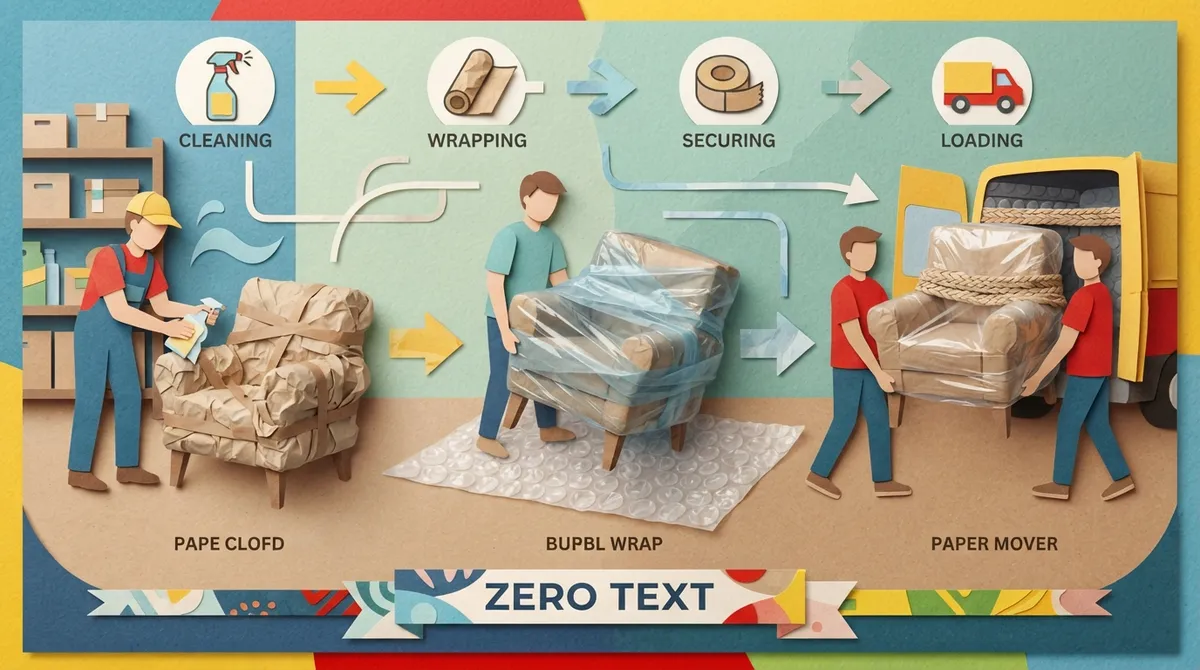
Curious what happens on moving day? Here is the typical flow when a trained crew wraps your furniture.
- Walk-through and assessment. The crew lead checks each piece for existing damage, fragile parts, and tricky shapes.
- Cleaning and prep. Furniture should be clean and fully dry before wrapping. Trapped dust or moisture can cause scuffs or finish problems.
- Disassembly where needed. Legs, shelves, and hardware come off when it makes the piece safer and easier to move.
- Padding. Blankets or pads go over the surfaces, with extra layers on corners and edges.
- Securing the pads. Stretch wrap goes over the padding to keep it snug, without squeezing cushions or parts out of shape.
- Loading and tie-downs. Pieces are placed in the truck so they cannot slide, tip, or press against fragile items.
Notice that tape never touches the furniture finish. Movers secure coverings to themselves or rely on stretch wrap over padding. That small detail saves many finishes from peeling and sticky residue.
How DIY Furniture Wrapping Works
Now for the other side. Wrapping your own furniture is absolutely possible, especially for a small move or a few simple pieces. You just need the right supplies and a good plan.
You will want moving blankets or furniture pads, stretch wrap, packing paper, bubble wrap, corner protectors, and sturdy boxes for hardware. Many people also use mattress bags and sofa covers for upholstered items. Our guide on 10 Moving Boxes and Supplies to Buy Before 2026 Move can help you build your shopping list.
Common DIY Pitfalls
- Plastic directly on wood. Leaving plastic against finished wood for a long time can trap moisture and harm the finish. Always add a protective layer first.
- Tape on the surface. It can lift finish or leave residue that is hard to remove.
- Wrapping too tightly. Over-tight stretch wrap can squash cushions and stress delicate parts.
- Skipping tie-downs. Even well-wrapped furniture can get damaged if it shifts in the truck.
Here is the thing: wrapping helps reduce scratches, scuffs, and some impacts, but it cannot guarantee damage-free transport. Lifting technique, route planning, loading order, and tie-downs matter just as much as the padding.
Pro vs. DIY: Side-by-Side Comparison
Sometimes a quick table says it all. Here is how the two approaches stack up.
| Factor | Professional Wrapping Service | DIY Wrapping |
|---|---|---|
| Upfront cost | Varies by mover and job; may be included or an add-on | Cost of supplies only |
| Time needed | Handled by the crew on moving day | Hours of your own time before the move |
| Materials | Pads, stretch wrap, guards, specialty protection | You buy or rent everything |
| Technique | Trained crews with daily practice | Learning as you go |
| Heavy or awkward pieces | Crew has the equipment and manpower | Risk of strain or injury |
| Truck loading and tie-downs | Part of the professional process | Depends on your skill and equipment |
| Liability coverage | Governed by the mover's valuation terms | Usually your own responsibility |
The takeaway? DIY saves cash on smaller moves, while professional wrapping saves time, effort, and worry on bigger or more valuable loads.
Which Option Fits Your Situation?
Every move is different, so let's match the choice to the mover.
Local Homeowners and Large Families
If you are moving a full household with bulky sectionals, dining sets, and oversized dressers, professional wrapping can save you a whole weekend of prep. Large families often have too many pieces and too little time. Letting a crew handle it keeps your focus on kids, pets, and paperwork. For help weighing the bigger picture, read Full-Service Furniture Movers vs. DIY: Lakeland Guide.
Long-Distance Movers
Long hauls mean more hours on the road, more vibration, and more chances for pieces to rub together. Quality wrapping plus solid tie-downs matters even more here. If you are moving out of the area, our article on How to Plan Long Distance Moving in Polk County, FL shares planning tips worth bookmarking.
Luxury Apartment and Luxury Home Residents
High-end buildings often have strict rules, tight elevators, and delicate finishes. Professional wrapping protects both your furniture and the property around it. Ask whether floor and wall protection is part of the service or an add-on, since wrapping alone may not cover it.
Retirees and Seniors
Heavy lifting is exactly where professional help shines. There is no reason to risk your back wrestling a solid-wood hutch. Many seniors choose to hand off wrapping, disassembly, and loading entirely. Our guide on 7 Moving Help Lakeland For Elderly Options (2026) covers more ways to make the move gentle and safe.
Specialty Item Owners
Antiques, pianos, and heirloom pieces call for item-specific protection and experienced hands. A piano, for example, needs different handling than a bookshelf. See How Do Piano Moving Services Protect Your Instrument? for a closer look at specialty care.
Protecting Wood, Glass, and Upholstery
Different materials need different care. Here is a quick guide to the big three.
- Wood furniture: Clean it and let it dry fully. Wrap in a blanket or pad first, then add stretch wrap over the padding. Avoid leaving plastic directly on the finish for long stretches.
- Glass and mirrors: Use paper, bubble wrap, or cardboard, and keep them upright and secured. These items often need their own protection even when the rest of the piece is padded.
- Upholstered pieces: Covers keep dust and moisture off, but loose wrap should be used so cushions do not get squeezed out of shape.
These small choices add up. They are the difference between a table that arrives looking brand new and one that needs a touch-up.
Cost: What to Expect and What to Ask
Let's talk money, because it matters. Pricing for wrapping varies widely by mover, the number of pieces, and the materials used. In some cases it is built into a full-service package. In others it appears as a separate charge.
There is no single magic number, so the smartest move is to ask smart questions. Before you book, ask:
- Which items are covered by the wrapping service?
- Are blankets, stretch wrap, and corner guards included?
- Does the price include disassembly and reassembly?
- Are there extra fees for glass, mirrors, or oversized pieces?
- What are the liability or valuation terms if something is damaged?
Get answers in writing. If you want help making sense of estimates, How Do Moving Company Quotes Really Work in 2026? is a handy read. And if damage worries you, 8 Facts: Are Movers Responsible For Damage in 2026? explains what protection usually looks like.
Can You Hire Movers Just for Wrapping?
Good news: sometimes yes. Some moving companies offer wrapping and protection as a stand-alone or add-on service, especially when you are renting your own truck or loading a portable container. Availability depends on the mover, so it is worth asking directly.
This hybrid approach can be a sweet spot. You handle the boxes, and the pros protect the big, heavy, or valuable pieces. If you are on the fence, our comparison How to Choose Full Service Movers vs DIY in Lakeland can help you find your balance.
The Verdict: Which Protects Better?
For small moves with a handful of sturdy pieces, DIY wrapping can do the job well, especially if you invest in quality blankets and take your time. For whole-home moves, long-distance trips, antiques, heavy items, or anyone who values their time and their back, a professional furniture wrapping service usually offers better protection and far less stress.
Remember, no wrapping method is a guarantee. The best results come from the full package: proper padding, careful lifting, smart loading, solid tie-downs, and clear liability terms.
Let DynaMight Movers Handle the Wrapping
At DynaMight Movers, we are a licensed and insured moving company serving Lakeland, Winter Haven, Davenport, Dover, and the rest of Polk County. We handle heavy lifting and specialty items with care, and we keep our pricing transparent so there are no surprises on moving day. You can see what neighbors say about us when you visit us on Google — DynaMight Movers.
Ready to protect your furniture the right way? Get a free estimate today, or call us at (866) 349-7719 to talk through your move. We would love to help you arrive with every piece looking just as good as it did when you packed it.
Curious about the area we serve? Learn more about Polk County, Florida, or if you are relocating with kids, explore Polk County Schools before you settle in.
FAQs
Q: What does a furniture wrapping service include when moving?
A: It usually includes padded blankets or furniture pads, stretch wrap to hold them in place, and corner guards for edges. Fragile pieces like glass or mirrors may get extra protection. Since scope varies by mover, ask for a written list of what is covered.
Q: Do movers disassemble furniture before wrapping it?
A: Many do, when it makes a piece safer to move, such as removing legs, shelves, or hardware and packing them separately. Disassembly is not always part of the wrapping price, so confirm it up front. A quick question now can save you a surprise later!
Q: Should furniture be wrapped in plastic for moving or storage?
A: Plastic stretch wrap is great for holding padding in place, but it should not sit directly on finished wood for long periods. Trapped moisture can harm the finish, so add a blanket or pad underneath first. For storage, a breathable protective layer is the safer choice.
Q: Does furniture wrapping protect against all damage?
A: Wrapping helps reduce scratches, scuffs, and some impacts, but it cannot promise damage-free transport. Careful lifting, smart loading, tie-downs, and the mover's liability terms all play a role. If something is damaged, your mover's valuation terms explain what happens next.
Q: Can I hire movers just to wrap and protect my furniture?
A: Some moving companies offer wrapping as a stand-alone or add-on service, though availability depends on the company. It can be a smart middle ground if you want to pack boxes yourself but leave big pieces to the pros. Just ask your mover directly.