
Key Takeaways
- Piano moves are high-risk for DIY: pianos weigh 300–500 lbs (uprights) or 500–1,200 lbs (grands), and their unbalanced weight can tip suddenly and damage floors, walls, or the internal action.
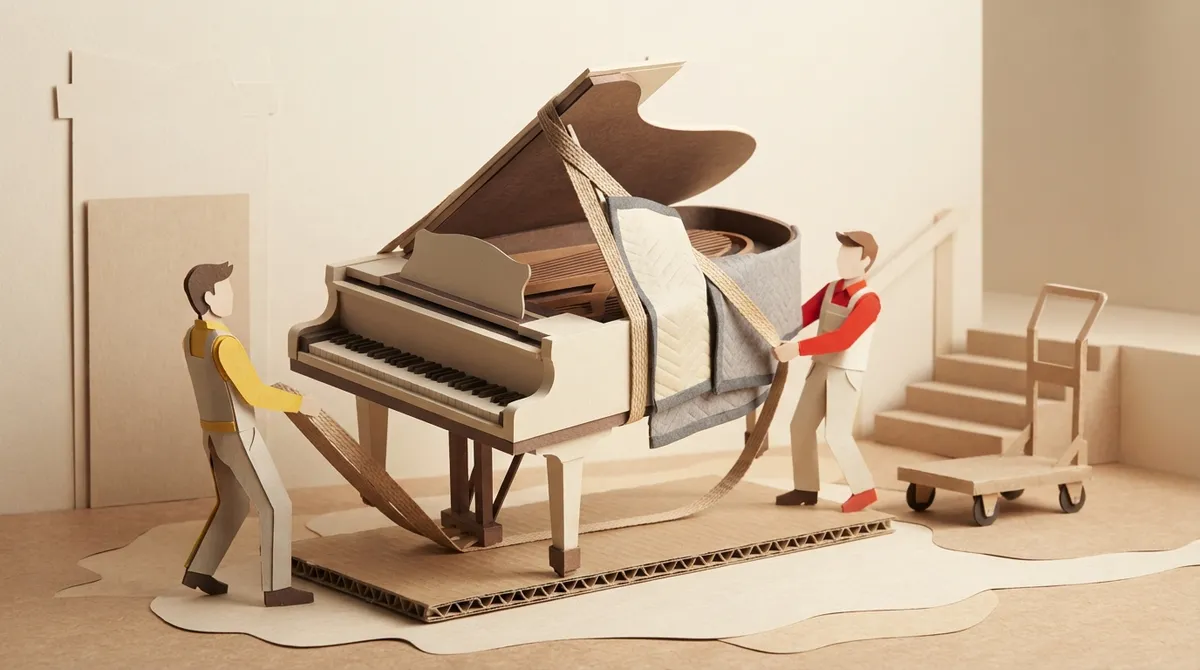
- Professional crews use piano boards, dollies, straps, skid boards for grands, and padded wraps, so ask any mover whether they bring this equipment to every piano job.
- Uprights are usually moved as one strapped unit, while grands require removing the legs and pedal assembly and tilting the body onto a skid board, so share your exact make and model when requesting a quote.
- Typical 2026 costs range from about $150–$650 for local moves and $500–$2,500 or more for long distances, with stairs often adding roughly $40–$100 per flight.
- Don't assume standard household-goods coverage replaces a piano at full value; request written details on coverage limits, exclusions, deductibles, and the claims process before booking.
- Get a written estimate that identifies the piano and lists possible surcharges, and verify licensing and insurance, using FMCSA registration for interstate moves.
- Let the piano settle in its new room before scheduling a tuning, and keep it away from direct sunlight, vents, heaters, and exterior doors.
Your piano is more than a heavy piece of furniture. Maybe it was your grandmother's upright. Maybe it's the baby grand where your kids learned their first song. Either way, the thought of moving it can make your stomach do a little flip. That's totally normal, and you're in good company!
The good news? Piano moving services exist for exactly this reason. Trained crews, padded boards, straps, and the right gear help get your instrument from point A to point B without a scratch on the piano or your walls. In this friendly guide, we'll walk through how pros do it, what it costs in 2026, and how to pick a team you can trust. Whether you're moving across Lakeland, downsizing in retirement, or heading out of state, you'll feel ready by the end. Let's dive in.
What Are Piano Moving Services?
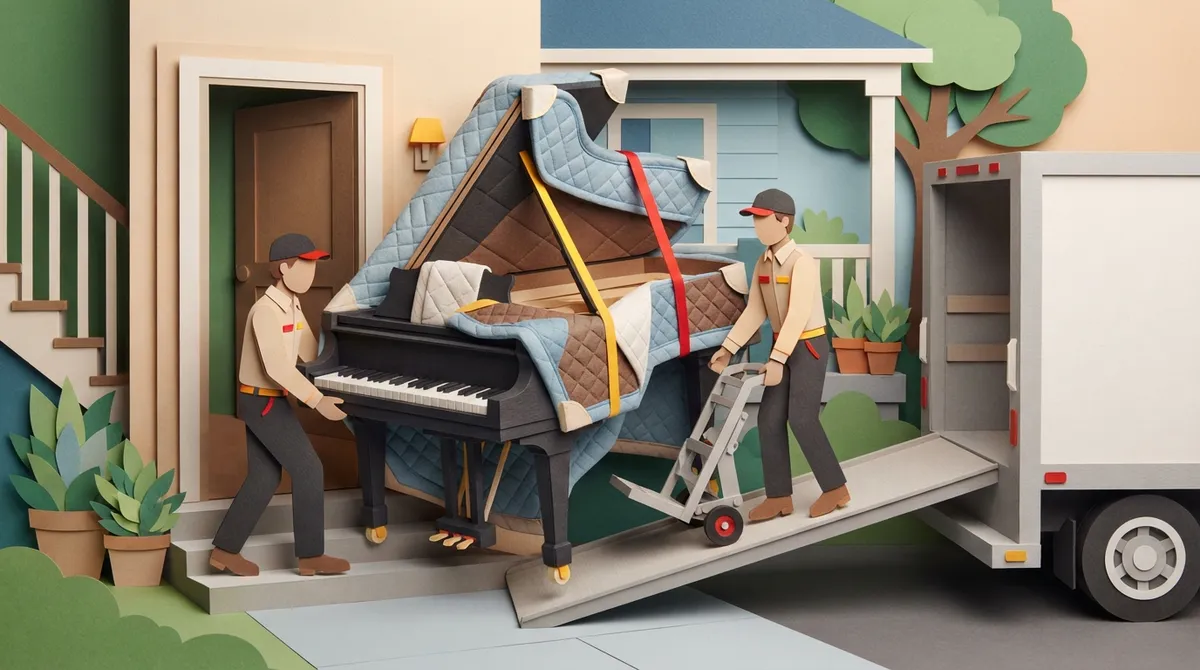
Piano moving services are specialized moving services built to transport upright pianos, grand pianos, and other large instruments safely. They're different from a regular box-and-couch move. The crew uses purpose-built equipment and proven handling methods to reduce risk to the instrument, the movers, and your property.
Think of it like this. A piano is part furniture, part delicate machine. Inside, it has thousands of moving parts, strings under serious tension, and a finish that scratches easily. According to the American Piano Manufacturers Association, upright pianos commonly weigh around 300–500 pounds, while grand pianos can run roughly 500–1,200 pounds. That's a lot of weight wrapped around a lot of fragile parts.
A good piano moving crew brings:
- Padded piano boards that protect the finish and give a secure surface to strap onto
- Heavy-duty dollies designed for concentrated weight
- Straps and harnesses that keep the piano from shifting
- Skid boards for grand pianos once the legs and pedal lyre are removed
- Moving blankets and wrap to shield the wood, keys, and corners
Just as important, they bring experience. Knowing how to tilt, turn, and lift a piano through a tight hallway is a skill you really can't fake.
Why Not Just DIY a Piano Move?
We get it. Friends are free, pizza is cheap, and it feels like a fun weekend project. But pianos are one of the most common items people regret moving on their own.
Here's why DIY piano moves go sideways so often:
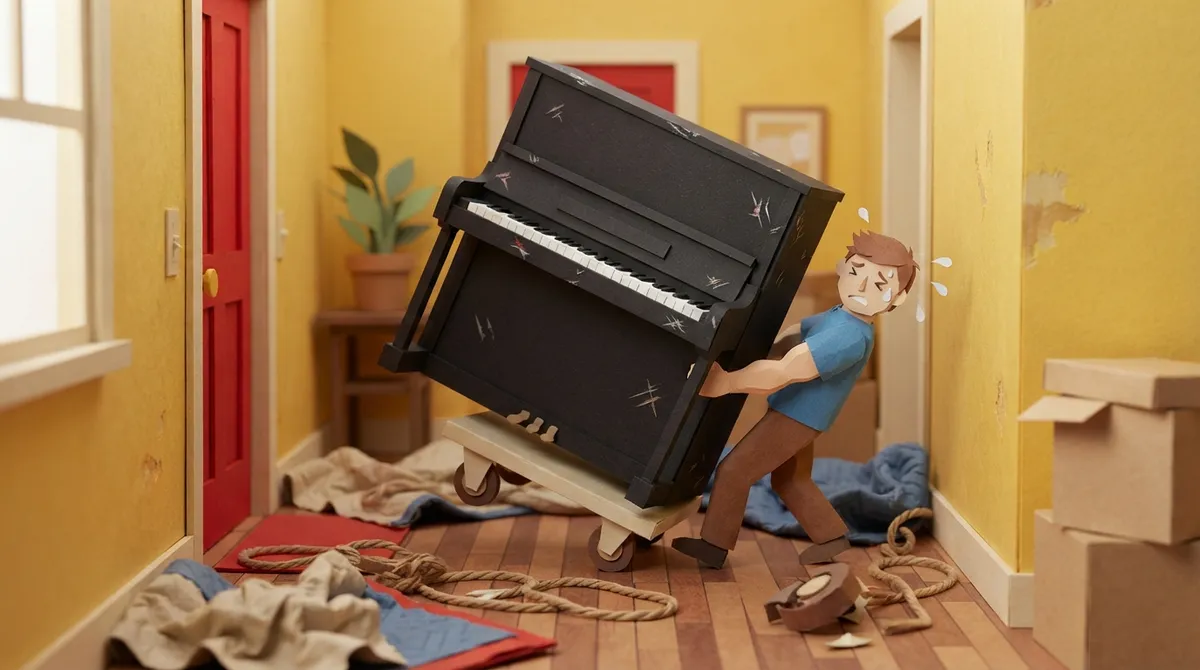
- The weight is unbalanced. Most of the mass sits low and in the back, so pianos can tip suddenly.
- Stairs are risky. A single slip can injure a person or crush a foot, and the piano can take a serious tumble.
- Floors and walls get damaged. Tile, hardwood, and drywall are easy to gouge when a piano shifts.
- Hidden damage happens. A hard bump can knock the action out of alignment or crack the soundboard, and you may not notice until later.
- Insurance gets tricky. If a volunteer gets hurt or the piano breaks, you may be on your own.
If you're weighing your options, our guide on DIY vs. specialty item movers breaks down the tradeoffs in more detail. For a broader look at the process, check out how to move a piano safely without damaging it.
Upright vs. Grand Piano: How Movers Handle Each
Not all pianos travel the same way. Knowing the difference helps you ask smarter questions when you call for a quote.
Moving an Upright Piano
Uprights are usually moved as a single unit. The crew wraps the piano in padded blankets, secures it to a piano board or heavy-duty dolly, and straps it down tight. Then they carefully roll or carry it to the truck, using ramps and lift techniques that keep the weight controlled.
Spinets, consoles, and studio uprights each have their own quirks, so a good mover will ask for the make, model, and approximate size before the move.
Moving a Grand or Baby Grand Piano
Grand pianos take more steps. The crew typically removes the lid, pedal assembly, and legs. Then they tilt the body onto its side on a padded skid board, wrap it snugly, and strap it in place. At the new home, they reverse the process and reassemble everything.
This is where trained hands really matter. Rushing the disassembly or setting the piano down at the wrong angle can cause damage that's expensive to fix.
| Piano Type | Typical Weight | How It's Moved | Special Equipment |
|---|---|---|---|
| Upright | 300–500 lbs | Moved as a single unit | Piano board, dolly, straps, blankets |
| Baby Grand | 500–800 lbs | Partial disassembly, tilted onto skid board | Skid board, straps, padded wrap |
| Concert Grand | 800–1,200 lbs | Full disassembly, skid board transport | Skid board, extra labor, possible crating |
Weights are general ranges. Your exact model may differ, so always share the make and size with your mover.
How Much Do Piano Moving Services Cost in 2026?
Let's talk numbers, because this is usually the first thing people ask. The honest answer is: it depends. But we can share some helpful ranges from recent consumer cost data.
- Thumbtack's 2025 data reports a national average piano-moving range of about $269–$472.
- NerdWallet (updated 2026) says professional piano moves typically run $250–$600.
- Extra Space Storage (updated 2026) cites $150–$650 for many local moves.
- For long-distance piano moves, Extra Space Storage estimates roughly $500–$2,500 or more, depending on distance, piano type, and protection.
These are broad estimates, not guaranteed prices. Your actual quote depends on several factors.
What Affects Your Piano Moving Quote?
- Piano type and size: A grand costs more to move than a small upright.
- Distance: Across the street is different from across the country.
- Stairs: Stair charges may run roughly $40–$100 per flight, though methods vary by mover.
- Tight turns and narrow doorways: These slow things down and may need extra hands.
- Elevators and parking: A long carry from the truck adds time.
- Terrain: Steep driveways, soft lawns, or uneven paths add difficulty.
- Extras: Crating, storage, hoisting through a window or balcony, and added labor all raise the price.
Want help understanding how movers build their numbers? Our 2026 pricing guide walks through the basics, and our post on piano moving costs in 2026 goes deeper on this exact topic.
Specialist Piano Mover or General Moving Company?
This is a great question, and the answer isn't one-size-fits-all.
A dedicated piano-only company can be a strong choice for very high-value instruments, like concert grands or antique pianos. But many full-service moving companies also have trained crews and the right equipment for piano moves. The key is to ask directly.
Here's a simple checklist to see if a mover is truly prepared:
- Do they have piano boards, skid boards, and straps on every piano job?
- Has the crew handled your specific type of piano before?
- Can they explain their process for stairs or tight spaces?
- Will they put the estimate in writing and list possible surcharges?
- Are they properly licensed and insured?
If you're comparing options, our guide to piano specialists vs. general movers can help you decide. And if you're choosing a team in the Tampa area, see how to choose Tampa piano movers.
How to Prepare for Your Piano Move
A little prep makes a big difference. It helps your mover quote accurately and keeps moving day smooth. Here's what to do before the crew arrives:
- Gather piano details. Note the type (upright, baby grand, etc.), brand, and approximate dimensions.
- Take photos of access routes. Snap pictures of doorways, hallways, stairs, and any tight corners at both homes.
- Measure the path. Doorways, stair width, and turning space matter.
- Note floor levels. Tell your mover about stairs, elevators, or any outdoor steps.
- Check building rules. Apartment and condo managers may require advance scheduling, elevator reservations, or a certificate of insurance.
- Clear the path. Move rugs, décor, and small furniture out of the way.
- Secure the lid and keys. Close and lock the keyboard lid, and remove loose items from the top.
The more info you share up front, the more accurate your written estimate will be. Ask the mover to identify the piano on the estimate and list any possible extra charges, so there are no surprises later.
What Protection Should You Ask About?
This one matters. Don't assume that standard household-goods coverage equals full replacement-value protection for a piano. Coverage limits, exclusions, and deductibles vary by mover and by state.
Before you book, ask for written details about:
- What protection applies to the piano itself
- What protects your home, floors, and walls
- Coverage limits, exclusions, and deductibles
- How the claims process works
For high-value or sentimental pianos, you might also check with your homeowner's or renter's insurance provider about extra coverage. A trustworthy mover will welcome these questions. Our guides on choosing insured movers and spotting licensed and insured movers are worth a read.
If your move crosses state lines, verify the mover's registration and authority through the Federal Motor Carrier Safety Administration (FMCSA). It's a quick step that adds real peace of mind.
Special Situations: Stairs, Tight Spaces, and Hoists
Many of us live in homes that weren't built with pianos in mind. Luckily, experienced crews have tricks for tough spots.
Stairs and Narrow Doorways
Stairs are one of the biggest challenges. Crews use extra manpower, strapping systems, and careful angles to keep the piano under control. Narrow doors might require removing the door itself or, for grands, taking the legs off to turn the instrument on its side.
Balcony or Window Hoists
Sometimes a piano simply can't go through the building. In those cases, a hoist may be needed to lift it through a window or over a balcony. This takes special equipment and planning, so mention any unusual access when you request your quote.
Luxury Apartments and High-Rises
If you're moving into an upscale apartment, expect rules. Many buildings require elevator reservations, protective floor coverings, and proof of insurance. Letting your mover know early helps everyone stay on schedule. Our apartment movers guide covers more of what to expect.
After the Move: Settling and Tuning Your Piano
You made it! The piano is in its new home. Before you grab the sheet music, here's one more tip. Let the instrument settle.
Moving and changes in temperature or humidity can affect tuning. Many technicians suggest letting the piano adjust to its new room before scheduling a tuning. How long to wait can depend on your climate, the distance traveled, and the instrument itself. After a long-distance move, it's wise to ask a piano technician about the best timing.
A few friendly placement tips for your new space:
- Keep the piano away from direct sunlight, which can fade the finish
- Avoid placing it near air vents, heaters, or exterior doors
- Try to keep the room's humidity steady, especially in Florida's humid climate
Moving Your Piano Locally or Long Distance
Whether you're moving across town or across the country, the basics stay the same. Local moves tend to be quicker and simpler, while long-distance moves often need extra protection, careful scheduling, and sometimes crating.
If you're relocating out of the area, our post on what to know before a long-distance move is a helpful starting point. Heading across Central Florida? 12 piano movers Lakeland tips offers practical advice for local homeowners.
Why Choose DynaMight Movers for Your Piano?
At DynaMight Movers, we know a piano isn't just heavy. It's treasured. We're a licensed and insured moving company serving Polk County, including Lakeland, Winter Haven, Davenport, and Dover, and we handle specialty items with real care. Our crews are strong, careful, and used to heavy lifting, from family estates to cozy retirement homes.
We keep pricing transparent, so your estimate is your price. No surprise add-ons on moving day. And because we handle both local and long-distance moves, you get one trusted team from start to finish. Curious what our neighbors say? Visit us on Google — DynaMight Movers and read our reviews.
If you're still deciding on a team, our guide on how to choose specialty item movers you can trust is a great next read.
Ready to Move Your Piano with Confidence?
Moving a piano doesn't have to be scary. With the right crew, the right equipment, and a little prep, your instrument can arrive safe and sound. Remember to compare written estimates, confirm protection and credentials, and let your piano settle before tuning.
Ready to take the stress out of your piano move? Get a free estimate from DynaMight Movers today, or call us at (866) 349-7719. We'd love to help you move your music home.
FAQs
Q: How much does it cost to hire piano movers?
A: Most local piano moves fall somewhere between about $150 and $650, with national averages often cited around $250–$600. Long-distance moves can run $500–$2,500 or more. Your final price depends on the piano type, distance, stairs, and any extras like crating or hoisting.
Q: Should I hire a specialist piano mover or a general moving company?
A: Either can work well, as long as the crew has the right equipment and experience. Ask whether they use piano boards and skid boards, and whether they've moved your type of piano before. Get the estimate in writing and confirm they're licensed and insured.
Q: How do movers transport an upright piano versus a grand piano?
A: Uprights are usually moved as one wrapped and strapped unit on a piano board or dolly. Grand pianos typically need partial disassembly, like removing the legs and pedal assembly, then get secured on a skid board and reassembled at the new home.
Q: How soon should a piano be tuned after it is moved?
A: It's best to let the piano settle in its new room first, since moves and changes in temperature or humidity can affect tuning. A piano technician can recommend the right timing, especially after a long-distance move.
Q: What protection should I ask about when moving a piano?
A: Ask for written details on coverage limits, exclusions, deductibles, and the claims process for both the piano and your home. Don't assume standard household-goods coverage equals full replacement value, since options vary by mover.