
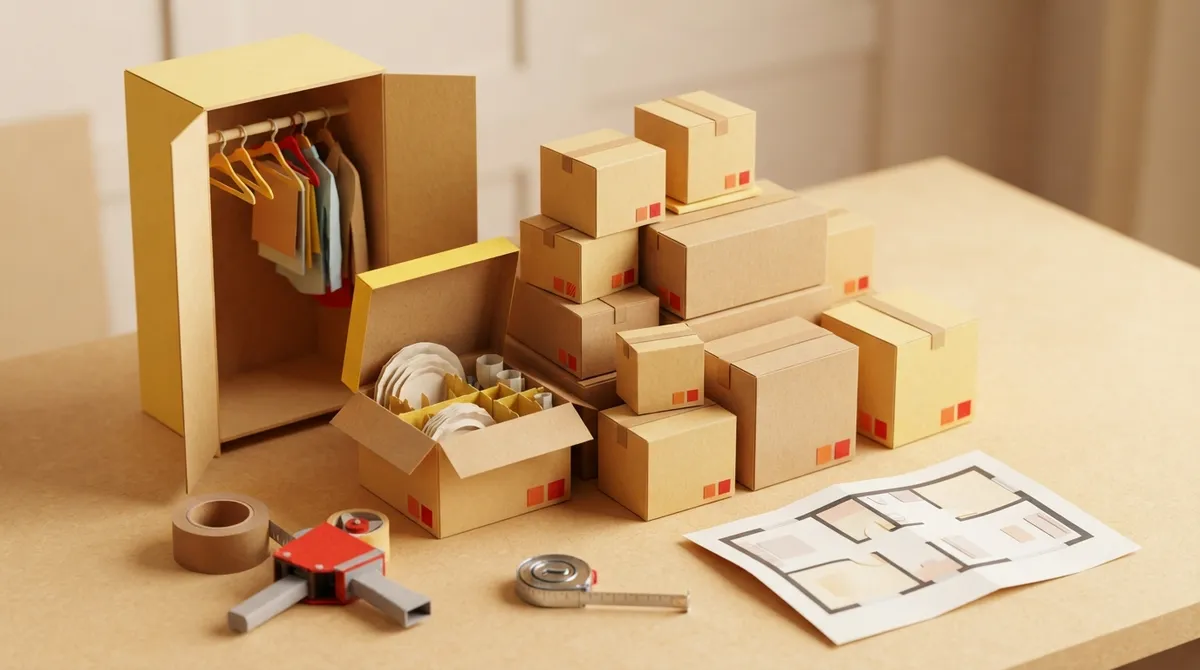
Key Takeaways
- Buy about 80 percent of your estimated box count first, then add extras as needed; returning unused boxes is harder than buying a few more.
- Estimate boxes by doing a room-by-room inventory and adding a 10 to 15 percent buffer, ordering supplies two to three weeks before moving day.
- Match box size to contents: small boxes for dense items like books and dishes, medium for general household goods, and large only for lightweight bulky items like linens.
- Use dish-pack boxes with dividers for glassware and china, and wardrobe cartons to keep clothes on hangers and avoid wrinkles.
- Inspect used boxes for damage and moisture before use, and reserve new boxes for fragile items while using used ones for soft goods.
- Seal the top and bottom of every box with strong tape, fill empty gaps with crumpled paper, and label each box by room and contents.
Picture this: it's the night before your move, and you're surrounded by half-packed bags, a mystery pile of kitchen gadgets, and one very sad roll of tape. We've all been there! The good news is that a smart plan for moving boxes and supplies can turn that chaos into calm.
Here in Polk County, folks move all year long. Summer heat, afternoon storms, and humid air all affect how you pack. Good supplies protect your things and make loading faster for everyone.
In this friendly guide, we'll walk through the 10 essentials worth buying, how many boxes you really need, and where to find them without overspending. Whether you're a local homeowner, a retiree downsizing, or a family leaving a big house, you'll find something useful. We'll keep it simple and share a few tips we've picked up from years of helping neighbors move. Let's get you packed with confidence.
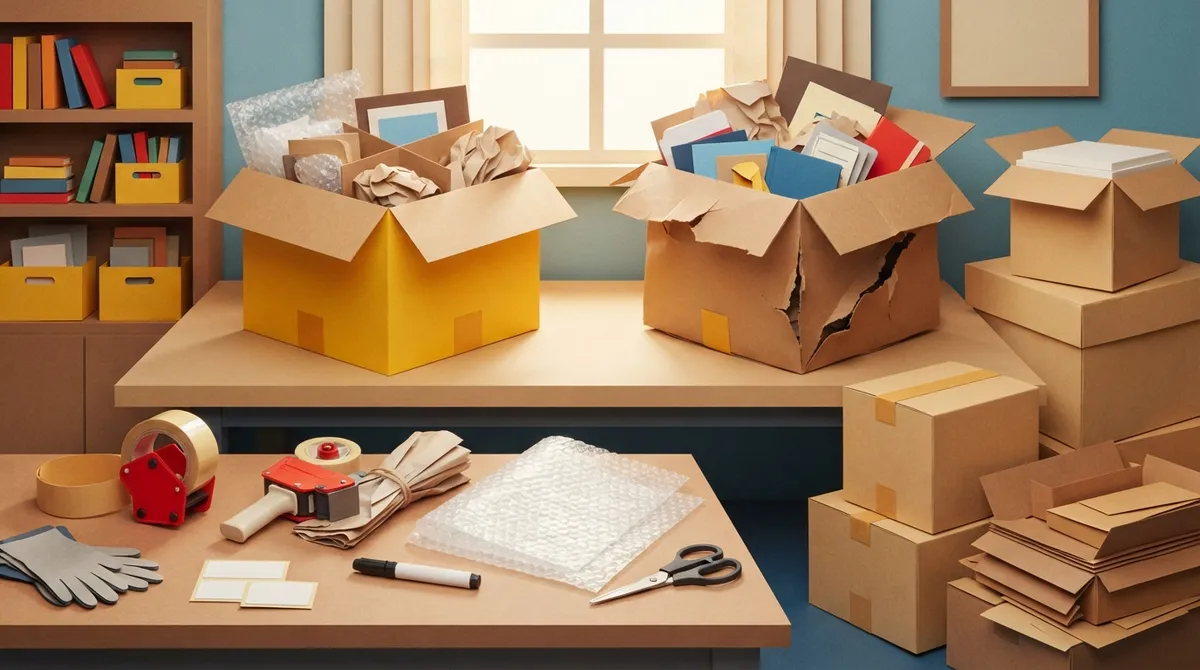
Why the Right Moving Boxes and Supplies Matter
Boxes may look like plain cardboard, but they do real work. Sturdy cartons protect your belongings, keep your packing organized, and make loading and unloading much more efficient. Weak boxes, on the other hand, can sag, tear, or crush your favorite dishes.
A good supply plan mixes several box sizes with cushioning, tape, labels, and a few specialty cartons. It also matches your home's actual contents, rather than relying on one rule of thumb. Think of it like packing a toolbox: the right tool for each job.
If you're still deciding how much to do yourself, our guide on full-service packing vs. self-packing can help you weigh the options.
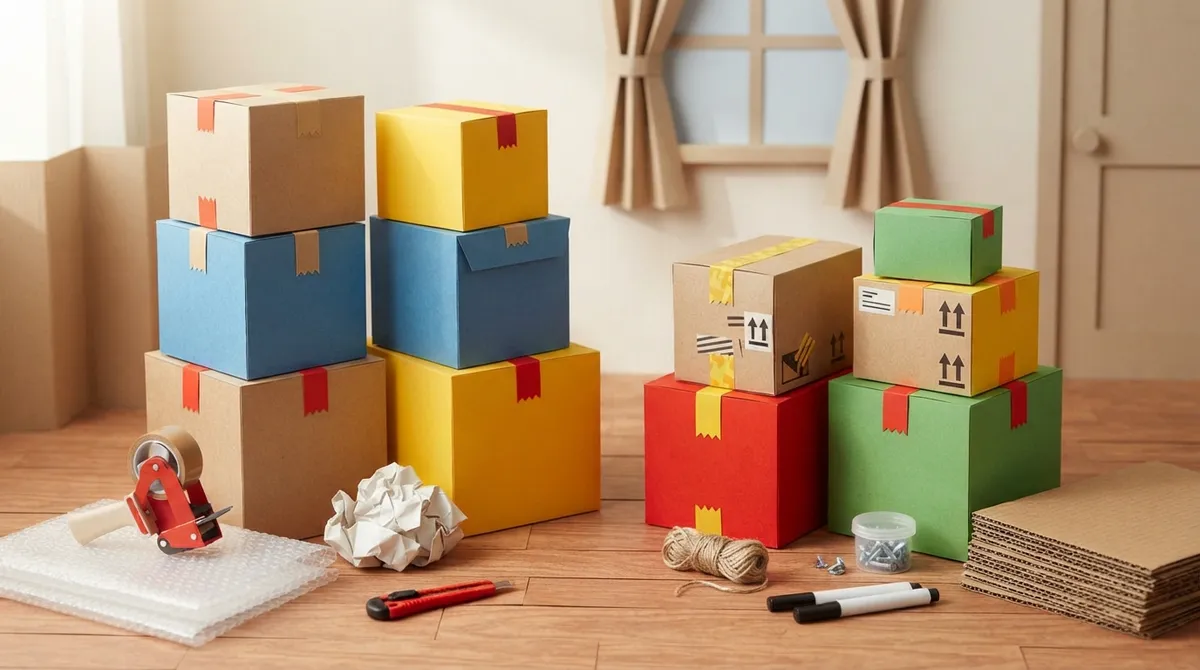
10 Moving Boxes and Supplies Worth Buying
Here are the ten items we recommend most. You don't need to buy every single one, but this list covers what most households use.
1. Small Boxes (About 1.5 Cubic Feet)
Small boxes are your heavy-item heroes. Use them for books, dishes, tools, and canned goods. Because they hold dense items, keeping them small means you can actually lift them. Nobody wants a book box that feels like a boulder!
2. Medium Boxes (About 3 Cubic Feet)
These are the workhorses of any move. Medium boxes suit general household items like kitchen gadgets, small appliances, toys, and décor. If you only buy one size in bulk, this is usually it.
3. Large and Extra-Large Boxes (4.5 to 6 Cubic Feet)
Save big cartons for bulky but lightweight things. Think linens, pillows, comforters, and stuffed animals. Remember that capacities vary by supplier, so check the dimensions before you order.
4. Dish-Pack Boxes With Dividers
If you own glassware or china, a dish-pack carton is worth it. The built-in dividers keep plates and glasses from bumping together. It's one of those small upgrades that can save a big heartbreak.
5. Wardrobe Cartons
Wardrobe boxes come with a hanging bar, so clothes travel on their hangers. That means no folding on packing day and no wrinkled suits on arrival. They're especially handy for luxury apartment residents moving formal wear.
6. Packing Paper and Cushioning
Plain packing paper wraps plates, vases, and décor. Bubble wrap and foam sheets add extra protection for fragile pieces. Crumpled paper also fills empty gaps so items don't shift during the ride.
7. Strong Packing Tape and a Dispenser
Good tape matters more than you think. Seal the bottom and top of every box, and use a tape gun to save your hands. Skip the thin, cheap rolls that peel off halfway through the job.
8. Labels and Markers
Label every box by room and contents, and mark fragile items clearly. Colored labels or stickers for each room make unloading a breeze. Your crew can then place boxes right where they belong.
9. Protective Covers and Pads
Mattress bags, furniture covers, and moving blankets keep dust, moisture, and scuffs away. Florida's humidity makes covers extra helpful, especially for upholstered pieces. Professional crews usually bring pads, but covers for your own packing are a smart add-on.
10. Specialty Cartons for TVs, Mirrors, and Art
Flat-screen TVs, large mirrors, and framed artwork each have special needs. Purpose-built cartons give them rigid, snug protection. For truly valuable pieces, you might want pros to handle both packing and moving, like with art and painting movers in Lakeland.
How Many Moving Boxes Do You Really Need?
This is the question everyone asks, and the honest answer is: it depends. Household size, how much you own, and your packing habits all change the count. Published estimates vary, so treat any chart as a starting point.
For example, a U.S. News Real Estate guide (2026) suggests about 10 to 20 small-to-medium boxes plus 5 to 7 large boxes for a studio. For a three-bedroom house, it suggests roughly 20 to 30 small, 30 to 40 medium, and 20 to 25 large boxes.
A Redfin guide (2026) gives a different, simpler range by home size. Here's how the two sources compare in general terms:
| Home Size | Redfin Estimate (Total Boxes) | Planning Note |
|---|---|---|
| Studio | 10 to 20 | Add a few large boxes for linens |
| 1 Bedroom | 20 to 40 | Extra small boxes if you own many books |
| 2 Bedroom | 40 to 60 | Count your kitchen items carefully |
| 3 Bedroom | 60 to 80 | Garage and storage areas can add many more |
| 4 Bedroom | 80 to 120 | Large families often need the high end |
These are planning ranges, not rules. The best method is to do a quick inventory room by room. Then buy about 80 percent of your estimate and pick up extras as needed. It's far easier to grab ten more boxes than to return fifty unused ones.
A Simple Way to Estimate
- Walk through each room and note big categories (books, kitchen, clothes, décor).
- Estimate how many boxes of each size every category needs.
- Add a 10 to 15 percent buffer for surprises.
- Order your supplies about two to three weeks before moving day.
If your household is large or you're leaving an estate, you may want help from a crew used to bulky loads. Our article on how large families move smoothly in Lakeland has practical ideas.
Packing Smart: Protect Your Belongings
Great supplies only work if you pack them well. A few simple habits make a big difference.
- Heavy goes small. Put dense items in small boxes so they stay easy to lift.
- Cushion fragile items. Wrap each piece, then pad the bottom and sides of the box.
- Fill empty spaces. Crumpled paper stops items from shifting and breaking.
- Seal top and bottom. Run tape across the seams for a strong hold.
- Label clearly. Write the room and a short list of contents on the side, not just the top.
For more fragile-item advice, see how to keep fragile items safe when moving.
Where to Get Moving Boxes and Supplies
You have several good options, and the best one depends on your budget and timeline.
| Source | Pros | Cons |
|---|---|---|
| Moving company | Convenient, right sizes, may include delivery | Pricing and availability vary by mover |
| Retail and home stores | Easy to find, buy what you need | Can add up for large homes |
| Used or free boxes | Lower cost | Must inspect for damage and moisture |
| Reusable plastic crates | Sturdy, uniform, weather resistant | Cost and local availability vary |
Many moving companies sell supplies, offer kits, or include materials with a packing service. Availability and pricing differ from mover to mover, so ask what's included. At DynaMight Movers, our team can talk you through what makes sense for your move, from a few specialty cartons to a full packing plan.
Used Boxes, Reusable Crates, and Going Green
Used boxes can slash your costs, but inspect them first. Look for damage, moisture, weak seams, or contamination. A box that's been in a damp garage may fail right when you need it most.
Reusable plastic moving crates are another option. Rental services typically deliver them, then collect them after your move. Their rigid shape, stackability, and weather resistance can be a real plus in Florida's humid, rainy climate. Cost and availability depend on your location and provider.
Eco-minded movers have another reason to smile. The U.S. Environmental Protection Agency's 2018 data, as reported by Packaging Revolution, shows containers and packaging made up 82.2 million tons of U.S. municipal solid waste, or 28.1 percent. That's broad packaging data, not a moving-box figure. Still, it's a good reminder to recycle clean, dry cardboard after your move, following local rules.
Quick Tips to Cut Waste
- Reuse boxes from friends who recently moved.
- Use towels, linens, and clothes as free cushioning.
- Return or reuse crates and supplies when you can.
- Flatten and recycle cardboard once you've unpacked.
Supplies for Special Situations
Not every move looks the same, and your supply list should reflect that. Here are a few common situations we see around Polk County.
Retirees and Downsizers
If you're moving to a smaller home, you'll likely sort and donate before packing. Start with a smaller supply order, then add as you go. Many seniors also appreciate having a team handle the heavy lifting. Our post on moving help in Lakeland for elderly residents shares gentle, practical options.
Luxury Homes and Apartments
High-end finishes and tight elevators call for extra care. Use protective covers, corner guards, and quality cartons for delicate décor. Professional packing can also reduce stress when you're moving into a building with strict rules.
Specialty and Awkward Items
Antiques, pianos, and other special pieces need more than a standard box. Custom padding and trained hands are the safest path. If you own an instrument, read how piano moving services protect your instrument before deciding on DIY.
Moving Boxes and Supplies Cost-Saving Ideas
Boxes don't have to drain your wallet. A little planning goes a long way.
- Buy by size, not by set. Pre-made kits are handy, but custom counts waste less.
- Compare what's included. Check box condition, quantity, and any delivery or return fees.
- Mix new and used. Use new boxes for fragile items and used ones for soft goods.
- Declutter first. Every item you donate is a box you don't need to buy.
- Ask about pickup. Some providers collect used boxes after your move.
Want a clearer picture of the whole budget? Our guide on how to budget for moving costs in Lakeland, FL walks through it step by step.
When to Let the Pros Pack for You
Some folks love packing. Others would rather do almost anything else! If your schedule is packed, your home is large, or your belongings are delicate, professional packing may be worth it. Crews arrive with the right materials, pack efficiently, and cushion items properly.
Many people choose a hybrid approach. You pack everyday items yourself and leave fragile or valuable pieces to the pros. It's a flexible way to save money while still protecting what matters most. Not sure which path fits? Read how to choose full-service movers vs. DIY in Lakeland.
To see what local neighbors think of our work, you can read DynaMight Movers reviews on Google and see how we handle Polk County moves, from Lakeland to Winter Haven.
Final Thoughts: Pack Smart, Move Happy
The right moving boxes and supplies won't just protect your belongings. They'll also make your whole move feel lighter and more organized. Start with a simple inventory, buy the sizes you actually need, and add specialty cartons for fragile pieces. Label everything, cushion well, and recycle when you're done.
And remember, you don't have to do it alone. DynaMight Movers is a licensed and insured Polk County team with transparent pricing and a real focus on caring for your things. Ready to start? Get a free estimate today, or call us at (866) 349-7719 and let's plan your move together. You've got this, and we've got your back.
FAQs
Q: How many moving boxes do I need for a studio, apartment, or house?
A: It depends on your belongings, but a common planning range is about 10 to 20 boxes for a studio and 60 to 80 for a three-bedroom home. Treat charts as a starting point, then adjust after you inventory your rooms. Buying about 80 percent first and adding extras is a smart move.
Q: What should I pack in small, medium, and large moving boxes?
A: Use small boxes for dense, heavy items like books, dishes, tools, and canned goods. Medium boxes work well for general household items, while large boxes suit bulky, lightweight things like linens and pillows. Keeping heavy items in small boxes keeps them easy and safe to lift.
Q: Which moving supplies do I need besides boxes?
A: Beyond boxes, you'll want packing paper, cushioning like bubble wrap, strong tape, labels, markers, and protective covers. Specialty cartons such as dish-pack boxes, wardrobe boxes, and TV or mirror cartons are also helpful. These small extras keep your belongings safe and your unpacking organized.
Q: Are reusable moving crates better than cardboard boxes?
A: Reusable plastic crates are rigid, uniform, and weather resistant, which can be great for Florida moves. Cardboard is often cheaper and easier to find, especially if you reuse clean boxes. The best choice depends on cost and availability in your area, so compare both.
Q: Are moving boxes and packing supplies available from moving companies?
A: Yes, many moving companies sell supplies, offer kits or delivery, or include materials as part of a packing service. Pricing and availability vary by mover, so it helps to ask what's included. You can always call a local team to talk through the best option for your move.