

Key Takeaways
- Verify your moving company's registration with FDACS (Florida) or FMCSA/U.S. DOT (interstate moves) before hiring, and confirm their business name, phone, and address match across all documents.
- Get at least three written in-home or video estimates comparing labor rates, travel fees, packing materials, and valuation coverage options to avoid hidden charges and ensure fair pricing.
- Read the entire contract before signing, ensuring it clearly specifies pickup/delivery dates, cancellation policy, estimate type, liability limits, and the claims process for damaged items.
- Confirm whether you're hiring a full-service moving company that owns trucks and employs crews, or a broker that hires third parties, as this affects contract responsibility and insurance coverage.
- Document all belongings with photos before loading and note any existing damage on the inventory sheet; on delivery day, check items off as they arrive and mark any damage before signing paperwork.
- Watch for red flags including unusually low estimates, large upfront deposits, pressure to sign immediately, vague company information, cash-only payments, and refusal to share registration details.
Moving day should feel exciting, not scary. But if you've never hired a moving company before, it's easy to feel overwhelmed by all the little details. That's why we put together this friendly, easy-to-follow hiring movers Lakeland FL checklist. Think of it as your roadmap to a smooth move, whether you're heading across town or across the country.
Here's the good news: hiring trustworthy movers doesn't have to be complicated. You just need to know what questions to ask, what paperwork to review, and what red flags to watch for. Whether you're a retiree downsizing to a cozy new place, a family moving out of a big estate, or a young professional settling into a luxury apartment, this checklist will help you feel confident every step of the way. Let's walk through it together.
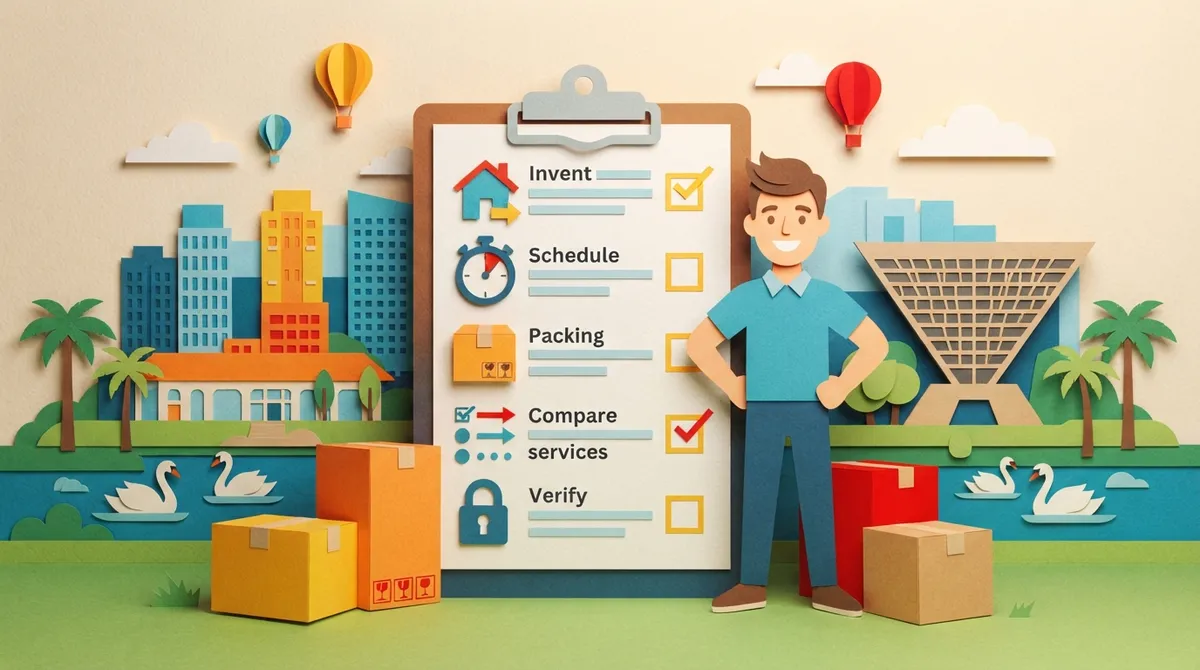
Why a Checklist Matters Before You Hire Movers in Lakeland
Moving involves a lot of moving parts (pun intended). Without a plan, it's easy to forget something important, like checking a company's registration or reading the fine print on your contract. A checklist keeps you organized and protects you from unpleasant surprises.
According to the Federal Motor Carrier Safety Administration (FMCSA), good move planning happens in three stages: before the move, moving day, and delivery day. We'll cover all three so you know exactly what to expect and when.

Step 1: Verify the Moving Company Is Properly Registered
Before you hand over your address and your belongings, make sure the company is legitimate. For moves that start and end in Florida, the mover should be registered with the Florida Department of Agriculture and Consumer Services (FDACS), which oversees moving companies in the state.
- Ask for the company's current registration number and details.
- Confirm the business name, phone number, and address match what's on their website and contract.
- Search for reviews and complaint histories, but treat official registration documents as your main proof.
- If your move crosses state lines, verify the mover's U.S. DOT number through the FMCSA database.
Interstate movers must also give you a copy of "Your Rights and Responsibilities When You Move," a federally required document explaining your consumer protections. If a company can't provide this, that's a warning sign.
Step 2: Know the Difference Between a Mover and a Broker
This is one of the most misunderstood parts of hiring movers. A mover actually owns the trucks and employs the crew that shows up at your home. A broker, on the other hand, arranges for another company to handle your move.
Neither option is automatically bad, but you need to know which one you're hiring. Ask directly: "Will your company physically move my belongings, or will you hire someone else to do it?" This matters because it determines whose insurance applies, whose contract you're signing, and who you contact if something goes wrong.
| Feature | Moving Company | Moving Broker |
|---|---|---|
| Owns the truck and crew | Yes | No |
| Handles your items directly | Yes | No (hires a third party) |
| Contract responsibility | Direct with you | May involve two contracts |
| Claims process | Handled in-house | May be more complicated |
Companies like DynaMight Movers operate as a full-service moving company, meaning the same crew that gives you a quote is the crew showing up on moving day. That kind of consistency brings real peace of mind.
Step 3: Collect at Least Three Written Estimates
Never hire the first company you find without shopping around a little. The FMCSA specifically recommends getting estimates from at least three movers so you can compare pricing and services side by side.
- Request in-home or video estimates rather than quick phone quotes, so pricing reflects your actual belongings.
- Ask each company to list labor rates, travel fees, packing materials, and any charges for stairs or long carries.
- Compare valuation coverage options, since this affects what you're reimbursed if something breaks.
- Look for extra fees tied to bulky items, storage needs, or specialty pieces like pianos or safes.
Our guide on getting accurate moving quotes in Lakeland Florida breaks this down even further if you want extra detail.
Step 4: Read the Contract Before Moving Day
A written contract, sometimes called a bill of lading, protects both you and the mover. Don't sign anything you haven't fully read. Here's what a solid moving contract should spell out clearly.
- Pickup and delivery dates, including any flexible time windows
- Cancellation policy and payment schedule
- Type of estimate (binding, non-binding, or not-to-exceed)
- Minimum charges and potential extra fees
- Inventory list of your belongings
- Liability limits and the claims process for damage
If any of this feels confusing, ask questions before signing. A trustworthy company will happily explain every line item. You can also learn more in our article on moving estimates and what they really mean.
Step 5: Understand Valuation Coverage and Insurance
Accidents happen, even with careful movers. That's why valuation coverage matters. This is different from traditional insurance, but it determines how much you're compensated if an item is lost or damaged.
Some local jurisdictions in Florida, like Miami-Dade County, reference a 60-cents-per-pound minimum coverage figure in their local rules. This is not a statewide requirement, so always confirm what applies to your specific contract and mover. Ask your Lakeland moving company directly what coverage options they offer and get it in writing.
For extra confidence, check out our guide on spotting licensed and insured movers in Polk County, which walks through exactly what to look for.
Step 6: Prepare Your Lakeland Home for Moving Day
Good movers can only work efficiently if your home is ready for them. A little prep goes a long way toward keeping things on schedule and stress-free.
- Reserve parking spots or loading zones near your building ahead of time.
- Check apartment or HOA rules about moving hours and elevator use.
- Measure doorways, hallways, and stairwells for large furniture.
- Protect your floors with runners or moving blankets in high-traffic areas.
- Tell your moving crew in advance about pianos, safes, hot tubs, or other heavy specialty items.
If you live in a gated community or a narrow-street neighborhood common in parts of Lakeland, mention this when booking. It helps the crew plan truck placement and avoid delays. Our apartment movers guide for Polk County has more tips for high-rise and gated community moves.
Step 7: Document Everything Before and After the Move
This step is easy to skip but incredibly important. Before your items go on the truck, walk through your home with the crew and note any existing damage on the inventory sheet.
- Take photos of furniture, electronics, and fragile items before loading.
- Review the inventory list carefully before signing the bill of lading.
- On delivery day, check off each item as it comes off the truck.
- Note any missing or damaged items directly on the delivery paperwork before signing.
- Keep all documents until your claim, if any, is fully resolved.
The FMCSA checklist strongly recommends this documentation step because it protects you if a dispute comes up later. Don't skip it, even if the crew seems in a hurry.
Red Flags to Watch For When Hiring Movers
Most moving companies are honest and hardworking. But scams do happen, so it pays to know the warning signs.
| Red Flag | Why It Matters |
|---|---|
| Unusually low estimate | Often a bait-and-switch tactic with hidden fees later |
| Large upfront deposit | Legitimate movers rarely require big deposits before service |
| Pressure to sign immediately | You should have time to review the contract fully |
| Vague company name or address | Makes it hard to verify registration or file complaints |
| Cash-only payment demands | Leaves you with no paper trail if something goes wrong |
| Refusal to share registration info | A licensed company should never hesitate to prove it |
If you notice even one of these signs, it's worth walking away and calling a different company. Trust your gut here.
Special Considerations for Different Types of Movers
Not every move looks the same, and your checklist might need a few extra items depending on your situation.
Retirees and Seniors Moving to Smaller Homes
If you're downsizing to a retirement community, ask about patient, careful crews who understand heavy lifting needs. Our senior moving services guide for Polk County has helpful tips tailored to this transition.
Families With Large Estates or Bulky Furniture
Big homes often mean big furniture, antiques, or specialty pieces. Make sure your movers have experience with these items specifically. Ask about equipment like piano boards, furniture dollies, and protective padding.
Long-Distance and Interstate Movers
If you're leaving Lakeland for another state, double-check FMCSA registration and ask about delivery windows, since interstate moves often have wider timeframes than local ones. Our long-distance movers Lakeland Florida guide covers this in more detail.
How DynaMight Movers Fits Into Your Checklist
We built DynaMight Movers around the idea that moving shouldn't feel stressful or confusing. We're licensed and insured, we offer transparent pricing with no hidden fees, and we handle everything from local Lakeland moves to long-distance relocations across Polk County and beyond.
Whether you need help with a heavy piano, a delicate antique collection, or just extra muscle for moving day, our team shows up ready to work. You can see what real customers say by visiting our DynaMight Movers location on Google, where honest reviews reflect the care we bring to every job.
Your Final Pre-Move Checklist Recap
Let's bring it all together into one simple summary you can reference anytime.
- Verify FDACS registration for in-state moves or FMCSA/U.S. DOT number for interstate moves.
- Confirm whether you're hiring a mover or a broker.
- Collect at least three detailed written estimates.
- Review the full contract before signing anything.
- Understand your valuation coverage options.
- Prepare your home for parking, elevators, and bulky items.
- Document your belongings before and after the move.
- Watch for red flags like low quotes or cash-only demands.
Follow these steps and you'll walk into moving day feeling calm, informed, and ready. For more planning help, check out our full guide on building a winning moving checklist in Lakeland FL.
Ready to Book Your Lakeland Move?
You've done the research, you know what questions to ask, and now it's time to take the next step. Our friendly team is here to make your move feel as easy as possible, with honest pricing and careful handling every time. Reach out today to get a free estimate or simply call us at (866) 349-7719 to talk through your moving plans with a real person who cares.
FAQs
Q: How do I verify that a Lakeland, FL moving company is licensed or registered?
A: For moves that stay within Florida, ask the company for its FDACS registration number and double-check that their name, phone, and address match everywhere. If you're moving across state lines, also verify their U.S. DOT number through the FMCSA. A trustworthy company will never hesitate to share this info with you.
Q: What should be included in a moving estimate and contract in Florida?
A: A solid estimate should list labor rates, travel fees, packing costs, and any extra charges for stairs or bulky items. Your contract should also spell out pickup and delivery dates, valuation coverage, and the claims process. Take your time reading it, and don't be afraid to ask questions before signing.
Q: How many moving quotes should I get before hiring movers in Lakeland?
A: We recommend getting at least three written estimates, which is also what the FMCSA suggests. This gives you a fair comparison of pricing and services so you're not caught off guard later. It's a small extra step that can save you real money and headaches.
Q: What is the difference between a moving company and a moving broker?
A: A moving company owns the trucks and employs the crew that actually shows up at your home. A broker arranges for another company to handle your move, which can add extra layers to contracts and claims. Always ask directly which one you're hiring so you know who's responsible for your belongings.
Q: What should I do if my belongings are damaged or missing after a move?
A: Note any damage or missing items on the delivery paperwork before you sign, and take photos right away as backup proof. Keep every document, including your original inventory list and bill of lading, until the claim is fully resolved. Reaching out to the mover quickly usually leads to a smoother resolution.