

Key Takeaways
- Florida law requires movers to provide itemized estimates listing origin, destination, service details, and business contact information; phone quotes without detailed questions are red flags for unreliable pricing.
- Verify your mover's registration with Florida's Department of Agriculture and Consumer Services before hiring—it takes minutes and protects you from unlicensed operators.
- Local Lakeland moves typically cost $390-$3,205+ depending on home size, while long-distance moves range from $1,380-$7,820; get at least three quotes based on identical inventory for accurate comparison.
- In-home or video surveys provide accurate estimates; phone quotes often underestimate costs and lead to higher final bills when movers discover more items than expected on moving day.
- Binding estimates lock in your price for interstate moves, while nonbinding estimates can increase up to 110% of the quoted amount; clarify which type applies and get it in writing.
- Common add-on fees include stairs, long carries, specialty items, packing labor, storage, and fuel charges—ask your mover to explain every line item upfront to avoid surprise billing.
Getting ready for a move in Lakeland? You're probably staring at a stack of quotes, wondering why one company says $500 and another says $2,000. We get it. Moving estimates can feel like a confusing puzzle, but they don't have to be. With a little know-how, you can spot a fair, honest quote from a mile away.
This guide breaks down everything you need to know about moving estimates lakeland fl homeowners actually deal with. We'll cover pricing, red flags, Florida rules, and smart questions to ask before you sign anything. Whether you're moving down the street or across the state, this list will help you feel confident and prepared. Let's dig in.
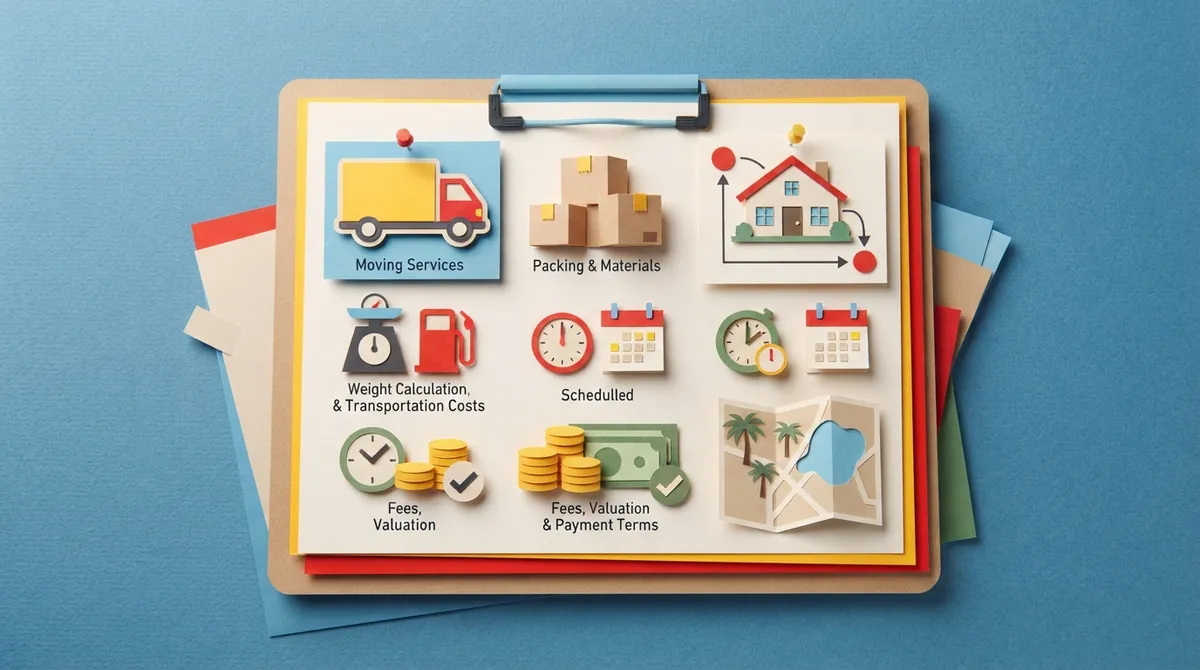
1. Know What a Real Moving Estimate Should Include
A proper moving estimate isn't just a random number scribbled on a napkin. Florida law actually spells out what belongs in one. A solid estimate should list your origin and destination, proposed moving dates, the services you're getting, and an itemized breakdown of charges.
It should also include the mover's business contact information and accepted payment methods. If a company only gives you a ballpark figure over the phone without asking many questions, that's a warning sign. Real estimates come from real conversations about your stuff.

2. Understand Florida's Household Moving Rules
Florida takes moving regulations seriously. Under Chapter 507 of the Florida Statutes, household movers and moving brokers must register annually with the Florida Department of Agriculture and Consumer Services. This law exists to protect you from shady operators.
Before hiring anyone, check their registration status. It only takes a few minutes and can save you from a huge headache later. A licensed company has nothing to hide, and they'll happily share their credentials if you ask.
3. Local Lakeland Moving Costs: What to Expect
So how much do movers actually cost in Lakeland? Prices vary quite a bit depending on your home size, how much stuff you own, and how far you're moving. But recent data gives us a helpful starting point.
| Home Size | Average Local Moving Cost |
|---|---|
| Studio Apartment | ~$390 |
| One-Bedroom | ~$524 |
| Two-Bedroom | ~$820 |
| Three-Bedroom | ~$1,836 |
| Four-Bedroom | ~$2,099 |
| Five-Bedroom or Larger | ~$3,205 |
These numbers come from FreightWaves and MoveBuddha cost data for 2026. Keep in mind, your actual price depends on your specific move. That's why it pays to get a free estimate tailored to your household.
4. Hourly Rates Matter More Than You Think
Local moves in Lakeland are often priced by the hour, not by a flat rate. A two-person crew typically runs around $95 per hour, though this changes based on the company and job complexity. More movers on the truck usually means a faster job, but also a higher hourly rate.
It's smart to ask how many movers will show up and what their hourly rate covers. Does it include the truck? Fuel? Moving blankets? Get these details in writing before moving day arrives.
5. Long-Distance Moves Need a Different Kind of Estimate
Moving out of Lakeland entirely? Long-distance moves work differently than local ones. Instead of hourly rates, you're usually looking at a price based on weight, distance, and inventory volume.
Reported long-distance moves from Lakeland commonly range from about $1,380 to $7,820 or more. A typical two- to three-bedroom move averages somewhere between $3,128 and $4,140. If you're planning a big move across state lines, check out our guide on long distance movers lakeland florida what to know for more detail.
Binding vs. Nonbinding Estimates
For interstate moves, you'll often hear the terms "binding" and "nonbinding." A binding estimate locks in your price for the listed services, so you know exactly what you'll pay. A nonbinding estimate is more of an educated guess and can change based on your actual shipment weight.
According to the Federal Motor Carrier Safety Administration, movers generally cannot demand payment at delivery that exceeds 110% of a nonbinding estimate. This rule protects you from surprise price jumps at the last minute.
6. Watch for These Common Add-On Fees
Nobody likes surprise charges. A thorough moving estimate should account for every possible fee upfront. Here are some common ones to ask about:
- Stairs or elevator access at either location
- Long carries from the truck to your front door
- Bulky or oversized items like pianos and safes
- Packing materials and packing labor
- Storage fees if there's a gap between move-out and move-in
- Fuel or travel charges based on distance
- Valuation coverage for your belongings
Ask your mover to walk through each of these before you agree to anything. A trustworthy company will explain every line item without hesitation.
7. Why an In-Home or Video Survey Beats a Phone Quote
Phone quotes are quick, but they're often wrong. The best movers offer an in-home visit or a video walkthrough to see exactly what you're moving. This lets them build an accurate inventory and give you a real number, not a rough guess.
For larger homes or estates with specialty items, this step matters even more. Skipping it usually leads to a higher final bill once the truck shows up and finds more furniture than expected.
8. Get Multiple Quotes Before You Decide
Don't settle for the first estimate you get. Experts recommend gathering at least three quotes based on the exact same inventory and services. This helps you compare apples to apples instead of guessing which company is actually cheaper.
- List every item you're moving, room by room.
- Share the same inventory with each moving company.
- Ask each company the same questions about fees and services.
- Compare written estimates side by side.
- Choose based on value, not just the lowest number.
This process takes a bit of time, but it's worth it. A little effort now saves you from regret later.
9. Verify Licensing and Insurance Before You Book
Anyone can put "moving company" on a truck. Not everyone is actually licensed and insured. Before you hand over a deposit, confirm the company's registration with Florida's Department of Agriculture and Consumer Services.
You can also check reviews and reputation. For example, visit us on Google — DynaMight Movers to see how real Lakeland customers describe their experience. Reviews tell you a lot about how a company handles real-world moving day challenges.
10. Understand How Home Size and Inventory Affect Pricing
The bigger your home, the more it costs to move. That seems obvious, but the details matter. A three-bedroom home with lots of furniture and boxes will cost more than a three-bedroom home with minimal belongings.
This is why an accurate inventory matters so much. Extra Space Storage data places local Lakeland moving costs anywhere between $200 and $6,019, depending on distance and inventory size. That's a wide range, which shows just how much your specific situation affects the final price.
11. Specialty Items Need Special Attention
Got a piano, a pool table, or a gun safe? These items require extra care, equipment, and sometimes extra hands. Make sure your estimate specifically mentions how these items will be handled and what it costs.
DynaMight Movers has experience handling specialty items with the right gear and technique. If you're worried about protecting something valuable, ask about our approach in our article on how to choose specialty item movers you can trust. Don't let a generic estimate leave out these important details.
12. What to Do If Your Final Bill Is Higher Than Expected
Sometimes the final bill doesn't match the estimate. This can happen if you added items, requested extra services, or if the mover ran into unexpected conditions like a blocked driveway.
If your bill seems off, ask for a detailed breakdown comparing it to your original estimate. A reputable company will explain every difference clearly. If something feels wrong, you can file a complaint with the Florida Department of Agriculture and Consumer Services or reference the terms in your signed contract.
Steps to Take If Costs Increase
- Review your original written estimate line by line.
- Ask the mover to explain any new charges in detail.
- Check your contract for cancellation and dispute terms.
- Contact your state consumer protection office if needed.
13. Choose a Mover Who Explains Everything Upfront
At the end of the day, the best moving estimate is one you actually understand. A good moving company walks you through deposits, cancellation policies, delivery windows, and what could change your price. No confusing fine print, no vague promises.
This kind of transparency is exactly what DynaMight Movers aims to deliver for families across Polk County. Whether you're moving locally within Lakeland or planning a bigger relocation, our team believes in clear pricing and honest communication from day one. Check out our guide on what should you expect from a free moving estimate to prepare for your consultation.
Comparing Estimate Types at a Glance
| Estimate Type | Best For | Price Certainty |
|---|---|---|
| Local Hourly Estimate | In-town Lakeland moves | Moderate, depends on hours worked |
| Binding Estimate | Interstate or long-distance moves | High, price is locked in |
| Nonbinding Estimate | Moves with uncertain inventory | Lower, price may adjust |
Understanding these differences helps you pick the estimate style that fits your situation. If you're unsure which one applies to your move, ask your moving company directly and get it in writing.
Ready to Get Your Own Estimate?
Moving doesn't have to feel overwhelming. With the right information and a trustworthy team behind you, it can actually be a smooth, even exciting experience. DynaMight Movers has helped families throughout Lakeland, Winter Haven, Davenport, and Dover move with confidence and zero hidden fees.
Ready to see what a fair, transparent moving estimate looks like? Reach out today to get a free estimate, or simply call us at (866) 349-7719 to speak with our friendly team. We're here to make your next move the easiest one yet.
FAQs
Q: How much do movers cost in Lakeland, FL?
A: It really depends on your home size and how far you're moving. Local moves can run from around $390 for a studio to over $3,000 for a five-bedroom home, while long-distance moves often land between $1,380 and $7,820. Getting a personalized estimate is always the best way to know your actual cost.
Q: What information should I provide to get an accurate moving estimate in Lakeland?
A: Share a full inventory of everything you're moving, including furniture, boxes, and any specialty items. Also mention stairs, elevators, or tricky parking situations at either location. The more details you give upfront, the more accurate your estimate will be.
Q: Are moving estimates in Florida free?
A: Most reputable Lakeland movers, including DynaMight Movers, offer free, no-obligation estimates. It's always a good idea to confirm this before scheduling, just so there are no surprises.
Q: What is the difference between a binding and nonbinding moving estimate?
A: A binding estimate locks in your price for the services listed, so you know exactly what you'll pay. A nonbinding estimate is an approximation that can shift based on your actual shipment weight or added services.
Q: What should I do if my final moving bill is higher than the estimate?
A: First, ask your mover for a detailed explanation comparing the final bill to your original estimate. If something doesn't add up, check your contract's terms and reach out to Florida's consumer protection office if needed. A trustworthy company will always be willing to walk through the details with you.