
Key Takeaways
- Home gym equipment movers handle heavy, awkward fitness gear like treadmills, squat racks, and cable machines, but service scope varies, so confirm whether disassembly, reassembly, and testing are included.
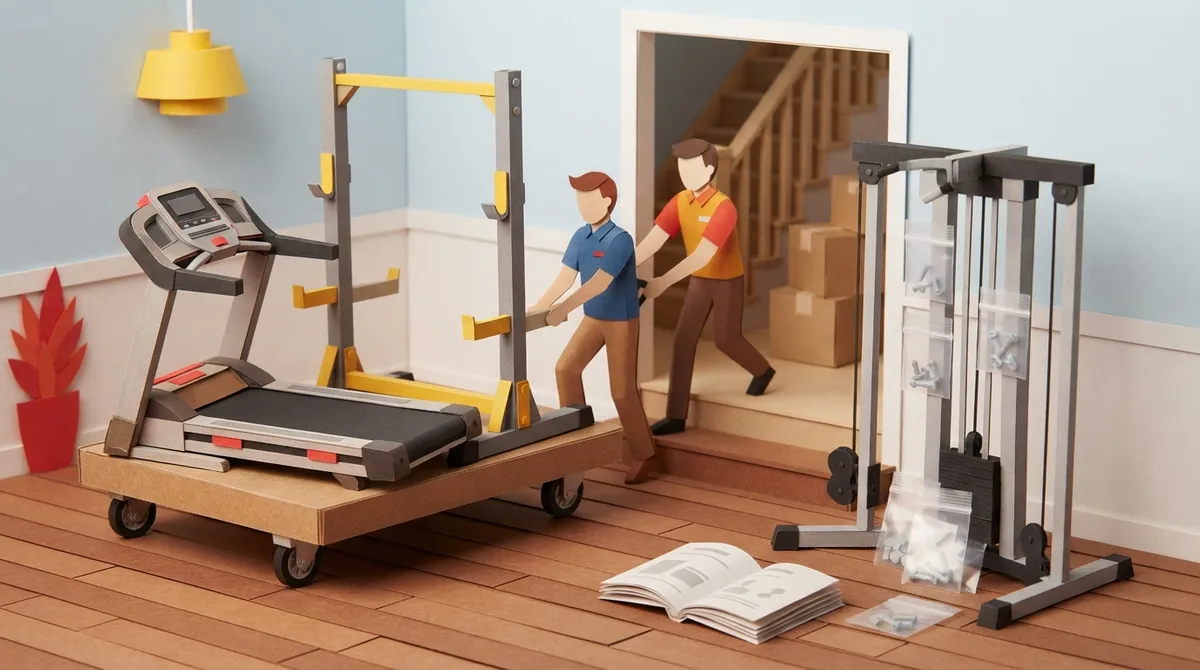
- Before moving day, photograph cable and wire connections, label bolts and small parts in bags taped to each machine, and keep manuals handy since transport steps are model-specific.
- Give movers the brand and model of each machine, approximate weights, photos, and details about stairs, tight turns, and elevators so they can send the right crew size and tools.
- Ask whether the quote covers disassembly, reassembly, a functional check after setup, and floor protection, and get all coverage and valuation details in writing before booking.
- Cable machines and multi-stations are the trickiest to move, so ask movers about their experience with these systems and never attempt to move heavy machines alone.
- Electrical or utility disconnects for certain equipment may require a qualified technician rather than a moving crew, so check with both your mover and the manufacturer beforehand.
You spent months building your home gym. Maybe it started with a simple bench and a few dumbbells. Now it might have a treadmill, a squat rack, and a cable machine that weighs more than your couch. Then a move comes along, and suddenly all that iron feels like a very big problem.
Don't worry. You are not alone, and this is a very fixable problem. Home gym equipment movers are moving pros who handle heavy, bulky, and sometimes delicate fitness machines as part of a household move. In 2026, more families are asking for this help than ever, because nobody wants a hurt back or a cracked basement floor on moving day.
In this friendly guide, we'll walk through what these movers do, how to prepare your equipment, what to ask before you book, and how to avoid common mistakes. Whether you're moving across Lakeland or heading out of state, you'll finish this article feeling ready and confident.
What Do Home Gym Equipment Movers Actually Do?
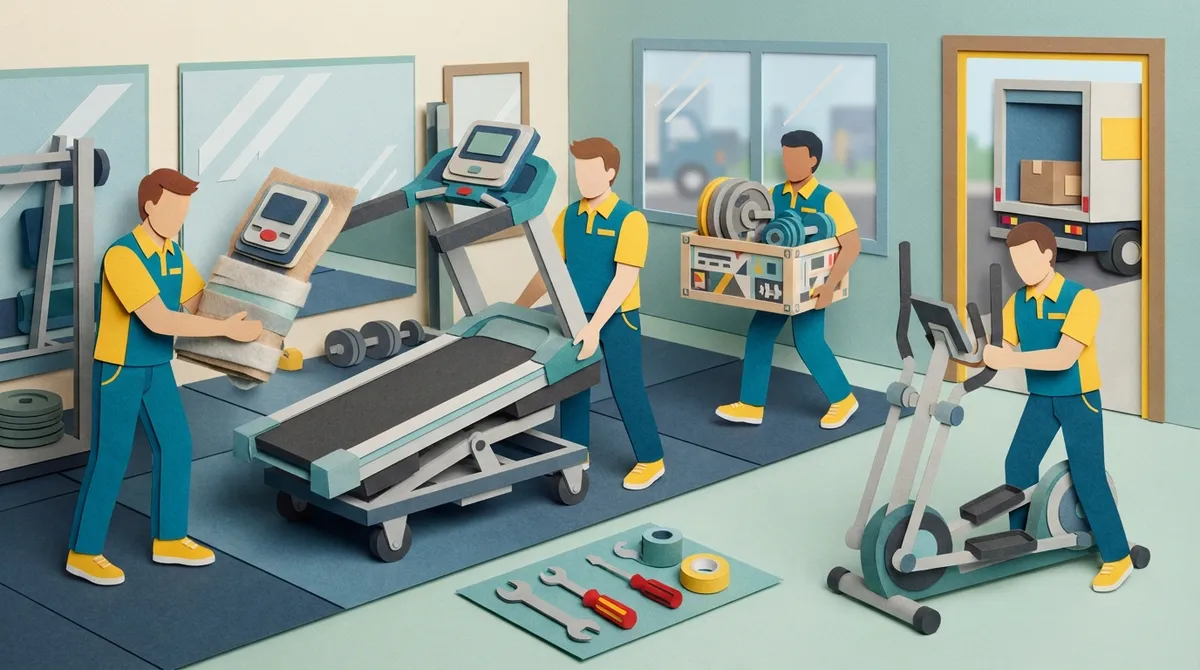
Home gym equipment movers help relocate treadmills, ellipticals, exercise bikes, rowing machines, weight benches, squat racks, cable machines, and free weights. Think of them as regular movers with extra know-how for heavy and awkward fitness gear.
Their work usually includes a few key steps:
- Assessing the equipment, the access routes, and the crew size needed
- Disassembling machines when the manufacturer's instructions allow it
- Wrapping and protecting frames, screens, and moving parts
- Carrying and loading heavy items safely with the right tools
- Unloading, reassembling, and checking that everything works
Here's the important part: service scope varies from company to company. Some crews only carry items from point A to point B. Others handle full disassembly and reassembly. Always ask what is included before you book.
Why Fitness Equipment Is So Tricky to Move
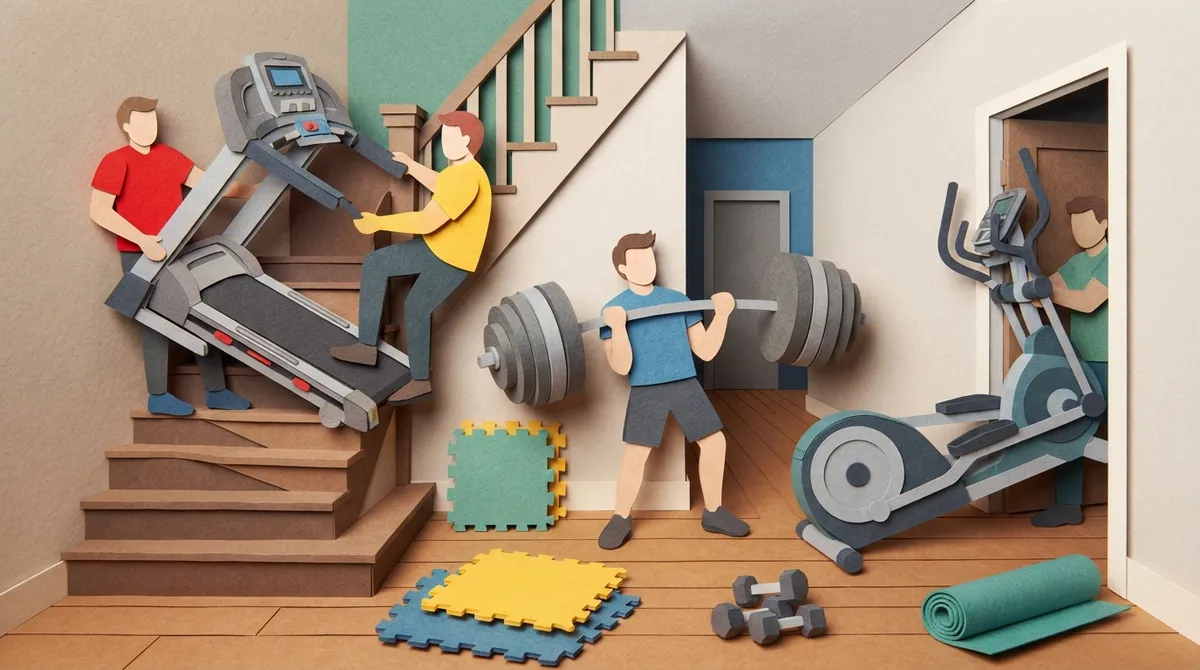
Gym gear is a unique mix of heavy, awkward, and sensitive. A treadmill, for example, has a motor, a console, and a folding deck that can be damaged if it's tilted the wrong way. A cable machine has pulleys and cables that need to be handled with care.
Standard household moving crews may not be trained for complex cable systems or specialized equipment. That is why it helps to work with a team that understands heavy lifting and has the right gear for the job.
Common challenges include:
- Weight: Plates, racks, and machines can be extremely heavy.
- Awkward shapes: Long bars and wide frames don't fit through doors easily.
- Delicate parts: Consoles, screens, and electronics can crack or short out.
- Tight access: Stairs, narrow hallways, and sharp turns add risk.
- Floor damage: Heavy items can scratch hardwood or crack tile.
Who Needs Home Gym Equipment Movers?
Almost anyone with a home gym can benefit, but a few groups really feel the difference.
Local Homeowners and Large Families
If you are moving across Polk County, you may think you can just borrow a truck and call a few friends. Sometimes that works for a few dumbbells. It rarely works for a loaded power rack. Large families with several machines often save time and stress by hiring pros.
Retirees and Luxury Apartment Residents
If you're downsizing or moving into a high-end apartment, protecting floors, walls, and elevators matters. Retirees also want to avoid heavy lifting altogether. Careful crews bring blankets, straps, and floor protection so your new place stays beautiful. If you're helping an older loved one, our guide to moving help in Lakeland for elderly residents is a great next read.
Long-Distance Movers
Moving out of the area? Fitness gear adds weight and bulk to your shipment. Planning ahead helps you decide what to move, sell, or donate. Our article on what to know before an interstate move from Lakeland can help you think it through.
Specialty Item Owners
If your gym sits next to a piano, a pool table, or a hot tub, you already know specialty items need special care. Many of these projects follow the same safety rules. You can see how that works in our guide to exercise equipment movers in Polk County.
How to Prepare Your Home Gym for Moving Day
A little prep goes a long way. The better you prepare, the faster and safer your move will be. Here is a simple step-by-step plan.
- Take inventory. List every machine, rack, bench, and set of weights.
- Find your manuals. Transport instructions are model-specific, so check the manufacturer's manual before anyone folds, tilts, lays flat, or disassembles a machine.
- Take photos. Snap pictures of cables, wires, and connections before you take anything apart. They'll make reassembly much easier.
- Label your hardware. Put bolts and small parts in labeled bags and tape them to the matching machine.
- Secure moving parts and cords. Tie down power cords and lock any moving parts if the manual allows it.
- Remove loose accessories. Take off water bottle holders, mats, and attachments, and keep safety keys handy.
- Clear a path. Move furniture and rugs out of the way so the crew has a safe route.
Never try to move a heavy or awkward machine alone. Stairs and complex disassembly increase the need for experienced help.
What to Tell Your Movers Before You Get a Quote
The more detail you give, the more accurate your estimate will be. This also helps the company decide how many people to send and what tools to bring.
Be ready to share:
- The brand and model of each machine
- Approximate size and weight, if you know them
- Photos of the equipment and the path out of your home
- Details about stairs, tight turns, elevators, or long carries
- The type of flooring that needs protection
If you're wondering how pricing works, our article on how moving company quotes really work in 2026 breaks it down in plain language. You can also learn the difference between hourly and flat-rate pricing before you decide.
Questions to Ask Before You Book
Not every mover offers the same level of service for fitness gear. Asking the right questions upfront protects your equipment and your wallet.
| Question to Ask | Why It Matters |
|---|---|
| Do you disassemble and reassemble equipment? | Some crews only carry items and do not handle assembly. |
| Do you test the equipment after setup? | A functional check confirms nothing was damaged in transit. |
| How do you price specialty services? | Extra fees for stairs, long carries, or assembly can add up. |
| What protection covers my equipment? | Valuation and coverage vary, so get details in writing. |
| Who handles electrical or utility disconnects? | These may need a qualified technician, not a moving crew. |
Get what the mover will and will not do in writing. That simple step prevents most misunderstandings. For more on coverage, read about whether movers are responsible for damage, and learn how to verify licensed and insured movers before booking.
Moving Specific Types of Equipment
Different machines need different care. Here is a quick look at the most common ones. Always follow the manufacturer's manual for your exact model.
Treadmills
Treadmills are heavy and often have folding decks. Check your manual for safe folding and locking steps. Keep the console protected, secure the power cord, and use enough people to carry it. Stairs make treadmill moves harder, so tell your movers about them ahead of time.
Ellipticals and Exercise Bikes
These machines have long frames and pedals that stick out. Movers often wrap them in blankets and strap them to dollies. Removing pedals or seats, when the manual allows, helps them fit through doorways.
Squat Racks and Benches
Racks are mostly steel, so the weight comes from the frame itself. Disassembling them into smaller pieces makes carrying much safer. Bag and label all bolts so reassembly is quick.
Cable Machines and Multi-Stations
These are the trickiest. Cables, pulleys, and weight stacks need careful handling. Take photos before disassembly and ask your mover whether they have experience with these systems.
Free Weights and Plates
Dumbbells and plates are small but very heavy. Pack them in sturdy boxes or bins, and do not overload any single box. Splitting the weight across several smaller containers prevents back strain and broken handles.
Quick Comparison: DIY vs. Professional Movers
It's tempting to save money by doing it yourself. Here's an honest look at both sides.
| Factor | DIY Move | Professional Movers |
|---|---|---|
| Physical risk | High, especially with stairs | Lower, with trained crews |
| Equipment needed | You must rent or buy dollies and straps | Crew brings blankets, straps, and dollies |
| Floor protection | Often overlooked | Commonly included with careful crews |
| Time | Can take most of a weekend | Usually much faster |
| Damage coverage | Usually none | Valuation options available |
If you want a deeper comparison, see how full-service movers compare to DIY in the Lakeland area.
Tips for a Smooth Gym Move
Here are a few friendly tips that make a real difference:
- Book early. Specialty help can fill up fast, especially at the end of the month.
- Measure doorways. Know your tightest spots before moving day.
- Protect your floors. Ask about runners, plywood, or doorway guards.
- Keep manuals together. Place them in one folder you can hand to the crew.
- Plan the new layout. Decide where each machine goes so unloading is quick.
- Check ceiling height. Tall racks and cable towers need clearance in the new space.
What About Electrical or Utility Work?
Some equipment, such as certain commercial-style treadmills, may need a dedicated electrical connection. Electrical, plumbing, or other utility disconnects and reconnects may require a qualified technician rather than a moving crew. If you aren't sure, ask your mover and your equipment's manufacturer for guidance.
Why Choose a Local Moving Team
A local team understands Polk County homes. That includes older houses with narrow hallways, newer homes with tight stairs, and apartments with strict elevator rules. At DynaMight Movers, we are a licensed and insured residential moving company serving Lakeland, Winter Haven, Davenport, Dover, and nearby areas. We handle heavy lifting and specialty items with transparent pricing, so there are no surprises on moving day.
Curious what other families say? You can visit us on Google and read about the DynaMight Movers experience from real customers in the Lakeland area. If you're comparing options, our guide on how to choose residential movers in Polk County is a helpful place to start.
Polk County has a lot to offer new and longtime residents, from lakes to schools to family-friendly neighborhoods. You can read more about Polk County, Florida or explore Polk County Schools if you're moving with kids and planning ahead.
Conclusion: Protect Your Gear and Your Back
Your home gym is an investment in your health, and it deserves to be moved with care. The right home gym equipment movers will assess your gear, protect your floors, handle the heavy lifting, and help you get back to your workouts faster. Remember to share model details, ask what's included, get everything in writing, and follow your manufacturer's instructions.
Ready to move without the strain? Get a free estimate from DynaMight Movers today, or call us at (866) 349-7719 to talk through your move. We'd love to help you get your gym set up in your new home.
FAQs
Q: Do movers move treadmills and other home gym equipment?
A: Yes, many moving companies can move treadmills, ellipticals, bikes, racks, and weights. Just ask whether the quote includes disassembly, protection, transport, and reassembly, since service scope varies from company to company.
Q: Will movers disassemble and reassemble a treadmill or home gym?
A: Some will, and some won't. Always confirm in writing whether your mover handles equipment-specific disassembly, reassembly, and a quick functional check, and follow your manufacturer's manual for the safest steps.
Q: How should I prepare exercise equipment for a move?
A: Clear space around each machine, remove loose accessories, and secure power cords and moving parts. Photograph connections before taking anything apart, label your hardware by machine, and keep manuals and safety keys handy.
Q: What information should I give movers when getting a quote for gym equipment?
A: Share each machine's brand and model, approximate size and weight, and photos of the equipment and its route out of your home. Also mention stairs, elevators, tight turns, long carries, and flooring that needs protection.
Q: Does moving insurance or valuation cover damage to exercise equipment?
A: Coverage depends on the mover and the protection plan you choose. Ask what valuation applies to your equipment and get the details in writing before moving day so you know exactly what is covered.