
Key Takeaways
- Treadmills can weigh up to about 400 pounds, so heavy fitness machines usually need a professional crew, not a rented dolly and a DIY attempt.
- Before booking, share each machine's make, model, weight, dimensions, photos, and every stair, elevator, and doorway measurement so the quote reflects the real job.
- Ask whether disassembly and reassembly are included, since basic reassembly often excludes calibration, electronic setup, and belt adjustments.
- Confirm the mover's valuation and coverage terms in writing, because standard liability is often limited and may not equal full replacement value for expensive equipment.
- Prep before moving day by clearing pathways, unplugging consoles, removing loose accessories, locating manuals, and photographing equipment and cable connections.
- Get a written estimate that spells out exactly what is included, since pricing varies with weight, distance, access challenges, and the number of pieces.
Let's be honest. Your treadmill is not a casual passenger. It's a big, awkward, cord-covered machine that somehow weighs more than your couch and fits through fewer doors. If you've ever tried to wrestle a squat rack down a hallway, you know the feeling. Your back knows it too.
That's where exercise equipment movers come in. These are moving pros who know how to protect, lift, transport, and place fitness machines without hurting people, floors, or the equipment itself. Whether you're moving a home gym across Lakeland or heading out of state, the right crew makes the whole thing feel easy.
In this guide, we'll walk through what exercise equipment movers actually do, what to tell them before you book, how to prep your gear, and what to ask about insurance. Grab your water bottle, and let's get you ready for a strong, stress-free move.
What Do Exercise Equipment Movers Actually Do?
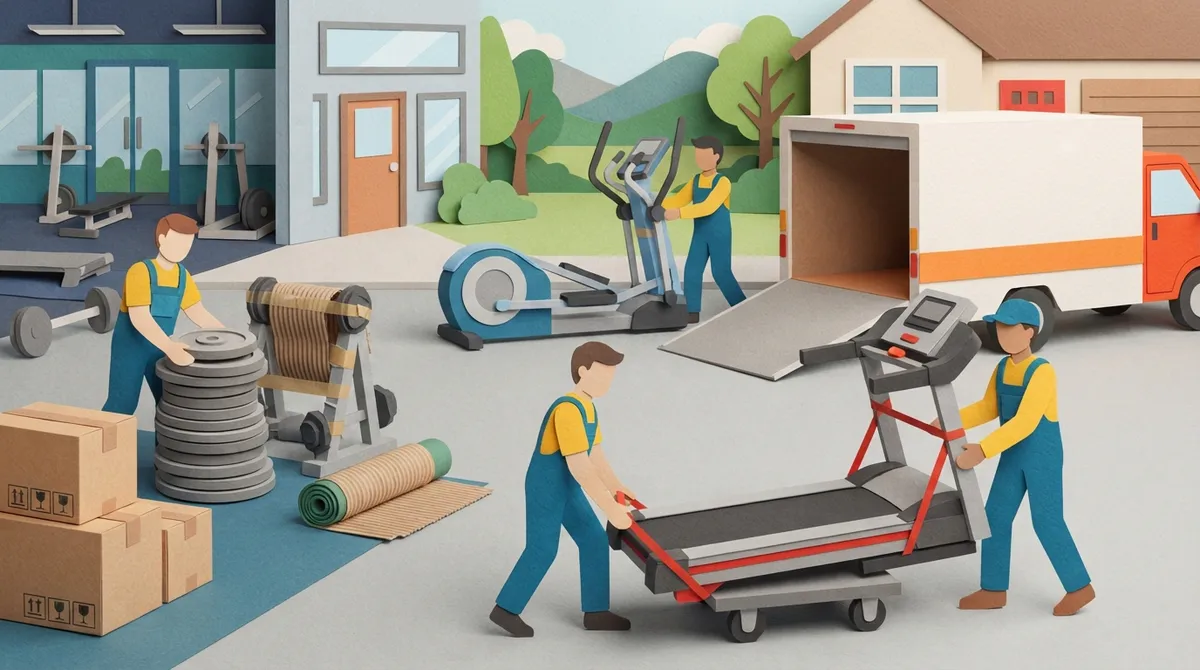
Exercise equipment movers are moving professionals who transport home or commercial fitness gear. A good crew handles the full journey, from the first look at your equipment to setting it down in its new spot.
Here is what the service usually includes:
- Assessment: Checking the size, weight, and access points before moving day.
- Protective wrapping: Covering machines in moving blankets and shielding consoles and screens.
- Careful loading: Using the right lifting methods and equipment to keep everyone safe.
- Secure transport: Strapping gear down so nothing shifts on the road.
- Placement: Setting equipment in the right room at your new home.
Some companies also offer disassembly and reassembly. Not all do, though, so always confirm this when you book. Services, pricing, and coverage differ from one mover to the next, and that's perfectly normal. The key is asking early.
Which Types of Fitness Equipment Can Be Moved?
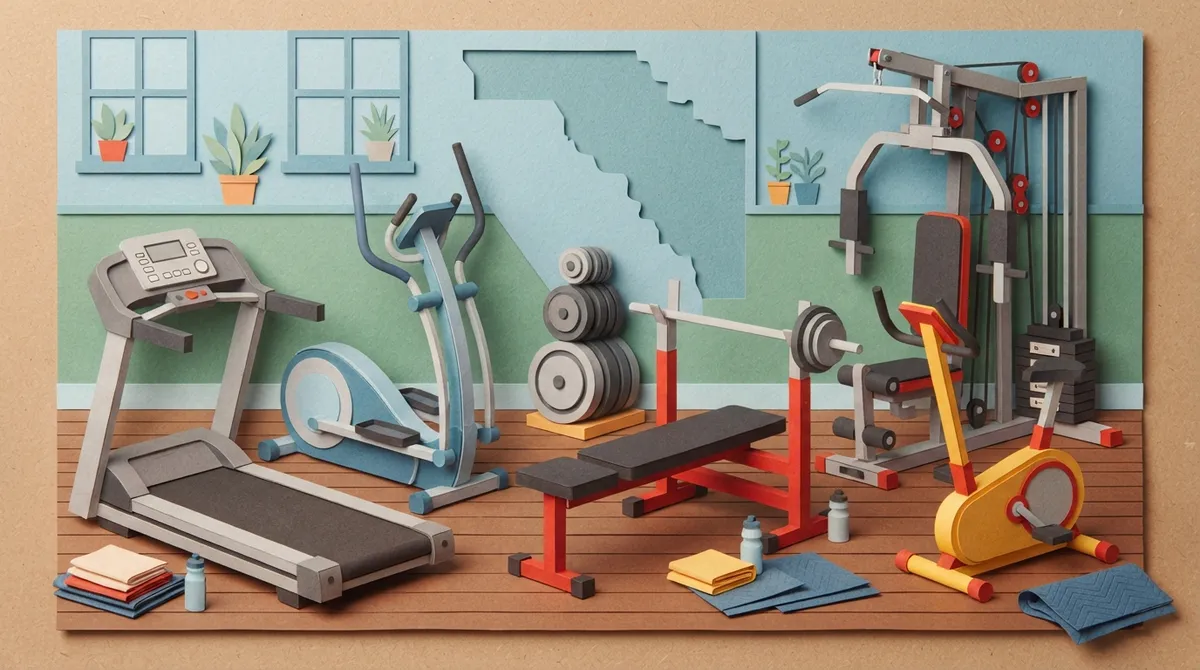
Most professional crews can move the common pieces people keep at home. Here are the usual suspects:
- Treadmills
- Ellipticals
- Stationary and spin bikes
- Rowing machines
- Weight benches and dumbbell sets
- Squat racks and power cages
- Multi-station strength systems
Some machines are much heavier than they look. One moving industry source notes that high-end treadmills can weigh up to about 400 pounds, though the actual number depends on the model. That's not a one-person job, and it's definitely not a job for a rented dolly and a hopeful attitude.
Commercial-grade machines, anchored equipment, or very complex systems may need a specialist crew rather than a standard household team. If you have something extra heavy or built into your space, tell the mover up front so they can plan the right people and tools.
What Information Should You Give Movers for an Accurate Quote?
Great quotes start with great details. The more your mover knows, the fewer surprises you'll see on moving day. That's good for your wallet and your stress level.
Before you ask for a price, gather these details:
- Make and model: This helps the crew look up weight and dimensions.
- Approximate weight and size: Check the manual or the manufacturer's website.
- Pickup and drop-off addresses: Distance affects planning and pricing.
- Stairs or elevators: Mention every flight, landing, and tight turn.
- Doorway and hallway widths: A quick tape-measure check can save big headaches.
- Disassembly or reassembly needs: Say whether you want the crew to handle it.
- Photos: Pictures of the equipment and the access routes go a long way.
Want the clearest number possible? You can get a free estimate and share your equipment list and photos so the team can plan properly. If you'd like to understand how pricing works first, our guide on how movers charge breaks it down in plain language.
How Much Do Exercise Equipment Movers Cost?
This is the question everyone asks, and the honest answer is: it depends. One moving provider lists a $150 charge for gym equipment as a local example, but that's just one company's number, not an industry-wide rate. Your price can shift based on several things.
| Cost Factor | Why It Matters |
|---|---|
| Equipment weight and size | Heavier machines need more crew members and tools. |
| Distance | Local moves cost differently than long-distance trips. |
| Access challenges | Stairs, narrow doors, and tight turns add time and effort. |
| Disassembly and reassembly | Extra labor is often priced separately. |
| Number of pieces | A full home gym takes longer than a single bike. |
| Crew size and time | More hands and more hours raise the total. |
Our article on what factors determine moving company pricing goes deeper if you want the full picture. The big takeaway is simple: ask for a written estimate, and make sure it spells out exactly what's included.
How to Prepare Your Gym Equipment Before Moving Day
A little prep goes a long way. Think of it as warming up before the real workout. Here's a simple routine to follow:
- Clear your pathways. Move rugs, shoes, and decor out of the route from the equipment to the truck.
- Measure tight spots. Check doorways, stairwells, and hallways against the size of each machine.
- Reserve the elevator. If you live in an apartment or condo, book the service elevator ahead of time.
- Unplug electronics. Power down treadmills, ellipticals, and bikes with consoles.
- Remove personal items. Take off water bottle holders, tablets, towels, and loose accessories.
- Find your manuals. They're handy for reassembly and for weight details.
- Take photos. Snap pictures of the equipment and any cable connections before anything comes apart.
Photos are your secret weapon. They show how things looked before the move, which helps with reassembly and gives you a record of the machine's condition. If you also need help getting the rest of the house ready, our packing and moving services in Polk County take a lot off your plate.
Disassembly and Reassembly: What to Expect
Some machines travel better in pieces. Squat racks, multi-station gyms, and certain treadmills often need to come apart before they can fit through doors or onto a truck. A careful crew will keep hardware organized, label parts, and note how everything fits together.
Here's the part many people miss: services vary a lot. Basic reassembly may not include calibration, electronic setup, mechanical tuning, or reconnecting equipment to building utilities. That means a treadmill might be put back together but still need a belt adjustment or console setup from a technician.
So ask these questions before you book:
- Do you disassemble and reassemble this specific machine?
- Is reassembly included in the price or listed separately?
- What happens if a part is damaged or missing?
- Will you handle calibration, or should I call the manufacturer?
Get the answers in writing. It protects both sides and keeps everyone on the same page. For more on this topic, check out our post on whether movers disassemble and reassemble furniture, since many of the same rules apply to fitness gear.
How Do Movers Get a Treadmill Through Stairs and Narrow Doors?
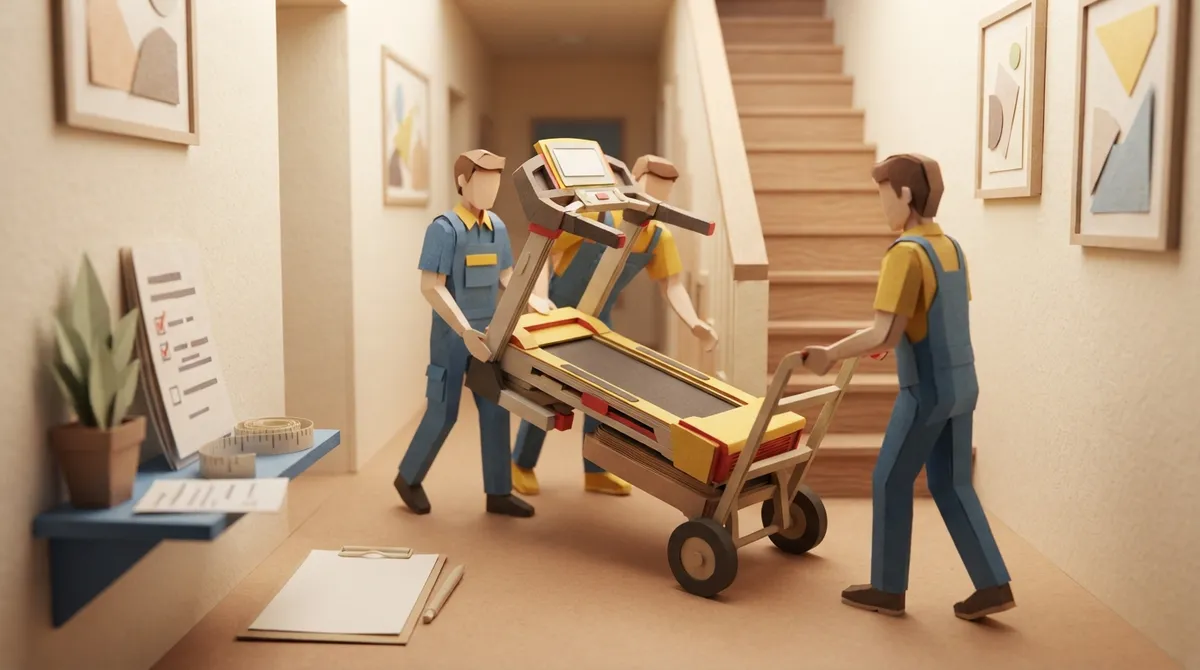
This is where experience really shows. Heavy machines on stairs are risky, and the safest approach depends on the model and the space. A skilled crew may fold or lower the deck, remove removable parts, or take the machine partly apart. They'll use straps, stair-climbing dollies, and proper team lifts to keep control the whole way.
Here are a few things that help the crew do their best work:
- Tell them about every step, tight turn, and low ceiling.
- Share doorway measurements ahead of time.
- Keep pets and kids away from the work zone.
- Let the crew make the call if they feel a step isn't safe.
It's tempting to save money by lugging the machine yourself. But a dropped treadmill can crack floors, dent walls, or hurt someone badly. If you're thinking it over, our comparison of hiring movers vs. a DIY local move can help you decide. For tips on staying safe with heavy items, see our heavy lifting moving tips.
Insurance and Coverage: Ask Before You Book
This part isn't glamorous, but it matters. Standard mover liability is often limited and isn't always the same as full replacement-value insurance. One provider, for example, states a standard valuation of $0.60 per pound per article as its own policy example. That is not a universal number, and your mover's terms may be very different.
Here's what to confirm with any mover:
- Are you properly licensed and insured for this kind of move?
- What valuation or coverage applies to my equipment?
- What are the limits and exclusions?
- Can I add extra protection for high-value machines?
You can learn how to confirm credentials with our guide to spotting licensed and insured movers in Polk County. The Federal Motor Carrier Safety Administration also offers helpful consumer resources on protecting your move, including your rights on interstate moves.
Home Gyms vs. Commercial Equipment
Not every gym move looks the same. A spare-bedroom setup with a bike and some dumbbells is a very different job than a full garage gym or a small studio.
| Move Type | Typical Needs | Things to Confirm |
|---|---|---|
| Apartment or condo | Elevator booking, hallway protection, careful stair handling | Building rules and move-in windows |
| Single-family home | Garage or upstairs access, multiple heavy items | Crew size and equipment on the truck |
| Large estate or home gym | Several machines, racks, and weight systems | Disassembly plan and timeline |
| Commercial equipment | Very heavy or anchored machines | Specialist crew availability and coverage terms |
If your fitness gear is part of a bigger relocation, it helps to hire a team that can handle the whole house. Large families and estate owners often prefer one crew for everything, from sofas to squat racks. Our overview of how to choose specialty item movers is a great next read.
Why Local Experience Matters in Polk County
Florida adds its own twists to a move. Summer heat, afternoon storms, and garage-based home gyms all affect how you plan. Equipment stored in a hot garage may need extra care, and a sudden downpour can complicate loading.
A local team that knows Lakeland, Winter Haven, Davenport, and Dover can plan around these things. At DynaMight Movers, we're a licensed and insured moving company with transparent pricing, and we handle heavy lifting and specialty items with care. We know a treadmill isn't just a machine. It's part of your routine, and we treat it that way. You can even read what neighbors say when you visit us on Google — DynaMight Movers.
If you're comparing options, you may also like our guide on how to choose Polk County movers you can actually trust. And for a broader look at heavy gear like safes and hot tubs, see our hot tub moving guide.
Quick Checklist: Hiring Exercise Equipment Movers
Before you commit, run through this short list:
- Confirm the mover handles fitness equipment.
- Share make, model, weight, and photos.
- Describe stairs, elevators, and doorway sizes.
- Ask about disassembly, reassembly, and calibration.
- Verify licensing and insurance.
- Understand the valuation coverage and its limits.
- Get your estimate and scope in writing.
Follow these steps, and you'll avoid most of the common bumps. A little planning now means a smooth move later.
Ready to Move Your Gym?
Your fitness equipment deserves a careful, confident move, and you deserve a crew that treats your back, your floors, and your machines with respect. DynaMight Movers brings the strength, skill, and clear pricing to make it happen across Polk County and beyond.
Ready to get started? Get a free estimate today, or call us at (866) 349-7719 to talk through your move. We'd love to help you get your home gym set up and ready to go.
FAQs
Q: Do moving companies move treadmills and other exercise equipment?
A: Many do, but not all, so it's smart to ask first. Professional movers can handle treadmills, ellipticals, bikes, and weight systems with the right tools and crew size. Be sure to share the make, model, and access details so they can plan well.
Q: Can movers disassemble and reassemble a treadmill or home gym?
A: Some movers offer disassembly and reassembly, while others only transport the equipment. Even when reassembly is included, it may not cover calibration or electronic setup. Confirm the exact scope in writing when you book.
Q: How should I prepare gym equipment before moving day?
A: Clear your pathways, measure doorways, unplug electronics, and remove loose accessories. Locate your manuals and take photos of the equipment and its connections. These small steps help the crew work faster and make reassembly easier.
Q: Does moving insurance cover exercise equipment if it gets damaged?
A: It depends on the mover's valuation terms, and standard coverage is often limited. Basic liability may not equal full replacement value, so ask about limits, exclusions, and extra protection options. Always get the details directly from your mover.
Q: What information do movers need for an accurate gym equipment quote?
A: Share the make and model, approximate weight and size, and both addresses. Mention stairs, elevators, doorway widths, and whether you need disassembly or reassembly. Photos of the equipment and access routes help a lot too.