

Key Takeaways
- Hire only movers with a verified FDACS registration number, and make sure it appears on your written estimate and contract before booking.
- Do not rely on general movers or a DIY dolly move; pianos need boards, straps, padding, and ramps, and crews should confirm piano-specific experience.
- Florida's $10,000 statutory minimum liability may not match your piano's replacement value, so ask how it is covered and get valuation and deductible terms in writing.
- Require an itemized written estimate listing piano type, addresses, stairs and tight doorways, and any crating or storage charges instead of accepting a vague phone quote.
- Tell movers about stairs, narrow doorways, steep driveways, and elevator rules, and send photos so they can plan crew size and equipment in advance.
- After the move, inspect the piano for damage, keep it away from vents and sunny windows, and schedule a tuning with a qualified technician once it has settled.
Your piano is more than furniture. Maybe it belonged to your grandmother, or maybe your kids learned scales on it every Tuesday afternoon. Whatever the story, it deserves better than a rushed move and a shaky dolly. If you are searching for piano movers lakeland fl, you are already thinking in the right direction. The next step is knowing which mistakes can turn a simple move into an expensive headache.
Pianos weigh hundreds of pounds, and they are sensitive to bumps and shifts. One bad turn on a staircase can crack a leg, scratch a finish, or knock the inside of the instrument out of alignment. We have all heard the horror stories, and most of them start with a good idea gone wrong.
This friendly guide walks you through eight common mistakes people make when hiring piano movers in Lakeland, FL. You will also find real price ranges, a Florida rules refresher, and a checklist you can use before you sign anything. Let's keep your piano safe and your wallet happy.
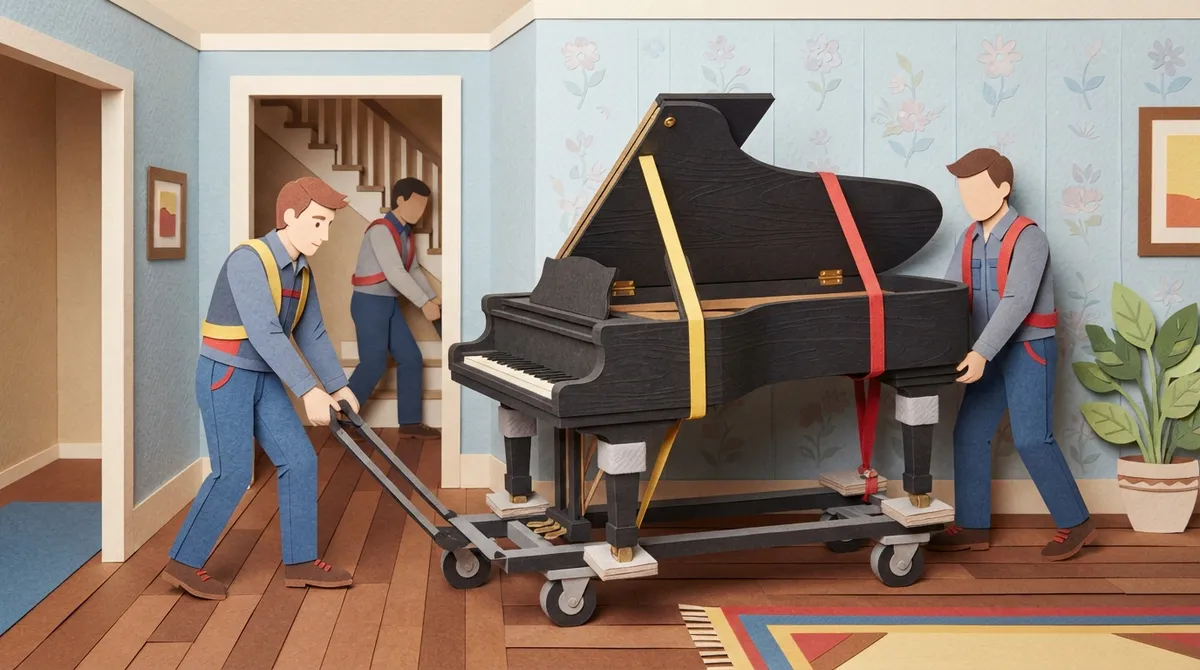
Why Piano Moving Is Its Own Special Skill
Piano moving is a specialized service. The instrument is heavy, awkward to carry, and easy to damage. Even a small shift can hurt the finish or the delicate parts inside.
Movers may handle several types of pianos, including:
- Upright pianos: tall and narrow, but surprisingly heavy and top-heavy
- Baby grand and grand pianos: need leg removal and a padded board for transport
- Digital pianos: lighter, but the electronics still need careful handling
Not every crew handles every type. Always confirm that your mover has experience with your exact instrument and your exact route. If you want a deeper look at how pros protect your instrument, check out How Do Piano Moving Services Protect Your Instrument?

Mistake 1: Treating Piano Moving Like a Regular Furniture Job
Many people call a general mover and say, "I have a couch, a bed, and a piano." That can work, but only if the crew has the right gear and training. A piano is not a dresser.
Pro crews use piano boards, heavy-duty straps, padded blankets, and ramps. They know how to tilt, lift, and turn the instrument without stressing the frame. Without those tools, even strong helpers can cause damage.
When you call around for piano movers lakeland fl, ask this simple question: "How many pianos does your crew move each month?" A confident answer is a good sign. A long pause is a hint to keep looking.
Mistake 2: Trying the DIY Route to Save Money
We understand the urge. A few friends, some pizza, and a rented dolly sounds like a bargain. But pianos are famous for hurting backs, floors, and doorframes.
Here is what can go wrong with a DIY piano move:
- The piano tips on a ramp or stair and falls.
- Helpers strain their backs or hurt their hands.
- The piano scrapes walls, doorframes, or hardwood floors.
- The finish gets scratched, or a leg snaps off.
A damaged piano can cost far more to repair than a professional move would have cost. If you are on the fence, read Piano Movers vs. DIY: Which Wins in Lakeland? before you rent that dolly.
Mistake 3: Skipping the Written Estimate
Florida law requires a written estimate and contract before moving or accessorial services begin. That is great news for you, because it protects both sides. A phone quote like "around a thousand bucks" is not enough.
A good written estimate for a piano move should list:
- The type and size of the piano
- Pickup and delivery addresses
- Stairs, tight doorways, or other access challenges
- Any packing, crating, or storage charges
- The mover's FDACS registration number
Ask for an itemized estimate, not a generic number. If you are curious how quotes actually come together, How Do Moving Company Quotes Really Work in 2026? breaks it down nicely.
Mistake 4: Forgetting to Verify Florida Registration
Here is a mistake that is easy to avoid. Florida requires movers handling intrastate household-goods moves to register with the Florida Department of Agriculture and Consumer Services (FDACS). Registration is biennial, and the statutory fee is $300 per year, or $600 for a two-year registration.
Before booking, ask for the company's registration number and make sure it appears on your written estimate and contract. You can also check it directly with FDACS. A real, professional mover will be happy to share it.
Want a simple walkthrough? Our guide on 4 Florida Moving Company Licensing Rules to Know in 2026 covers it in plain English.
Mistake 5: Assuming Insurance Covers Everything
This one surprises a lot of people. Florida's statutory minimum mover liability coverage for household goods is $10,000 per shipment, subject to statutory provisions and exceptions. That sounds like plenty, but it is not the same as full replacement-value protection for your specific piano.
A fine grand piano can be worth far more than the minimum. A treasured family upright might be priceless to you, even if it is modest on paper. So ask direct questions before moving day:
- How is my piano covered during loading, transport, and unloading?
- Are there exclusions or deductibles that apply to pianos?
- What valuation options can I add for extra protection?
- Can you put all coverage terms in writing?
If damage ever happens, knowing the process helps. Learn more in 8 Facts: Are Movers Responsible For Damage in 2026? and Insured Local Moving Companies: How to Choose Safely.
Mistake 6: Ignoring Stairs, Doorways, and Tight Turns
Your piano does not live in a vacuum. It lives in a home with hallways, steps, and corners. A mover who never asks about access is a mover who might get surprised on moving day.
Tell your crew about:
- Stairs at pickup or delivery, and how many
- Narrow doorways or tight hallway turns
- Steep driveways or long walks to the truck
- Elevators, gated communities, or apartment rules
- The exact spot where the piano will sit in the new home
Photos help a lot. Send pictures of the piano, the stairs, and the path it will take. Good piano movers lakeland fl can plan the right crew size and equipment in advance, which prevents delays and extra charges.
Mistake 7: Not Budgeting Realistically
Price shocks happen when people guess instead of asking. Piano-move pricing depends on the type and size of the instrument, stairs or other obstacles, distance, crew and equipment needs, and extras like disassembly, crating, or storage.
One Lakeland mover directory reports these estimated ranges:
| Piano Type | Estimated Range (Directory) |
|---|---|
| Upright piano | $736 to $1,380 |
| Baby grand piano | $1,104 to $2,300 |
| Grand piano | $1,656 to $3,220 |
Please treat those numbers as directory estimates, not official rates. Your actual quote can be higher or lower depending on the details above. The same directory notes that piano moving is an offered add-on for about 43% of listed Lakeland movers, so options exist, but availability can change.
To plan your overall budget, you may also like How Much Do Piano Movers Cost in 2026? A Price Guide.
Mistake 8: Skipping the Post-Move Care
The move is done, the piano is in place, and everyone is tired. It is tempting to call it a day. But pianos are sensitive to changes in humidity, temperature, and vibration, and a move can nudge the tuning.
Here is a simple after-move routine:
- Check the piano for scratches, loose parts, or wobbly legs right away.
- Note any problems in writing and take photos before the crew leaves.
- Place the piano away from vents, sunny windows, and exterior doors.
- Give the instrument a little time to settle.
- Schedule a tuning with a qualified piano technician.
Florida's humidity can be tough on pianos, so a quiet corner with steady conditions is your friend. A quick tuning appointment can bring the sound back to where you love it.
A Quick Checklist for Hiring Piano Movers in Lakeland
Directories and online listings can point you to Lakeland-area companies that advertise piano moving. That is a great place to start, but listings are leads, not endorsements. Always confirm current availability, registration, insurance, and piano-specific experience directly.
Keep this short list handy while you compare companies:
- Confirm FDACS registration and get the number in writing
- Ask about experience with your exact piano type
- Request an itemized written estimate
- Ask how the crew pads, straps, and secures the piano
- Get insurance and valuation terms in writing
- Read recent customer reviews carefully
For help reading reviews the smart way, see Moving Company Reviews Polk County: How to Read Them Right. And if you want more on choosing a trustworthy team, try How Do You Find Trustworthy Piano Movers Lakeland Florida?
Who Needs Extra Piano Care?
Some move situations call for a little extra planning, and that is completely normal.
- Retirees and downsizers: A piano may be moving from a large home into a smaller space. Measure the new room first so the instrument fits comfortably.
- Luxury apartment residents: Elevators, loading docks, and building rules matter. Check reservation windows and insurance requirements with your property manager.
- Family estate owners: A piano often moves alongside antiques and other specialty pieces. Plan the order of loading so the heaviest items go first.
- Long-distance movers: Ask about climate concerns, travel time, and how the piano will be secured for the road.
If your move involves a bigger trip, What Should You Know Before an Interstate Move From Lakeland? is a helpful read.
How DynaMight Movers Fits In
DynaMight Movers is a licensed and insured moving company serving Polk County, including Lakeland, Winter Haven, Davenport, and Dover. The team handles local and long-distance residential moves, specialty items, and heavy lifting with transparent pricing and a focus on careful service. You can learn more about our specialty item moves if you have a piano or other awkward belongings on your list.
Curious what neighbors are saying? You can also visit us on Google — DynaMight Movers to read feedback from Polk County customers. For anyone new to the area, you can read about Polk County, Florida to see what makes this community such a popular place to call home.
Final Thoughts: Protect the Music
Hiring piano movers in Lakeland, FL does not have to be stressful. Avoid the eight mistakes above, ask good questions, and get everything in writing. Verify FDACS registration, understand your insurance options, and tell your crew about every staircase and tight corner.
Do those things, and your piano arrives in one piece, ready to fill your new home with music. You have taken care of this instrument for years, and now you are giving it the care it deserves.
Ready to move your piano with confidence? Get a free estimate from DynaMight Movers, or call us at (866) 349-7719 to talk through your move. We are happy to help.
FAQs
Q: How much does it cost to move a piano in Lakeland, FL?
A: One Lakeland mover directory estimates about $736 to $1,380 for an upright, $1,104 to $2,300 for a baby grand, and $1,656 to $3,220 for a grand piano. These are directory estimates, not official rates, so ask for a written, itemized quote that reflects your stairs, distance, and any extras.
Q: Are movers in Florida required to be registered with FDACS?
A: Yes, Florida movers handling intrastate household-goods moves must register with the Florida Department of Agriculture and Consumer Services. Ask for the registration number and make sure it appears on your written estimate and contract.
Q: Does moving insurance cover piano damage?
A: Florida's statutory minimum mover liability coverage is $10,000 per shipment, subject to statutory provisions and exceptions, but that may not equal full replacement value for your piano. Ask exactly how your instrument is covered, what exclusions or deductibles apply, and get those terms in writing.
Q: Should I tune my piano after moving it?
A: It is a smart idea. Moves, climate changes, and vibration can shift a piano's tuning, so give the instrument a little time to settle and then schedule a visit with a qualified piano technician.
Q: Can movers handle upright, baby grand, and grand pianos?
A: Many piano movers can, but not every crew handles every type. Confirm that your mover has experience with your specific piano and your exact route, including stairs and tight doorways, before you book.