
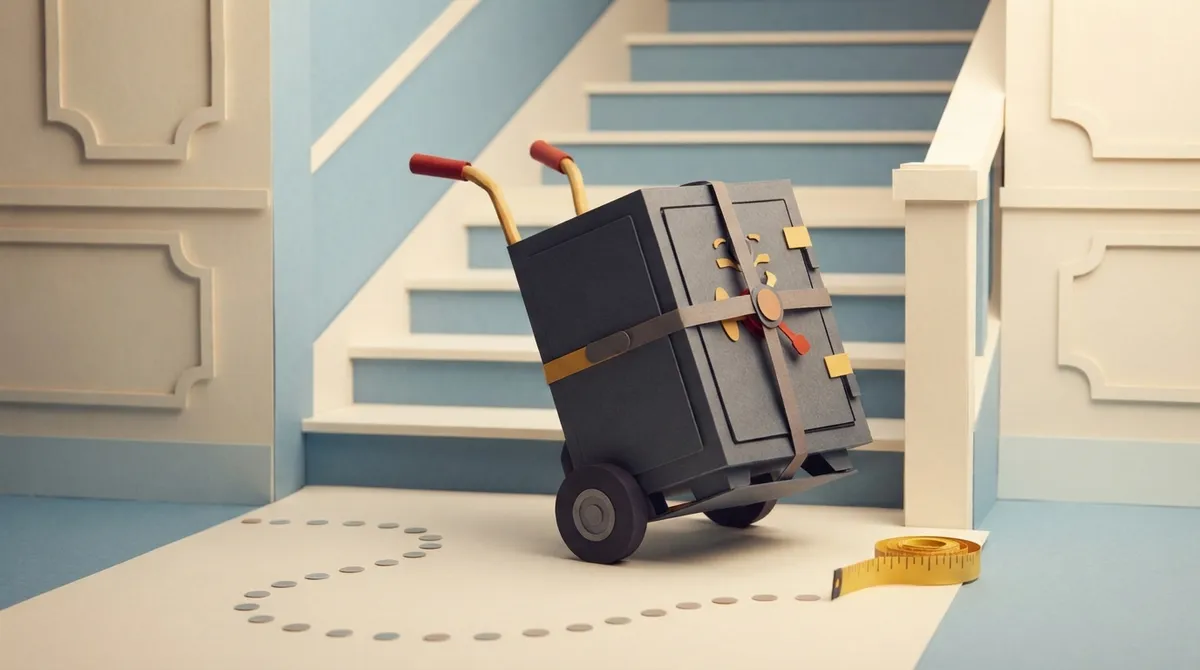
Key Takeaways
- Find your safe's make and model (label inside the door, back, or bottom edge) and estimate its weight honestly, since guessing low causes problems on moving day.
- Map the full route from the safe's current spot to its final location, noting stairs, thresholds, tight turns, and soft ground, and share it with movers before getting a quote.
- Verify the mover's credentials and insurance, ask whether they have moved safes of similar weight, and confirm in writing who is responsible for damage to floors and walls.
- Ask about equipment and stair handling: rated safe-moving dollies and powered stair-climbing gear should never be overloaded, and stairs are often the biggest risk in a safe move.
Let's be honest: a safe is not a couch. It does not tip nicely, it does not slide on carpet, and it does not forgive a bad plan. If you have ever tried to nudge one across a room, you know how stubborn they can be. That's exactly why heavy safe movers exist.
Maybe you're moving from a big Lakeland house to a smaller place. Maybe you're settling into a new apartment or a retirement community. Or maybe you just want your safe moved to a new spot in your home. Whatever your reason, the right plan makes everything safer for you, your floors, and the safe itself.
Here at DynaMight Movers, we have seen how much a little prep can save. So we put together 15 friendly, practical tips to help you hire well, prepare smart, and avoid the common mistakes. Grab a coffee, and let's get into it.
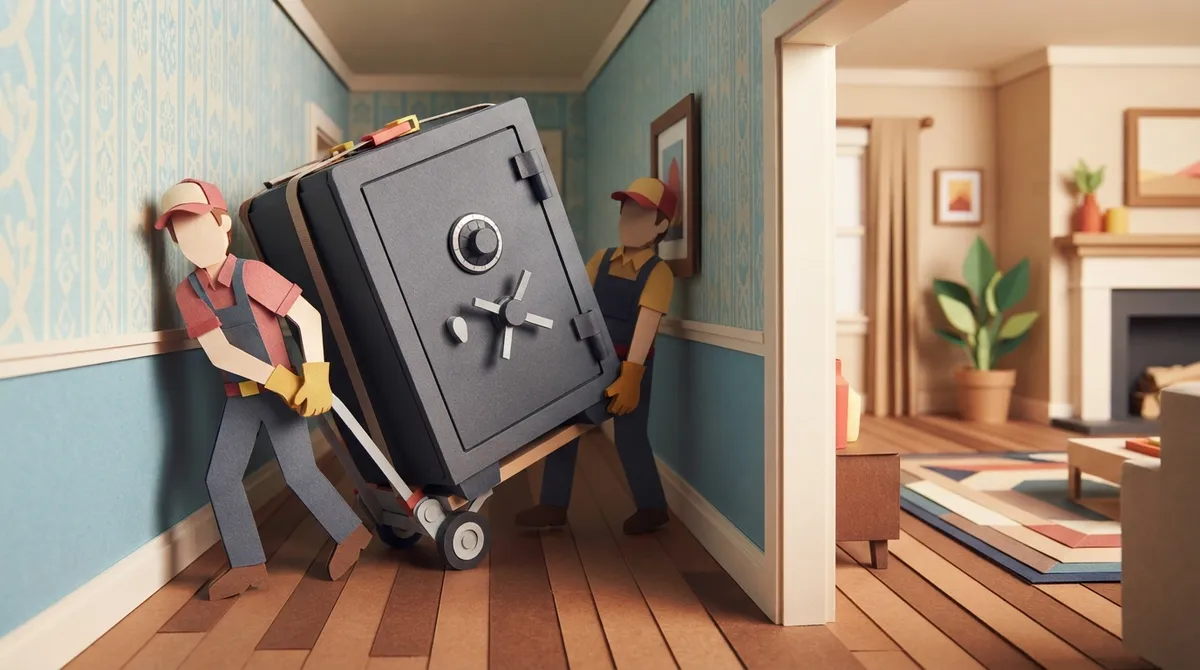
Why Heavy Safe Movers Are Not Optional
Heavy safe movers are specialists. They plan and carry out the move of large, high-mass safes in homes and businesses. Narrow doorways, stairs, tight turns, and uneven ground are all part of the job.
Safe weight varies a lot by model and build. Because of that, there is no single "safe" way to lift one by hand. OSHA's material-handling guidance backs this up. It supports using mechanical aids for heavy or bulky loads, and it says to never exceed equipment capacity. It also says to get help when a load is too heavy or bulky to handle safely.
One note from OSHA's materials-handling guidance: loads over about 50 pounds raise injury risk in that specific context. It is not a legal limit for safes, but it shows how quickly weight becomes a problem. Most safes are far beyond that number.

Part 1: Know Your Safe Before You Call
1. Find the Make and Model
Look for a label inside the door, on the back, or on the bottom edge. The make and model help movers look up the real weight. This is the fastest way to get an accurate quote.
2. Estimate the Weight Honestly
If you cannot find a label, check the owner's manual or the maker's website. Guessing low can cause problems on moving day. Guessing high is much safer. When in doubt, tell the mover you are unsure.
3. Measure the Dimensions
Measure height, width, and depth. Then measure every doorway, hallway, and turn along the path. A safe that fits the room may still not fit the route.
4. Be Upfront About What's Inside
Contents add weight and can shift during the move. Movers may ask you to empty the safe or tell them what is inside. Follow their instructions rather than assuming a loaded safe can go as-is. Handle firearms, cash, and documents on your own, in line with local rules.
Part 2: Prepare Your Home or Business
5. Map the Route From Start to Finish
Walk the path from the safe's current spot to its new home. Note stairs, steps, thresholds, tight corners, and soft ground. Share all of it with your mover before the quote.
6. Clear the Path
Remove rugs, furniture, décor, and anything that could trip a crew. OSHA's guidance stresses keeping routes clear. A tidy path is a safer path for everyone.
7. Think About Your Floors
Tile, hardwood, and even concrete can crack or scratch under concentrated weight. Pros use protective materials to help guard floors and walls. Ask what they plan to use.
8. Plan the Final Spot
Decide exactly where the safe will sit. Check that the floor can handle the load, especially on an upper level. If you plan to bolt it down, ask a pro about anchoring.
Part 3: How the Pros Actually Do It
You do not need to be an expert, but knowing the basics helps you spot a good crew. Here is how a careful safe move often goes.
- Pre-move assessment. The crew reviews the safe and the route to spot risks to the building and the safe.
- Equipment selection. They choose gear based on the load size, weight, and path.
- Protection. Floors, door frames, and walls get covered.
- Secure and lift. The safe is strapped, tilted, and loaded with rated equipment.
- Controlled transport. The crew moves slowly, with spotters at turns and steps.
- Placement. The safe is set in the final spot and checked for stability.
9. Ask About the Equipment
Pro crews may use rated safe-moving dollies, powered stair-climbing equipment, lifting aids, ramps, and protective materials. The right method depends on the safe and the route. Whatever they use, the gear must never be overloaded.
10. Ask How They Handle Stairs
Stairs are the biggest risk in many safe moves. Ask whether they use powered stair-climbing equipment and how many people will be on site. A crew that has a clear answer is a good sign.
Part 4: Choosing the Right Mover
11. Verify Credentials and Insurance
Check the company's state or local credentials and insurance. Requirements vary by location and by whether the move crosses state lines. For a full walkthrough, see our guide on how to verify licensed and insured movers before booking.
12. Look for Real Safe Experience
Ask if they have moved safes of similar size and weight. General moving experience is great, but safes are a specialty. If you want a deeper checklist, our post on things to know before hiring a gun safe moving company covers the key questions.
13. Get a Written Estimate
A written estimate protects you. It should spell out what is included and what is not. Not sure how quotes work? Read how moving company quotes really work in 2026.
What to Compare Before You Book
Use this simple table to compare quotes side by side. It helps you see what you are really paying for.
| Question to Ask | Why It Matters | Good Sign |
|---|---|---|
| Is the quote written? | Prevents surprise charges | Clear line items |
| Are stairs and long carries included? | These often change the price | Stated up front |
| Is disconnection or reinstallation included? | Some safes are anchored | Offered or clearly excluded |
| Who is responsible for damage? | Protects floors, walls, and the safe | Clear written terms |
| Do you do a pre-move assessment? | Spots risks before moving day | Yes, in person or by photos |
14. Understand What Drives the Price
Safe moving cost depends on weight, size, stairs, distance, access, and crew size. There is no honest flat price without those details. For general budgeting, our simple 2026 price guide is a helpful starting point.
15. Confirm Insurance and Damage Coverage
Ask what the mover's coverage includes for the safe, floors, and walls. Coverage can vary, so get the details in writing. Our post 8 facts on whether movers are responsible for damage breaks this down in plain language.
Who Benefits Most From Professional Safe Movers
Heavy safes show up in all kinds of moves. Here are a few situations where a pro makes the biggest difference:
- Large family estates: Big homes often have safes tucked in basements, closets, or upper floors with tricky access.
- Luxury homes and apartments: Finished floors, elevators, and building rules call for extra care.
- Retirees downsizing: Heavy lifting is a real strain. Letting a crew handle it protects your back and your peace of mind.
- Long-distance movers: A safe is often the heaviest single item on the truck. Planning ahead keeps the whole move on track.
- Specialty item owners: If you also have a piano or other awkward piece, ask about bundling. Our guide on how to move a safe or vault safely in Lakeland shows what a careful local process looks like.
Common Mistakes to Skip
- Trying to "just slide it" across the floor
- Renting a basic dolly that is not rated for the weight
- Leaving the safe loaded without telling the crew
- Skipping the route check for stairs and tight turns
- Choosing the lowest price without checking insurance
Safes can shift fast once they tip. That is how people get hurt and floors get wrecked. If you are weighing a do-it-yourself plan, finding heavy lifting help you can trust is almost always the smarter call.
Moving a Safe in Polk County
Polk County has a mix of older homes, newer builds, and growing neighborhoods from Lakeland to Winter Haven to Davenport. Each one has its own quirks, like narrow hallways, steps at entries, or tight garage access. Curious about the area? You can read about Polk County, Florida for a quick overview. Local crews who know these layouts can plan faster and safer.
For OSHA's general guidance on lifting and equipment limits, you can review the OSHA materials handling guidance. It reinforces the same big idea: use the right equipment, stay within its limits, and ask for help when a load is too heavy.
If you want to see how neighbors rate local crews, visit our DynaMight Movers location on Google and read real customer reviews.
Ready to Move Your Safe the Right Way?
You do not have to wrestle a thousand-pound problem alone. Good planning, the right gear, and a trained crew turn a scary job into a calm one. Gather your safe's details, map your route, and ask the smart questions from this list.
DynaMight Movers is a licensed and insured Polk County moving company that handles heavy lifting and specialty items with clear, upfront pricing. When you're ready, get a free estimate or call us at (866) 349-7719. We'd love to help you move with confidence.
FAQs
Q: How much does it cost to hire heavy safe movers?
A: Cost depends on the safe's weight and size, stairs, distance, access, and crew size. Because every move is different, the best way to know your price is to share your safe's details and get a written estimate. A clear estimate also lists what is included, like stairs or long carries.
Q: Should I empty my safe before movers relocate it?
A: Contents add weight and can shift during the move, so it's best to tell your mover what's inside. Many crews will ask you to empty it. Follow their instructions rather than assuming a loaded safe can be moved safely.
Q: How do professional movers move a heavy safe upstairs or downstairs?
A: Pros plan the route first, then use rated equipment such as safe-moving dollies, powered stair-climbing equipment, and protective materials. The method depends on the safe and the stairs. Equipment is never loaded past its rated capacity.
Q: How can I find out how heavy my safe is?
A: Check the label inside the door or on the back, then look up the make and model in the manual or on the maker's website. If you can't find it, give your mover your best estimate and the dimensions. They can help confirm the weight before moving day.