

Key Takeaways
- Specialty items like pianos, pool tables, and gun safes require trained crews with specialized equipment such as piano boards, slate dollies, and custom crates—standard movers often lack the proper tools and training to handle them safely.
- Florida law requires movers to register with the Department of Agriculture and Consumer Services and carry at least $10,000 liability coverage per shipment, but standard valuation only covers 60 cents per pound—request additional valuation coverage for high-value items.
- Get detailed photos, measurements, and information about your home's layout (stairs, doorways, elevators) before requesting quotes, as these factors significantly impact pricing and help avoid surprise fees on moving day.
- Verify a mover's legitimacy by checking Florida registration status, requesting written itemized estimates, confirming liability insurance, and asking about specific experience with your item type before booking.
- Lakeland's local geography matters—older downtown neighborhoods have narrow staircases and tight doorways while newer communities have HOA restrictions, so hiring movers familiar with the area prevents delays and damage.
- Ask potential movers upfront whether they'll disassemble and reassemble your item, what equipment they'll bring, and what happens if damage occurs—vague answers or refusal to provide written quotes are red flags.
Got a piano that's been in your family for three generations? Or maybe a pool table you're not ready to say goodbye to? You're not alone. Plenty of Lakeland families own items that are too heavy, too fragile, or just too precious for a regular moving crew to toss on a dolly. That's where specialty item movers Lakeland residents trust come into play. These are the folks who know how to handle the oddball, oversized, and downright delicate stuff that makes a house feel like home.
We get it. Moving is stressful enough without worrying whether your grandfather clock will survive the trip or your gun safe will crack your hardwood floors. This guide walks you through everything you need to know about hiring the right specialty movers in Lakeland, Florida. We'll cover what these movers actually do, how pricing works, what Florida law says, and how to pick a company you can trust with your most treasured belongings.

What Counts as a Specialty Item?
Specialty items are the possessions that don't fit neatly into a moving box. They're usually heavy, awkward, fragile, or just plain valuable. Regular movers might not have the right tools or training to move them safely.
- Pianos, organs, and other large musical instruments
- Pool tables and their heavy slate pieces
- Gun safes and other extremely heavy safes
- Antiques, artwork, and sculptures
- Marble or glass furniture and tabletops
- Grandfather clocks and chandeliers
- Large or built-in appliances
If you own any of these, you already know they need extra care. A regular moving crew without the right gear could end up damaging your item or hurting themselves trying.
Why Regular Movers Aren't Always Enough
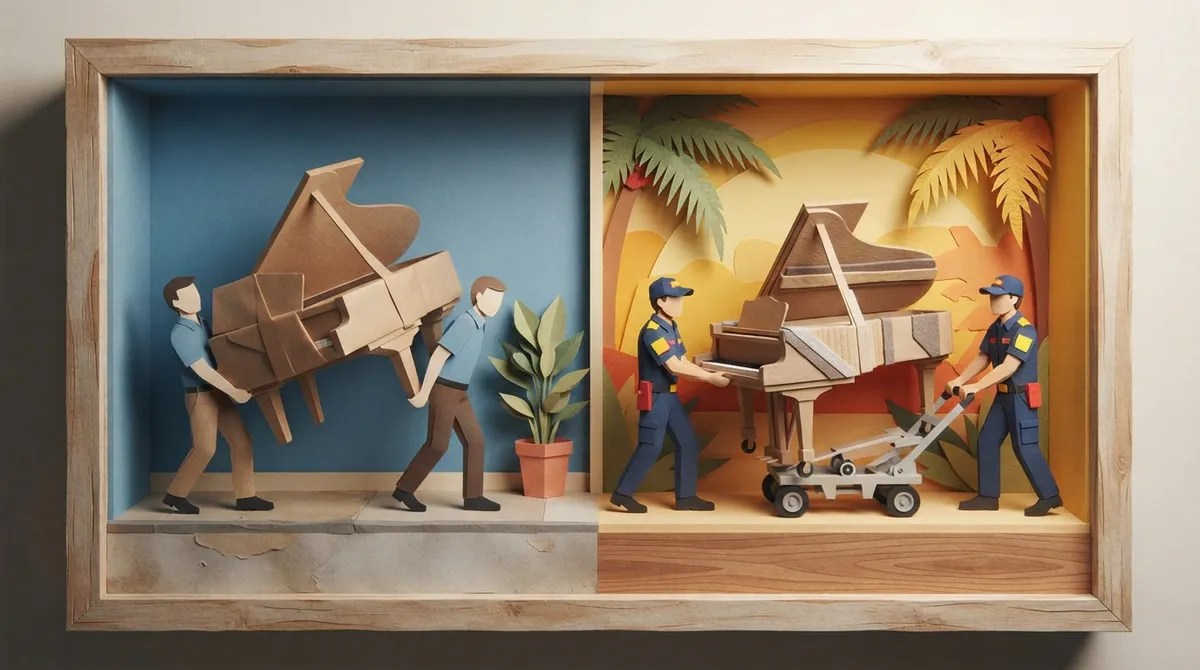
Standard moving crews are great at boxes, furniture, and everyday household goods. But specialty items ask for more. They often need trained crews, piano boards, furniture dollies, lifting straps, protective blankets, and sometimes custom crating.
Think about a baby grand piano. It's not just heavy. It's oddly shaped, sits on delicate legs, and can easily be damaged if tilted the wrong way. Moving one safely takes practice, patience, and the right equipment. The same goes for pool tables, which usually need to be disassembled, with the slate carefully wrapped and carried separately before everything gets put back together and leveled at the new home.
This is exactly why companies like DynaMight Movers train their crews specifically for these jobs. It's not just about muscle. It's about knowing how each item comes apart, how it should be wrapped, and how it needs to be carried through doorways, down stairs, or around tight corners.
Common Specialty Moving Challenges
| Item Type | Main Challenge | Typical Equipment Needed |
|---|---|---|
| Piano (upright) | Weight, awkward balance | Piano board, straps, dolly |
| Grand Piano | Size, fragile legs, weight distribution | Piano board, skid boards, extra crew |
| Pool Table | Disassembly, heavy slate | Slate dolly, leveling tools |
| Gun Safe | Extreme weight, floor protection | Safe dolly, ramps, straps |
| Antiques/Artwork | Fragility, value | Custom crates, padded blankets |
| Marble Furniture | Cracking risk, heavy weight | Furniture straps, sliders |
How Much Does It Cost to Move a Piano in Lakeland?
Piano moving costs depend on a few things. The type of piano matters a lot. An upright piano is generally easier and cheaper to move than a baby grand or full grand piano. Movers also look at stairs, doorways, flooring, and whether there's an elevator involved.
Long carries from the truck to the front door, narrow hallways, and tricky parking situations can all add to the price. This is why a good Lakeland mover will ask for photos, measurements, and details about your home's layout before giving you a quote. It's not about nickel-and-diming you. It's about giving you an honest number upfront so there are no surprises on moving day.
If you want to see how estimates typically work for local jobs, check out our guide on what to expect from a free moving estimate.
Can Movers Handle Pool Tables and Heavy Safes?
Yes, and this is one of the most common specialty moves in Central Florida. Pool tables need to be taken apart carefully. The frame, legs, and heavy slate sections all get wrapped and moved separately. Once everything arrives at the new spot, the crew reassembles and levels the table so it plays just like before.
Gun safes are a whole different beast. Some weigh several hundred pounds, and moving them wrong can crack tile, dent hardwood, or even cause injury. Experienced crews use safe dollies, ramps, and straps to move these giants without wrecking your floors. If this sounds like your situation, our article on how to move a gun safe without damaging your home breaks down the process step by step.
Steps a Good Mover Follows for Heavy or Fragile Items
- Ask for photos, weight, and measurements before quoting
- Inspect access points like stairs, doorways, and elevators
- Document the item's condition with photos before handling
- Disassemble parts that can be safely removed
- Wrap and protect every surface with blankets or crates
- Use proper equipment like dollies, straps, and ramps
- Reassemble and inspect the item at delivery
- Get signatures at pickup and delivery for peace of mind
What Florida Law Says About Specialty Moving Services
Florida takes household moving seriously, and there are real rules movers have to follow. Under Chapter 507 of the Florida Statutes, movers and moving brokers operating within the state must register with the Florida Department of Agriculture and Consumer Services. This registration costs $300 per year, and it's a good sign that a company is playing by the rules.
Florida law also requires movers to carry at least $10,000 in liability coverage per shipment for damage caused by negligence. On top of that, commercial vehicles used for moving must carry auto insurance ranging from $50,000 to $300,000 depending on the vehicle's weight. As of December 2023, Florida had 1,348 active registered movers and 39 active moving brokers, according to a 2024 legislative analysis. That's a lot of companies to choose from, so knowing what to look for really matters.
One thing many people don't realize is that Florida's standard valuation coverage is only 60 cents per pound per item. That might sound fine for a box of books, but it's nowhere near enough for a grand piano or a valuable antique. This is exactly why asking about valuation coverage is so important before you sign anything.
Accessorial Services You Should Know About
Florida law defines certain tasks as "accessorial services." These are extra jobs beyond simple loading and unloading, and they often come with additional charges. Knowing about these ahead of time helps you avoid surprise fees.
- Packing and crating fragile or valuable items
- Disassembly and reassembly of furniture or specialty items
- Hoisting or lowering items through windows or over balconies
- Long carries from the truck to your front door
- Stair carrying and elevator use
- Overtime labor for lengthy jobs
A written estimate should spell out which of these apply to your move. If a company won't put it in writing, that's a red flag.
How to Verify a Lakeland Mover Is Legit
Before you hand over your prized possessions, do a little homework. It only takes a few minutes and can save you a massive headache later.
- Check Florida registration status with the Department of Agriculture and Consumer Services
- Ask for proof of liability insurance
- Request a written, itemized estimate
- Ask about valuation coverage versus full replacement insurance
- Read reviews and check for complaint history
- Confirm the company has real experience with your specific item
For more on this topic, our article on how to spot licensed and insured movers in Polk County walks through the details. You can also see what real customers say by checking DynaMight Movers reviews and ratings, and visit us on Google — DynaMight Movers to read firsthand experiences from Lakeland neighbors just like you.
Preparing Your Antiques and Artwork for the Move
Fragile and valuable items need a little extra love before moving day. Here's what helps most:
- Take detailed photos of each item before the move for your records
- Note any existing scratches, cracks, or wear
- Ask about custom crating for irreplaceable pieces
- Keep small, delicate items separated from bulky furniture
- Discuss climate-conscious transport if the item is sensitive to heat or humidity
Florida heat is no joke, and items like fine art or antique wood furniture can warp or crack if left in a hot truck too long. A mover who understands this will plan accordingly, especially during our long Central Florida summers.
Comparing Specialty Moves vs. Standard Moves
| Factor | Standard Move | Specialty Item Move |
|---|---|---|
| Pricing | Often flat hourly rate | Priced individually based on item and access |
| Equipment | Dollies, basic straps | Piano boards, custom crates, safe dollies |
| Crew Training | General moving experience | Specific training for fragile or heavy items |
| Insurance Needs | Standard valuation usually fine | May need extra coverage for high-value items |
| Time Required | Predictable | Can vary based on disassembly and access |
If you're weighing your options between a full crew or just some extra hands, our comparison on full-service versus labor-only residential moving might help you decide what fits your situation.
Why Local Experience in Lakeland Matters
Every city has its quirks, and Lakeland is no different. Older neighborhoods around downtown often have narrow staircases and tight doorways. Newer luxury communities might have strict HOA rules about moving trucks and time windows. Retirement communities often need extra patience and gentle handling.
A mover who knows the area understands these little details. They know which streets get tricky during rush hour, which apartment complexes require elevator reservations, and how to navigate a driveway that's steeper than it looks on Google Maps. That local knowledge saves time and stress on moving day.
For families juggling a move into a retirement community, our guide on senior moving services in Polk County covers what to expect and how to make the transition smoother for older loved ones.
Questions to Ask Before Booking
Before you commit to a company, it helps to ask a few pointed questions. This protects you and helps the mover give you an accurate quote.
- Have you moved this specific type of item before?
- What equipment will you bring for this job?
- Will my item be disassembled and reassembled?
- What happens if something gets damaged?
- Is your quote written and itemized?
- Are you registered with the state of Florida?
A trustworthy company will answer these without hesitation. If you get vague answers or pushback, it's probably time to look elsewhere.
Wrapping Up: Trust the Right Team With Your Treasures
Your piano, your pool table, your grandmother's antique dresser. These things matter. They deserve more than a rushed job by an undertrained crew. Specialty item movers in Lakeland exist for exactly this reason, and choosing the right one makes all the difference between a smooth move and a stressful disaster.
DynaMight Movers is proud to serve Polk County families with licensed, insured, and genuinely careful specialty moving services. Whether you're relocating across Lakeland or heading out to Winter Haven, Davenport, or Dover, our crew treats your belongings like they're our own. We'd love to help make your next move the easiest one yet. Ready to see what transparent pricing and real care feel like? Get a free estimate today, or call us at (866) 349-7719 to talk through your specialty item move with a real person who actually cares.
FAQs
Q: What specialty items can movers in Lakeland, FL move?
A: Lakeland specialty movers typically handle pianos, pool tables, gun safes, antiques, artwork, marble furniture, grandfather clocks, and chandeliers. Basically, if it's heavy, fragile, or awkward to carry, there's a good chance a trained crew can move it safely for you.
Q: How much does it cost to move a piano in Lakeland?
A: Piano moving costs depend on the type of piano, stairs, doorways, and how far the crew has to carry it. Upright pianos are usually cheaper to move than grand pianos, and getting a detailed quote upfront helps you avoid surprises.
Q: Can a Lakeland moving company move and level a pool table?
A: Yes, most experienced Lakeland movers disassemble the table, carefully wrap the slate, transport everything safely, then reassemble and level it at your new home. It's a specialized job, so make sure your mover has real pool table experience.
Q: How can I verify that a Florida moving company is licensed and insured?
A: You can check the company's registration status with the Florida Department of Agriculture and Consumer Services and ask directly for proof of insurance. A trustworthy mover will happily share this information without any hesitation.
Q: What information do Lakeland movers need to provide an accurate specialty-item quote?
A: Movers usually ask for photos, measurements, weight estimates, and details about your home's layout, like stairs or narrow doorways. The more details you share upfront, the more accurate and stress-free your quote will be.