

Key Takeaways
- Ask for the legal name and FMCSA registration number of the actual carrier before booking, as moving brokers are middlemen who don't control the trucks or crew handling your belongings.
- Understand the difference between binding estimates (fixed maximum price) and non-binding estimates (can increase up to 110% at delivery), and always get your estimate in writing with inventory details and extra fees listed.
- Verify your mover's FMCSA registration, check complaint history, confirm insurance coverage, and read recent reviews—this 15-minute verification process protects you from scams and binding disputes.
- Choose Full Value Protection instead of Released Value Protection for valuable items, as it ensures the mover covers repairs, replacements, or cash settlements rather than minimal weight-based payouts.
- Book your mover 6-8 weeks in advance, especially during peak season (late spring through summer), to secure better pricing and flexible pickup/delivery windows rather than rushing into costlier last-minute arrangements.
- Prepare a detailed room-by-room inventory, take photos of valuable items before packing, and confirm pickup/delivery windows in writing to streamline moving day and document any damage claims.
Moving across state lines feels like a big deal, and honestly, it is. You're not just packing boxes. You're trusting a stranger with everything you own and hoping it all shows up in one piece. If you're feeling nervous about your upcoming long-distance moving plans, take a deep breath. You're in good company. Millions of families make this same leap every year, and with the right steps, yours can go smoothly too.
According to Census Bureau data, about 7.1 million people moved from one state to another between 2023 and 2024. Florida alone welcomed roughly 574,000 new residents from other states that year. So if you're headed our way or leaving Central Florida for a fresh start, you're part of a very big, very normal wave of movement. This guide will walk you through exactly what to expect, what to ask, and how to protect yourself along the way.

What Counts as a Long-Distance Move?
In the moving world, a long-distance move usually means crossing state lines, though some long in-state moves can feel just as complicated. Interstate moves fall under federal rules set by the Federal Motor Carrier Safety Administration (FMCSA), while moves that stay inside one state are handled mostly by state agencies.
This matters because interstate movers have extra responsibilities. They must give you a booklet called "Your Rights and Responsibilities When You Move" before your move happens. They also need to offer a dispute-resolution program if something goes wrong. Knowing this upfront helps you spot a legitimate mover from one that's cutting corners.
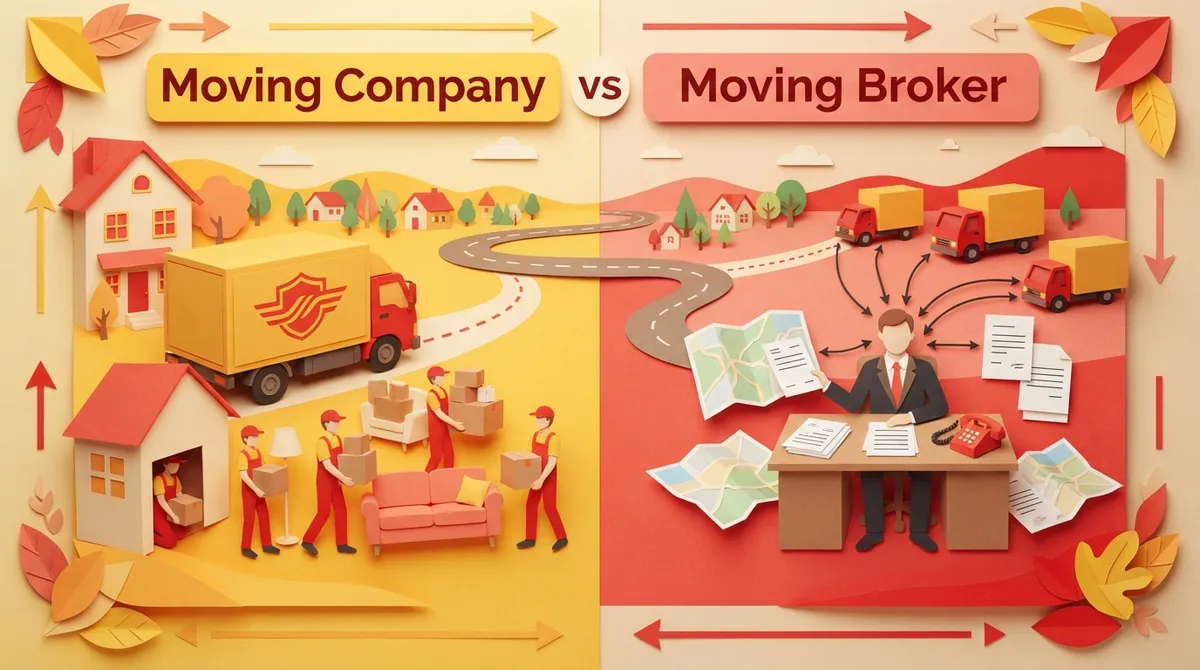
Moving Company vs. Moving Broker: Know the Difference
Here's something a lot of folks don't realize until it's too late. A moving company and a moving broker are not the same thing, even though their websites might look almost identical.
- A moving company owns the trucks, hires the crew, and physically handles your belongings from start to finish.
- A moving broker is more like a middleman. They collect your information and sell it to an actual carrier, who then does the real work.
Brokers aren't automatically bad, but you lose some control. You don't always know who's really showing up, what truck you'll get, or what the final price looks like. Before you sign anything, ask for the legal name and registration number of the actual carrier. This one question can save you a massive headache later. If you'd rather skip the guesswork entirely, working with a company that handles the whole move themselves, like our team serving statewide moves across Florida, keeps things simple and accountable.
How to Verify a Mover Before You Book
Doing a little homework before moving day can save you thousands of dollars and a lot of stress. Here's a simple checklist to run through:
- Check the mover's FMCSA registration number and confirm it's active.
- Look up their complaint history through FMCSA's consumer protection tools.
- Ask for proof of insurance and read what it actually covers.
- Confirm they're licensed to operate in your destination state, not just your home state.
- Read recent reviews, and pay attention to how the company responds to negative ones.
FMCSA's Protect Your Move resources are a great free tool for this. It takes maybe fifteen minutes and can protect you from scams that trap your belongings until you pay more money. Yes, that really happens, and it's more common than people think.
Understanding Your Estimate: Binding vs. Non-Binding
This is one of the most confusing parts of long-distance moving, so let's break it down simply.
| Estimate Type | What It Means | Best For |
|---|---|---|
| Binding Estimate | Sets a fixed maximum price based on your inventory. The price won't go up unless you add services. | People who want price certainty |
| Non-Binding Estimate | An educated guess based on weight and services. Final cost can shift. | People with flexible or uncertain inventory |
| Binding Not-to-Exceed | Combines both. Price can go down but never up. | People who want the best of both worlds |
Here's a helpful rule to remember: under the federal 110% rule, if you accepted a non-binding estimate, movers generally cannot demand more than 110% of that quote at delivery. Anything beyond that gets billed later. Always get your estimate in writing, and make sure it lists your inventory, pickup and delivery windows, and any extra fees clearly.
What Drives the Cost of a Long-Distance Move?
Long-distance moving costs vary a lot, and that's not because companies are being sneaky. It's because so many factors play into the final number. Here are the biggest ones:
- Total weight or volume of your belongings
- Distance between your old home and new one
- Access issues like stairs, elevators, or long walkways
- Packing services versus doing it yourself
- Specialty items like pianos, safes, or hot tubs
- Time of year, since summer moves tend to cost more
- Storage needs if your new home isn't ready yet
If a company gives you a rock-bottom price without asking about any of this, be cautious. A trustworthy mover wants details because accurate details lead to accurate pricing. You can also learn more about what factors determine moving company pricing before requesting quotes, so you know what questions to expect.
Full Value Protection vs. Released Value Protection
Nobody likes thinking about damaged belongings, but it's worth understanding your options before something happens, not after.
- Full Value Protection: The mover is responsible for repairing, replacing, or offering a cash settlement for damaged or lost items, based on their policy terms.
- Released Value Protection: This is the basic, low-cost option, but coverage is minimal. You must choose this in writing, and it often pays out based on weight rather than actual value.
Ask about deductibles, exclusions, and how claims are filed. This is especially important if you're moving valuable furniture, family heirlooms, or specialty items like fine art or antiques.
How to Prepare for Moving Day
Preparation is honestly your best friend here. A little effort now saves a ton of frustration later. Try these steps:
- Create a detailed inventory list of your belongings, room by room.
- Take photos of valuable or fragile items before they're packed.
- Set aside medications, documents, and essentials to keep with you personally.
- Ask your mover which items they won't transport, like propane tanks or certain chemicals.
- Get written confirmation of your pickup and delivery windows.
- Label boxes clearly by room and priority level.
If your move involves large furniture, bulky estate pieces, or delicate specialty items, it helps to work with a team experienced in specialty item moving so nothing gets damaged in transit. Families relocating from larger homes often benefit from crews trained in handling heavy furniture and awkward pieces safely.
What Happens If Something Goes Wrong?
Even with great planning, hiccups can happen. Maybe your delivery is late, or a box arrives with a dent it didn't have before. Here's what to do:
- Inspect everything at delivery before signing off, if possible.
- Take photos of any damage immediately.
- Document missing or broken items in writing.
- File a claim with your mover as soon as you can.
- If the issue isn't resolved, use the mover's dispute-resolution program or file a complaint through FMCSA.
For moves within Florida, state consumer protection offices can also help if disputes come up. Keeping calm and organized during this process makes a real difference in how quickly things get resolved.
Long-Distance Moving Timeline: How Far Ahead Should You Book?
Good movers get booked up fast, especially during peak season from late spring through summer. Here's a simple timeline to follow:
| Timeframe | What to Do |
|---|---|
| 8 weeks before | Research and request estimates from movers |
| 6 weeks before | Book your mover and confirm your estimate type |
| 4 weeks before | Start packing non-essentials and sort out what to donate |
| 2 weeks before | Confirm pickup and delivery windows in writing |
| 1 week before | Pack essentials bag and confirm final details |
If you're moving from Lakeland, Winter Haven, Davenport, or anywhere in Polk County, planning early gives you more flexibility on pricing and scheduling. Rushed moves tend to cost more and leave less room for careful handling.
Should You Choose a Full-Service Mover, a Truck Rental, or a Container Service?
This decision really comes down to your comfort level, budget, and how much heavy lifting you want to personally handle.
- Full-service movers pack, load, transport, and unload everything. Best for busy families, seniors, or anyone with heavy or specialty items.
- Rental trucks save money but require you to do all the labor yourself, including driving a large vehicle long distances.
- Portable containers offer flexibility but still require you to load and unload the heavy stuff.
For retirees, large families, or anyone managing a stressful transition, full-service support often makes the whole experience feel far more manageable. Learn more by comparing hiring movers versus a DIY approach before deciding what fits your situation best.
Why Local Knowledge Still Matters for Long-Distance Moves
Even though long-distance moves cross state lines, having a team that understands your starting point makes a real difference. At DynaMight Movers, we're proud to serve families throughout Polk County, Florida, including Lakeland, Winter Haven, Davenport, and Dover. We know the roads, the neighborhoods, and the little details that make local pickups smoother, even when the destination is hundreds of miles away.
We're licensed, insured, and built to handle everything from apartment moves to full family estates. If you want to see what your neighbors are saying, feel free to visit us on Google — DynaMight Movers and read real experiences from folks just like you.
Final Thoughts on Making Your Long-Distance Move Easier
Long-distance moving doesn't have to feel overwhelming. With a little research, a clear estimate, and a trustworthy team, you can move forward with confidence instead of stress. Remember to verify your mover, understand your estimate type, protect your valuables, and plan early. These simple steps make all the difference on moving day.
If you're ready to start planning your move, our friendly team is here to help every step of the way. You can get a free estimate today, or if you'd rather talk it through first, call us at (866) 349-7719. We're here, we're ready, and we genuinely can't wait to help make your move a smooth one.
FAQs
Q: How much does long-distance moving cost?
A: It really depends on your shipment weight, distance, and any specialty items you're bringing along. Most companies factor in labor, packing services, and access issues too. The best way to get an accurate number is to request a detailed, written estimate rather than relying on a quick online guess.
Q: What is the difference between a moving company and a moving broker?
A: A moving company owns the trucks and handles your belongings directly from start to finish. A broker, on the other hand, arranges the move through a separate carrier, so you have less control over who actually shows up. Always ask for the real carrier's name and registration before booking.
Q: What is the difference between a binding and non-binding estimate?
A: A binding estimate locks in a maximum price based on your inventory, so there are no surprises later. A non-binding estimate is more of an educated guess, and the final cost can shift depending on actual weight or services. Federal rules limit how much extra you can be charged at delivery under a non-binding estimate.
Q: What does Full Value Protection cover?
A: Full Value Protection means your mover is responsible for repairing, replacing, or offering a cash settlement for any lost or damaged items, based on the policy terms. It's a stronger safety net than the basic released value option, which pays out much less. Always ask about deductibles and exclusions before you sign anything.
Q: How far in advance should I book a long-distance mover?
A: We recommend booking at least six to eight weeks ahead, especially if you're moving during the busy summer season. Early booking gives you better pricing options and more flexibility with your pickup and delivery dates. If you're in a pinch, don't worry, many movers can still accommodate shorter timelines.