
Key Takeaways
- Always remove weights and pendulum before moving; leaving them inside causes serious internal damage and misalignment of delicate mechanical parts.
- Transport grandfather clocks upright only—never on their side or laying flat, as this damages the internal movement and causes misalignment.
- Hire professional specialty movers for antique/heirloom clocks (150-250 lbs); they have proper equipment, padding, and liability coverage to protect valuable pieces.
- Secure chains and cables with zip ties before transport to prevent them from tangling or damaging internal mechanisms during movement.
- Use at least two people when loading/unloading and move slowly on ramps and stairs; one slip can result in a shattered clock and potential injury.
- Level the clock immediately after setup and allow it to run for several hours before checking accuracy; improper leveling prevents correct timekeeping.
You inherited a beautiful grandfather clock from your grandmother. Or maybe you found the perfect antique piece for your new home in Hillsborough County. Either way, moving day is coming — and now you're staring at this tall, heavy, intricate timepiece wondering how on earth you're going to get it from Point A to Point B without disaster. You are not alone! Grandfather clock moving is one of the most nerve-wracking parts of any residential move. These clocks are fragile, heavy, and full of delicate parts that can shift, break, or fall out of alignment during transport. The good news? With the right preparation and the right team, moving your grandfather clock can be smooth, safe, and completely stress-free. This guide walks you through everything you need to know — step by step.
Why Grandfather Clock Moving Requires Special Care
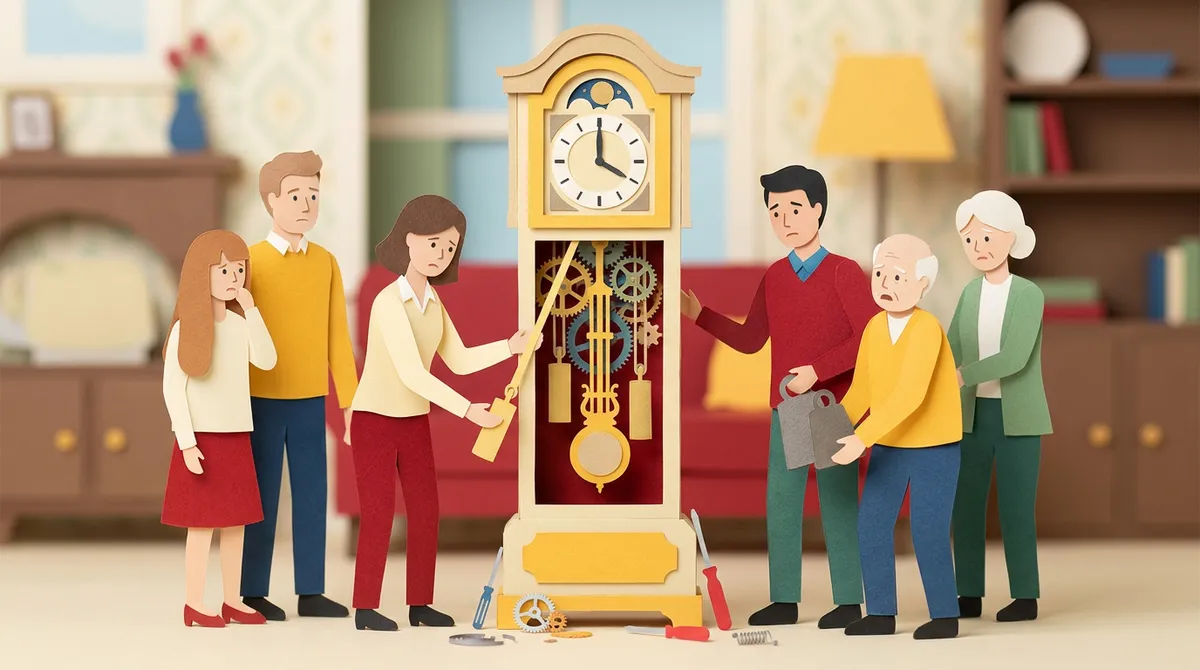
A grandfather clock is not just a piece of furniture. It is a precision instrument with moving mechanical parts. Many clocks are also priceless family heirlooms. That combination makes grandfather clock moving one of the most specialized tasks in the moving industry.
These clocks typically stand between 6 and 8 feet tall and weigh anywhere from 100 to 250 pounds. Inside, you have delicate pendulums, weights, chimes, and gears that can shift or break if the clock is not properly prepared and secured before transport. Even a small bump in the road can cause major damage if the internal components are still loose.
According to the FMCSA "Consumer Rights and Responsibilities", consumers have the right to choose professional movers who use proper equipment and techniques. For specialty items like grandfather clocks, that right matters more than ever.

What You Need Before You Start
Good preparation makes grandfather clock moving much easier. Before you touch the clock, gather everything you need. Here is a simple list of supplies to have on hand:
- Soft moving blankets or furniture pads
- Bubble wrap or foam padding
- Packing tape and scissors
- Zip ties or twist ties for securing pendulum chains
- A two-wheel dolly or appliance cart
- Moving straps or ratchet straps
- A helper (or two)
- The clock's original manual, if available
Having everything ready before you start means you won't have to stop mid-move to hunt for supplies. Trust us — you do not want to leave a 200-pound clock half-wrapped in the middle of your living room while you run to the store.
Step-by-Step Guide to Moving a Grandfather Clock
Follow these steps in order. Skipping steps — especially the early ones — is how clocks get damaged. Take your time and work carefully.
Step 1: Stop the Clock and Remove the Weights
Start by stopping the pendulum. Open the clock's access door on the front or side. Carefully reach in and stop the pendulum from swinging. Then, remove the weights — these are the heavy metal cylinders that hang inside the clock and power its movement. Most clocks have two or three weights. Each weight can be very heavy on its own, so set them down gently. Wrap each weight individually in bubble wrap and place them in a labeled box. Do not mix them up, because they may need to go back in specific positions.
Step 2: Remove and Wrap the Pendulum
Next, carefully unhook the pendulum from its suspension spring inside the clock. This long, decorative rod is very delicate at the top where it connects. Wrap it in bubble wrap from top to bottom, then wrap it in a moving blanket. Store it flat in a long box if possible. Never stand the pendulum upright without support during transport — it can bend or break.
Step 3: Secure Any Loose Chains or Cables
Many grandfather clocks use chains or cables to operate the weights. Once the weights are removed, these chains can swing around and tangle or damage the internal mechanism. Use zip ties or twist ties to gently secure the chains so they cannot move during transport. Be careful not to pull them tight — just secure them loosely in place.
Step 4: Wrap the Clock Body
Now wrap the clock itself. Start with the glass panels — if they are removable, take them out and wrap them separately. Then wrap the entire clock body in soft moving blankets. Use packing tape on the outside of the blankets (never directly on the wood finish). Pay extra attention to corners and any carved decorative details, as these are the most likely spots to chip or crack.
Step 5: Secure the Clock for Transport
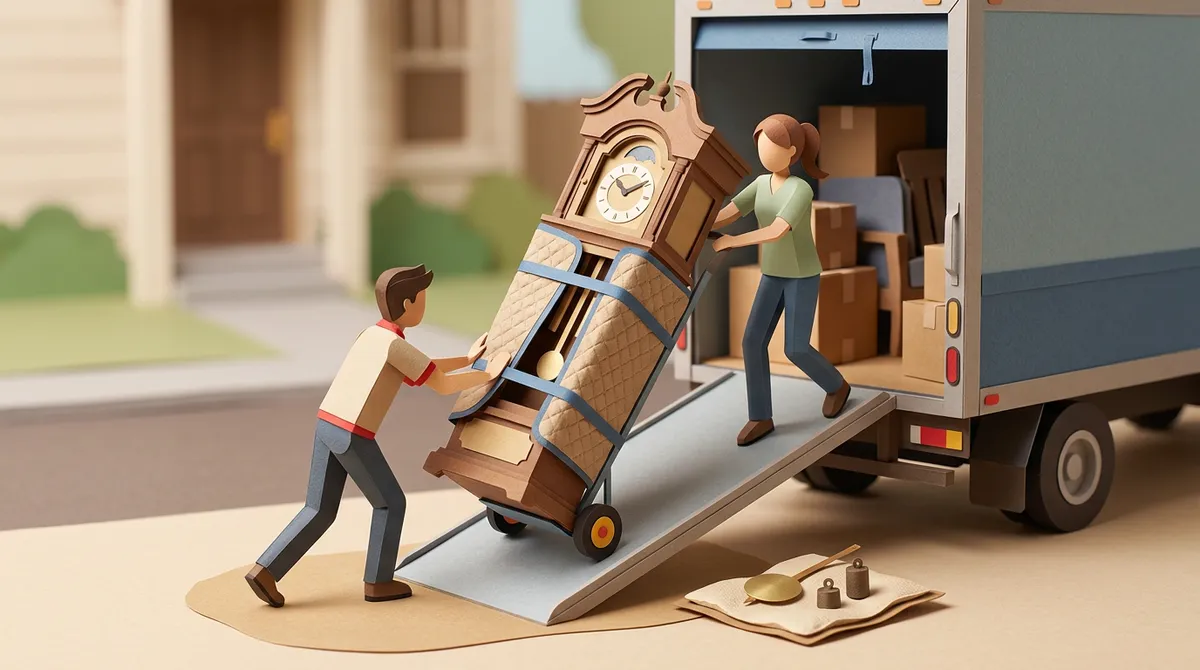
This is where many people make mistakes. A grandfather clock should always be transported upright — never on its side. Laying a grandfather clock flat can damage the movement and misalign the internal mechanism. Use a sturdy dolly to carefully tip and roll the clock. Secure it to the dolly with moving straps. In the moving truck, position the clock against a wall and use straps to keep it from shifting. Pad surrounding items to prevent bumping.
Step 6: Load and Unload with Extra Caution
Always have at least two people when loading and unloading a grandfather clock. One person guides and steadies the clock while the other manages the dolly. Move slowly on ramps, steps, and uneven surfaces. Never rush this part — one slip could mean a shattered clock and an injury.
Common Mistakes to Avoid During Grandfather Clock Moving
Even well-meaning movers make mistakes when it comes to grandfather clocks. Here are the most common ones — and how to avoid them:
- Leaving the weights inside: Always remove weights before moving. Leaving them in causes serious internal damage.
- Transporting the clock on its side: Always keep the clock upright during the move.
- Forgetting to stop the pendulum: A swinging pendulum damages the suspension spring quickly.
- Using too much tape on the wood: Tape can pull off the finish. Always tape on the blanket, not the clock.
- Rushing the process: Grandfather clock moving rewards patience. Take your time at every step.
Should You Hire Professional Specialty Movers?
Honestly? Yes. For most people, hiring professionals is the smartest choice for grandfather clock moving. These clocks are heavy, fragile, and expensive to repair or replace. A professional moving team with experience in specialty item movers has the right equipment, padding, and techniques to protect your clock at every stage of the move.
Professional movers also carry liability coverage, which means you have protection if something goes wrong. Before you hire anyone, review your rights as a consumer under Florida Statutes Chapter 507 (Household Moving Services) to make sure you are working with a properly licensed and insured company.
If you are moving locally within Hillsborough, Polk, or Pasco counties, local moving services from a trusted team can handle your grandfather clock with care. For moves farther away, long distance moving specialists use padded trucks and custom securing systems to keep specialty items safe on the road.
Grandfather Clock Moving Difficulty Comparison
Not all grandfather clocks are equally difficult to move. Here is a quick comparison to help you understand what you are dealing with:
| Clock Type | Average Weight | Difficulty Level | Professional Help Needed? |
|---|---|---|---|
| Antique/Heirloom Clock | 150–250 lbs | High | Strongly Recommended |
| Modern Grandfather Clock | 100–180 lbs | Medium-High | Recommended |
| Grandmother/Granddaughter Clock | 60–120 lbs | Medium | Optional |
| Reproduction/Decorative Clock | 50–100 lbs | Low-Medium | Optional |
How to Set Up Your Grandfather Clock After the Move
You made it! Now it is time to set up your clock in its new home. Here is how to do it correctly:
- Position the clock on a level surface. Use a small level tool to make sure the clock is perfectly upright. An unlevel clock will not keep accurate time.
- Reinstall the weights. Hang the weights back in their correct positions. Refer to any photos you took before the move or check the owner's manual.
- Rehang the pendulum. Carefully hook the pendulum back onto the suspension spring. Make sure it hangs freely without touching any internal components.
- Start the pendulum swinging. Give the pendulum a gentle push to start it swinging. It should swing evenly from side to side.
- Set the time. Use the minute hand to move the clock to the correct time. Never push the hands backward — always move them forward.
- Listen for proper chiming. Let the clock run for a few hours and listen to make sure the chimes sound correct.
If your clock does not keep time properly after setup, it may need professional adjustment. A clock repair technician or your moving team can help identify if anything was shifted during transport. You can also use this moving checklist to make sure all your specialty items are properly handled and documented throughout the move.
Tips for Moving a Grandfather Clock on a Budget
If you want to keep costs down, here are some smart ways to save during grandfather clock moving without cutting corners on safety:
- Do the disassembly yourself (removing weights and pendulum) to save labor time
- Ask your movers what packing materials they provide so you do not buy duplicates
- Schedule your move on a weekday — rates are often lower than weekends
- Get a free estimate upfront so there are no surprise fees on moving day
- Bundle the clock move with your full household move to save on trip costs
DynaMight Movers offers transparent pricing with no hidden fees — so you always know exactly what you are paying for before the truck arrives. You can get a free estimate online in just a few minutes.
When to Call for Help with Heavy Lifting
Sometimes the clock itself is fine to move, but getting it out of a tight space — or up or down stairs — is the real challenge. That is where professional labor services come in. Even if you are handling the rest of your move yourself, hiring a team for the heavy and tricky pieces like your grandfather clock can save you from injury and heartbreak.
Want to know more about what our team can do? About DynaMight Movers explains our approach, our values, and why so many Florida families trust us with their most precious belongings. You can also check out our reviews on Google to see what our customers have to say.
Conclusion
Moving a grandfather clock does not have to be a nightmare. With the right supplies, careful preparation, and a patient step-by-step approach, you can get your beautiful timepiece safely to its new home. Remember to remove the weights and pendulum first, always keep the clock upright during transport, and take your time at every stage. If the job feels too big to tackle alone, do not hesitate to call in the pros. Your clock is too special — and too valuable — to risk with shortcuts.
Ready to make your move the smoothest one yet? Whether you need help with your grandfather clock or your entire household, our team is here to help. Request your free moving estimate today and let DynaMight Movers handle the heavy lifting — with the power, precision, and care your belongings deserve. You can also explore more helpful tips and moving guides when you visit our blog.
FAQs
Q: Can I move a grandfather clock on its side?
A: No — you should always transport a grandfather clock upright. Laying it on its side can damage the internal movement and misalign the mechanical parts. If you must tilt it slightly to get through a doorway, keep it as upright as possible and move slowly.
Q: Do I need to remove the weights before moving a grandfather clock?
A: Absolutely! Removing the weights is one of the most important steps in grandfather clock moving. Leaving them inside during transport puts excessive strain on the movement and can cause serious internal damage. Wrap each weight individually and keep them in a labeled box.
Q: How long does it take to set up a grandfather clock after a move?
A: Setting up a grandfather clock typically takes 30 to 60 minutes. This includes reinstalling the weights and pendulum, leveling the clock, starting the pendulum, and setting the time. Allow the clock a few hours to run before checking its accuracy.
Q: Should I hire professional movers for my grandfather clock?
A: For most people, yes! Grandfather clocks are heavy, fragile, and often irreplaceable — making them ideal candidates for professional specialty movers. A trained team has the right equipment and experience to move your clock without damage, giving you real peace of mind.
Q: What happens if my grandfather clock does not work after the move?
A: Don't panic — this is more common than you think! First, make sure the clock is level, the weights are in the correct positions, and the pendulum is properly hung. If it still will not run correctly, a professional clock technician can usually recalibrate and repair it quickly.