

Key Takeaways
- Verify any interstate mover's USDOT number and registration on the FMCSA website before booking, and walk away from any company that cannot provide one.
- Interstate movers must give a written estimate based on a physical survey (in person or by video); a verbal phone quote is not an official estimate.
- Ask whether the company is a carrier that moves your goods or a broker that subcontracts the move, since this determines who shows up on moving day.
- Compare quotes using the same inventory and services, and treat an unusually low estimate as a warning sign of possible surprise charges at delivery.
- Choose valuation coverage carefully: Full Value Protection costs extra but offers higher liability, while Released Value has no added charge but limited, weight-based liability, so protect high-value items accordingly.
- Read the bill of lading before signing, check dates, payment terms, and that your estimate and chosen coverage are attached, and document belongings with photos before and after the move.
Moving across state lines is a big deal. Maybe you're leaving Lakeland for a new job. Maybe you're heading north to be closer to family. Either way, you're handing over your home's contents to a team you may have just met. That can feel scary, and it's totally normal to feel that way.
The good news? A little homework goes a long way. Long distance house movers come in all shapes and sizes, and the difference between a smooth move and a nightmare often comes down to the questions you ask before you book. In 2026, millions of Americans will pack up and relocate. According to the U.S. Census Bureau's 2024 American Community Survey, about 2.1% of people moved to a different state in 2024. That's roughly 7.16 million people.
This friendly guide walks you through the whole process, step by step. You'll learn how to check a mover's credentials, read estimates, understand coverage, and avoid common mistakes. Let's get you moving with confidence.

What Do Long Distance House Movers Actually Do?
Long distance house movers transport your household belongings over a big distance. In the U.S., that usually means a move across state lines. The term "long distance" isn't a precise federal category, but interstate moves follow special consumer-protection rules from the Federal Motor Carrier Safety Administration (FMCSA).
A full-service crew can handle many tasks:
- Packing and wrapping your belongings
- Loading furniture, boxes, and heavy items onto the truck
- Driving your shipment to your new home
- Unloading and placing items where you want them
- Reassembling beds, tables, and other furniture
Some movers also offer storage, specialty item handling for pianos or antiques, and extra labor for heavy lifting. If you're moving from a large home or estate, that heavy-lifting help can save your back and your sanity.
Step 1: Check Whether You Need a Mover or a Broker
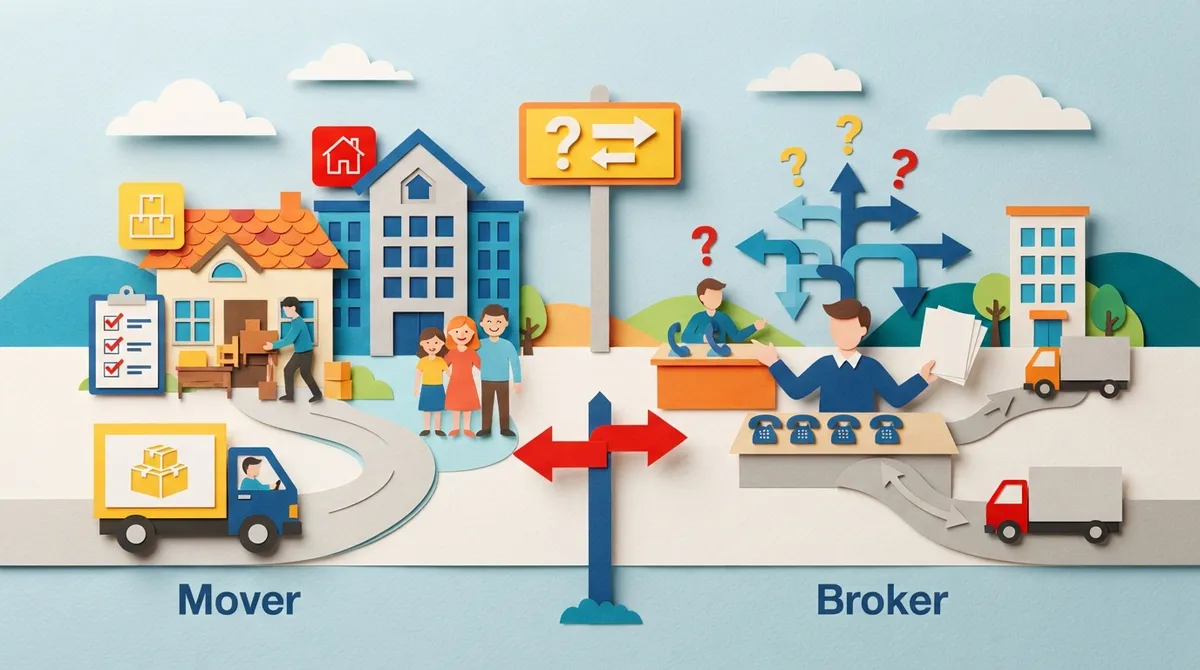
Before you call anyone, understand a key difference. A carrier (a moving company) owns trucks and employs crews who move your goods. A broker arranges the move but usually hires another company to do the actual work.
Neither one is automatically bad. But you should always know which one you're talking to. Ask directly: "Are you the company that will physically move my belongings?" If the answer is unclear, keep asking until you get a straight answer.
Why does this matter? When a broker hands your move to a stranger, you may not know who shows up on moving day. Knowing who is responsible helps you if something goes wrong. For more on picking the right team, check out this guide on how to hire movers.
Step 2: Verify Licensing and Registration
This step is simple and powerful. Interstate movers and household-goods brokers must be registered with the FMCSA. You can look up a company's registration and complaint history through the FMCSA Protect Your Move resources before you book.
Here's a quick checklist to run through:
- Get the company's full legal name and USDOT number.
- Search for that number on the FMCSA website.
- Confirm the registration is active.
- Review any complaint information.
- Check that the name on the estimate matches the name on the registration.
If a company can't give you a USDOT number, that's a red flag. Walk away. Our post on 9 ways to spot licensed and insured movers goes deeper on this topic.
Step 3: Get a Written, Survey-Based Estimate
Here's something many people don't know. For an interstate move, the mover must give you a written estimate. A verbal quote over the phone isn't an official estimate.
FMCSA also says estimates should be based on a physical survey. That survey can happen in person or virtually by video call. The only exception is if you waive the survey in writing.
Why does a survey matter? Because the mover can see what you actually own. They'll notice the piano in the corner, the stairs at the back door, and the packed garage. Those details change the price. If you want a feel for what a good quote looks like, read what you should expect from a free moving estimate.
Binding vs. Non-Binding Estimates
These two terms confuse a lot of people. Here's a simple side-by-side look.
| Feature | Binding Estimate | Non-Binding Estimate |
|---|---|---|
| Price | Set for the listed items and services | An approximation based on the survey |
| Can the price change? | Only if you add items or services, or circumstances require a revised estimate | Yes, based on actual weight and services |
| Payment at delivery | Agreed price for listed shipment | Federal rules generally limit what a mover can require at delivery to 110% of the estimate |
| Best for | People who want price certainty | People comfortable with some variation |
Whichever you pick, get it in writing. And make sure the estimate lists the same inventory and services you're comparing across companies.
Step 4: Understand What Affects Your Cost
Everyone wants to know the price. The honest answer is, "It depends." Angi's 2025 moving trends page reports an average long-distance moving cost of $4,401. That's a handy ballpark, but it's not a guaranteed quote. Your price could be much higher or lower.
Here are the biggest things that shape a long distance quote:
- Shipment weight or volume: More stuff costs more to move.
- Route and distance: Longer trips use more fuel and time.
- Packing services: Having the crew pack adds labor.
- Access challenges: Stairs, elevators, and long carries can add charges.
- Shuttle service: If a big truck can't reach your street, a smaller shuttle truck may be needed.
- Storage: Short-term storage between homes adds cost.
- Timing: Peak season and month-end dates often cost more.
- Valuation coverage: Higher protection levels can add to your bill.
To dig into how pricing works, see what factors determine moving company pricing. And if you want a closer look at what to expect on the road, this guide on what to expect from long distance moving services is a nice companion read.
Step 5: Compare Quotes the Smart Way
Getting three quotes is smart. But comparing them fairly takes a little care. Follow these steps so you're not comparing apples to oranges.
- Give every company the same inventory list.
- Ask each one for the same services (packing, unpacking, assembly, storage).
- Confirm whether each estimate is binding or non-binding.
- Ask if each company is the carrier or a broker.
- Compare the valuation coverage included in each quote.
- Read the fine print on extra fees like stairs, long carries, and shuttles.
If one quote is dramatically lower than the others, pause. A lowball estimate can lead to surprise charges on delivery day. A fair, transparent price is worth more than a cheap-looking one. If budget is your main worry, these tips for finding cheap movers can help you save without taking big risks.
Step 6: Learn the Protection Options
This part is a little technical, but it matters. Interstate movers must offer two liability options for your belongings:
| Option | What It Means | Cost |
|---|---|---|
| Full Value Protection | A higher level of liability for lost or damaged goods | Usually an added cost |
| Released Value Protection | Limited liability based on weight | No additional charge |
These are liability options. They're not necessarily the same as a separate insurance policy. Ask each mover to explain the details, including deductibles and exclusions. Then decide what fits your belongings.
If you own antiques, art, or a baby grand piano, think carefully before choosing the lowest coverage. Our guide on how to choose insured movers you can actually trust explains what to look for.
Step 7: Read the Bill of Lading Before You Sign
The bill of lading is your transportation contract and receipt. It's an important document. Don't just sign on the dotted line and hope for the best.
Before you sign, check these items:
- The mover's correct name and contact details
- Pickup and delivery dates or delivery windows
- Payment terms and accepted payment types
- That your estimate and inventory are attached or referenced
- The valuation coverage you chose
Take your time. A good mover will happily answer questions. If someone pressures you to sign fast, that's your cue to slow down.
Step 8: Plan Your Timeline
Great movers book up, especially in summer. A good rule of thumb is to start calling several weeks before your target date, and even earlier if you're moving in peak season. If you're wondering about the best timing, read how far in advance you should book movers.
Here's a simple timeline to follow:
- 6-8 weeks out: Research movers and verify registrations.
- 4-6 weeks out: Schedule surveys and collect written estimates.
- 3-4 weeks out: Choose your mover and sign the contract.
- 2 weeks out: Start packing non-essentials and sort what to donate.
- Moving week: Pack an essentials bag and confirm all details.
Need to move on short notice? It's still possible. Here's how to find last-minute movers when plans change fast.
Tips for Special Situations
Retirees and Seniors
Moving into a retirement home or downsizing is emotional. Look for patient crews who can handle the heavy lifting and organize the packing for you. You shouldn't have to carry a thing. Our post on senior moving services in Florida shares helpful ideas.
Large Families and Estate Owners
A big home means big furniture, lots of boxes, and plenty of coordination. Ask the mover how many crew members they'll send and what equipment they bring. Also ask about disassembly and reassembly for bulky pieces.
Specialty Items
Pianos, antiques, gun safes, and pool tables need extra care. Ask whether the crew has experience with your item. DynaMight Movers handles specialty item moves with the right gear and trained hands. You can also read how to choose specialty item movers you can trust.
Luxury Homes and High-End Apartments
If you're moving into a luxury building, check for elevator reservations, loading dock rules, and insurance requirements. A professional crew will protect your floors, walls, and doorways, and will arrive prepared.
What to Do If Something Goes Wrong
Even with great planning, problems can happen. Here's how to stay calm and protect yourself.
- Document everything: Take photos of your belongings before the move and after delivery.
- Note damage right away: Write down any issues on the delivery paperwork before the crew leaves.
- File a claim promptly: Contact the mover in writing as soon as you spot a problem.
- Keep copies: Save your estimate, bill of lading, inventory, and all emails.
- Escalate if needed: If the mover doesn't respond, you can file a complaint with FMCSA.
Knowing your rights makes a big difference. The FMCSA's Your Rights and Responsibilities When You Move booklet is a free resource every mover should provide.
Why Local Experience Still Matters for Long Distance Moves
You might think a long distance move only needs a big national name. But the start of your move happens at your front door. A crew that knows your area, your neighborhood, and your access challenges will load faster and more safely.
DynaMight Movers is a licensed and insured moving company serving Polk County, including Lakeland, Winter Haven, Davenport, and Dover. We handle local and long-distance residential moves with transparent pricing, careful handling, and heavy lifting power. Your estimate is your price, with no surprises on moving day. If you're leaving Polk County, you can read what to know about long distance movers in Lakeland, Florida for local tips. Want to see what neighbors say? Visit us on Google — DynaMight Movers and read the reviews.
Common Mistakes to Avoid
Learn from others' bumps in the road. These are the most common slip-ups people make when hiring long distance house movers:
- Accepting a verbal quote with nothing in writing
- Skipping the FMCSA registration check
- Choosing the cheapest quote without comparing services
- Not asking whether the company is a carrier or broker
- Failing to read the bill of lading
- Picking minimum coverage for high-value items
- Booking too late and settling for whoever is available
Avoiding even a few of these can save you real money and stress. For a longer list, see these mistakes to avoid when choosing a moving company.
Ready to Start Your Move?
A long distance move doesn't have to be scary. With a little planning, you can choose a mover you trust, understand your costs, and arrive at your new home feeling relaxed. Verify registrations, get written estimates, compare fairly, and read every document before you sign.
When you're ready for friendly, transparent help, get a free estimate from DynaMight Movers, or call us at (866) 349-7719. We're here to make your next chapter an easy one.
FAQs
Q: How much do long distance house movers cost?
A: Costs vary a lot based on weight, route, packing, access, and timing. Angi's 2025 data shows an average of about $4,401 for long-distance moves, but that's only a ballpark. The best way to know your price is to get a written, survey-based estimate.
Q: How can I check whether a long distance mover is registered?
A: Ask for the company's USDOT number and look it up through the FMCSA Protect Your Move resources. You can confirm the registration is active and review any complaint history. It only takes a few minutes and it's well worth it.
Q: What is the difference between a binding and non-binding estimate?
A: A binding estimate sets the price for the listed items and services, though it can change if you add items or services. A non-binding estimate is an approximation, and federal rules generally limit what a mover can require at delivery to 110% of that estimate.
Q: What does Full Value Protection cover?
A: Full Value Protection is a higher level of mover liability for lost or damaged goods, and interstate movers must offer it. It's a liability option rather than a separate insurance policy, so ask about deductibles and exclusions before you choose.
Q: What is the difference between a moving company and a moving broker?
A: A moving company, or carrier, uses its own crews and trucks to move your belongings. A broker arranges the move and usually hires another company to do the work. Always ask which one you're dealing with before you book.