

Key Takeaways
- Verify licensing and registration through FMCSA's Protect Your Move search for interstate moves or state/local authorities for local moves—this is the single most critical step before hiring any mover.
- Distinguish between carriers (companies that physically move your items) and brokers (companies that arrange moves but don't transport goods themselves) by directly asking which one you're hiring and confirming the actual carrier's registration.
- Obtain written, itemized estimates comparing binding estimates (fixed price) versus non-binding estimates (price may change), and ask explicitly what services could increase costs like packing, stairs, storage, or long carries.
- Read recent customer reviews across multiple independent sites looking for patterns about price accuracy, on-time delivery, communication quality, damage handling, and how companies respond to complaints rather than focusing on single reviews.
- Understand your protection options by asking what coverage pays for in plain language, what deductibles apply, how to file claims, and whether you need extra coverage for high-value items like antiques or pianos.
- Avoid red flags including requests for huge upfront deposits, quotes given without questions or site visits, unclear company information, refusal to provide credentials, and pressure to sign blank or confusing paperwork.
Picking a moving company can feel like handing a stranger the keys to your whole life. Your couch, your photos, your grandmother's china, all riding in someone else's truck. No wonder so many people search for the most trusted movers before they ever pick up the phone.
Here is the thing nobody tells you up front: there is no single official list that crowns the most trusted movers. Rankings exist, and they can help. But real trust is something you build by checking a few simple facts yourself.
The good news? It is easier than it sounds. In this guide, we will walk you through exactly how to size up a mover, whether you are moving across Polk County or across the country. Grab a cup of coffee, and let's make this simple together.

What "Most Trusted Movers" Really Means
When people say the most trusted movers, they usually mean a company that does what it says it will do. It shows up on time, gives a clear price, protects your stuff, and fixes problems fast if something goes wrong.
Different rankings measure trust in different ways. For example, Lifestory Research's 2026 America's Most Trusted Moving Company study gathered 10,357 opinions from people who had been shopping for moving services in the past 12 months. Its top three were Arpin Van Lines (99.6 Net Trust Quotient), North American Van Lines (99.2), and Mayflower (99.2). Those are consumer trust scores for that study, not government certifications or promises of service.
Other review sites use their own methods. Move.org says its 2026 review looked at more than 75 long-distance companies and over 10,000 customer reviews. Use rankings like these as a starting point to build a shortlist. Then do your own homework.
Your Move Type Changes the Rules
Trust looks a little different depending on where you are going. A local move inside one state follows that state's rules. A move across state lines falls under federal rules. Knowing which one you are facing helps you check the right things.
- Local moves: Check the licensing and consumer protection rules for your state or area.
- Interstate moves: Check the company's federal registration and complaint history.
- Specialty moves: Ask about experience with pianos, antiques, safes, and other tricky items.
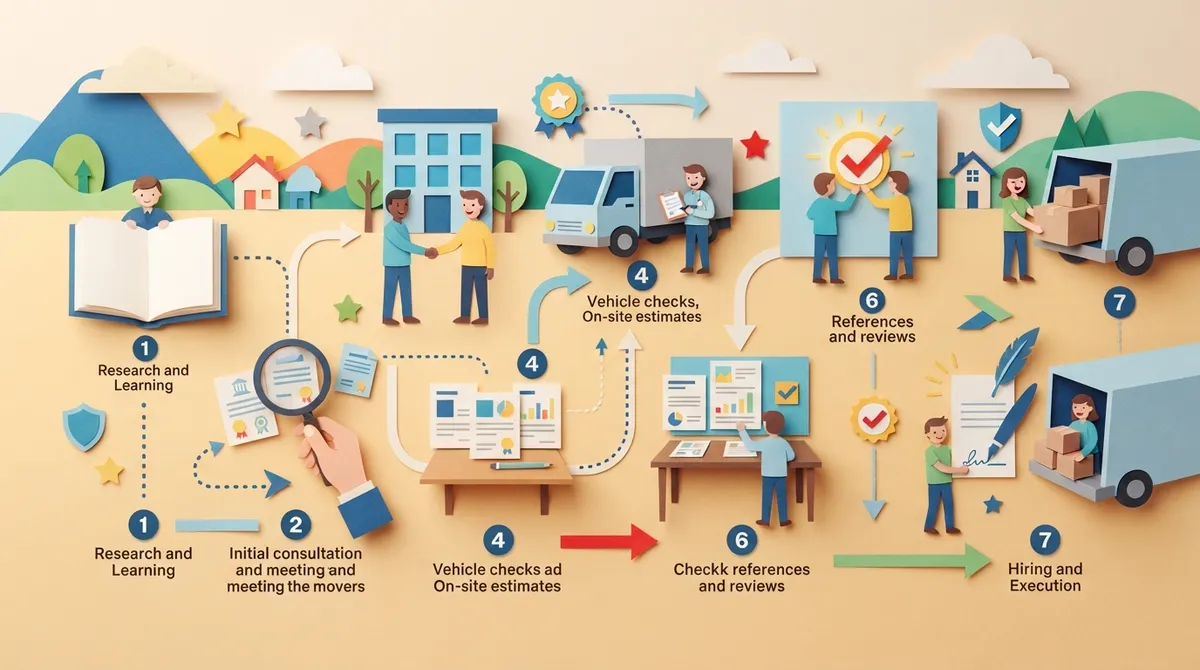
How to Find the Most Trusted Movers: 7 Simple Steps
Think of this as a friendly checklist. Work through it in order, and you will weed out the risky companies fast.
- Build a short list. Start with three to five companies. Use rankings, neighbors, and local recommendations.
- Verify credentials. Confirm licensing and registration before you talk price.
- Ask who does the work. Find out if you are hiring a mover or a broker.
- Get written estimates. Compare them side by side.
- Compare coverage. Understand what happens if something breaks.
- Read reviews for patterns. Look at recent feedback on several sites.
- Read every document. Do not sign anything you do not understand.
Let's dig into each step so you feel confident at every turn.
Step 1: Verify Licensing and Registration
This is the single most important step. A trusted mover will always be proud to show you proof that they are legit.
For interstate household moves, the Federal Motor Carrier Safety Administration (FMCSA) says movers and brokers must be registered. You can check any company using the FMCSA Protect Your Move search. It shows a company's identity, registration, authority to transport household goods, insurance information, and complaint history.
One quick warning: a USDOT number alone does not prove a company is allowed to move household goods. Always confirm the authority for the exact service you need.
For local moves within Florida, rules are set at the state and local level. If you want a quick guide on spotting the right paperwork, check out our post on 9 ways to spot licensed and insured movers in Polk County.
Step 2: Know If You Are Hiring a Mover or a Broker
This one trips up a lot of people. A moving broker arranges transportation, but does not move your belongings itself. A carrier is the company that actually loads, drives, and delivers.
Neither is automatically bad. But you need to know which one you are dealing with. Ask these questions:
- Are you the carrier, or a broker?
- Which company will physically move my belongings?
- Can I check that carrier's registration myself?
If a company dodges these questions, treat that as a red flag. A trusted mover answers plainly.
Step 3: Get Written Estimates You Can Compare
A friendly phone quote is nice, but it is not the same as a written estimate. The FMCSA points out that a quote is not necessarily an estimate, and that estimates come in two kinds.
| Estimate Type | What It Means | What to Watch For |
|---|---|---|
| Binding estimate | The price is based on the shipment and services listed | Make sure every service is written down |
| Non-binding estimate | The final price may change based on actual weight or services | Ask how much it could rise |
Also ask what could change your price. Common surprises include packing, stairs, long carries from the door to the truck, storage, and other extra services. A trusted mover explains these up front.
For more help, read what you should expect from a free moving estimate.
Step 4: Understand Your Protection Options
Even the best crews can have a bad day. That is why coverage matters so much. Interstate movers must offer Full Value Protection, subject to their terms and deductible choices. Released Value Protection is a more limited option, and it often pays far less than your items are worth.
Before you pick, ask these questions:
- What does this coverage pay for, in plain words?
- Is there a deductible?
- How do I file a claim, and how long does it take?
- Do I need extra coverage for high-value items?
This matters most for people moving antiques, pianos, art, or other special pieces. Our guide on how to choose insured movers you can actually trust goes deeper on this.
Step 5: Read Reviews the Smart Way
Reviews are helpful, but only when you read them with a sharp eye. One angry review or one glowing review tells you very little. Patterns tell you a lot.
Check more than one independent site, and focus on recent feedback. Look for repeated comments about:
- Whether the final price matched the estimate
- Whether the crew arrived and delivered on time
- How well the office communicated
- How damage claims were handled
- How the company responded to complaints
A company that replies kindly to a bad review and fixes the problem is often a better sign than a company with no bad reviews at all. You can also see what neighbors say about us by visiting DynaMight Movers on Google.
Step 6: Read Before You Sign
For interstate moves, the FMCSA requires movers and brokers to give you the Your Rights and Responsibilities When You Move booklet and the Ready to Move brochure. Please read them. They explain your rights in plain language.
You will also see several important papers during your move: the estimate, the order for service, the inventory, and the bill of lading. Keep copies of everything. If a mover pressures you to sign something blank or rushes you through the paperwork, slow down.
Warning Signs of a Moving Scam
The FMCSA notes that thousands of Americans report moving fraud each year. Most scams share the same warning signs. Here is a quick look.
| Red Flag | Why It Matters |
|---|---|
| Huge deposit demanded up front | Hard to get your money back if things go wrong |
| Quote given sight unseen with no questions | Often leads to a bigger bill later |
| No clear company name or address | Makes it hard to track down if there is a problem |
| Will not provide credentials | May not be registered or licensed |
| Blank or confusing paperwork | Leaves room for surprise charges |
If your gut says something feels off, listen to it. There are plenty of honest movers out there.
Tips for Different Kinds of Movers
Every household is a little different. Here is what to focus on based on your situation.
Local Homeowners and Large Families
If you are moving a bigger home nearby, ask about crew size, heavy lifting, and how bulky furniture will be handled. Our post on how to choose Polk County movers you can actually trust is a great next read.
Retirees and Seniors
If you are moving into a retirement home, look for patience, heavy lifting help, and organized packing. You should never feel rushed. See 8 senior moving services in Polk County that help for ideas.
Luxury Homes and Apartments
High-end homes and apartments need extra care. Ask how the crew protects floors, walls, elevators, and hallways. Ask about furniture pads, wrapping, and damage coverage.
Specialty Item Owners
Pianos, antiques, safes, and pool tables are not ordinary boxes. Ask directly about experience with your item and the equipment used. Read how to choose specialty item movers you can trust before you book.
Long-Distance Movers
For a bigger move, double-check federal registration, delivery windows, and how the company handles delays. Our guide on what you should know before a long distance move can help you plan.
Questions to Ask Every Mover
Keep this list handy when you call. A trusted mover will welcome these questions.
- Are you licensed and registered for my type of move?
- Are you a carrier or a broker?
- Is your estimate binding or non-binding?
- What could change my final price?
- What protection options do you offer?
- How do you handle damage claims?
- Who will be on my crew, and are they your employees?
- Can you share recent customer references?
You can find more ideas in 7 questions to ask movers before you book in 2026.
What Trust Looks Like in Real Life
At DynaMight Movers, we believe trust is earned one move at a time. We are a licensed and insured residential moving company serving Lakeland, Winter Haven, Davenport, Dover, and the rest of Polk County. We give free estimates with clear pricing, so your estimate is your price, with no surprises on moving day.
We also handle the jobs many companies shy away from, including heavy lifting and specialty items like pianos and antiques. That kind of care is what you should look for in any mover you hire, ours or someone else's. If you want to compare how local pros stack up, take a look at 8 things to look for in a Polk County moving company.
Final Thoughts: Trust Is Something You Can Check
The most trusted movers are not found by luck. They are found by checking credentials, asking honest questions, comparing written estimates, and reading reviews with care. Rankings can point you in a good direction, but your own homework is what protects you.
Take your time, trust your instincts, and keep copies of every document. A little effort now saves you a lot of stress later.
Ready to talk with a team that puts clear pricing and careful handling first? Get a free estimate from DynaMight Movers today, or call us at (866) 349-7719. We would love to help you feel confident about your next move.
FAQs
Q: Who are the most trusted moving companies in the United States?
A: There is no single official list. Studies like Lifestory Research's 2026 survey, which ranked Arpin Van Lines, North American Van Lines, and Mayflower at the top, can help you build a shortlist. Still, always verify credentials and read recent reviews yourself before you hire.
Q: How can I verify that an interstate mover is licensed and registered?
A: Use the FMCSA's Protect Your Move search to look up the company. It shows registration, authority to move household goods, insurance details, and complaint history. Remember, a USDOT number alone is not proof of authority for household moves.
Q: What is the difference between a moving company and a moving broker?
A: A moving company, or carrier, physically moves your belongings. A broker only arranges the move and hires a carrier to do the work. Always ask which one you are dealing with, and verify the carrier who will actually handle your shipment.
Q: How can I tell whether a moving estimate is binding or non-binding?
A: A binding estimate sets the price based on the shipment and services listed in writing. A non-binding estimate can change after the move based on actual weight or services. Ask for the estimate in writing and ask what could raise the final cost.
Q: What should I do if my mover loses or damages my belongings?
A: Take photos, note the damage on your paperwork right away, and follow the mover's claim steps in writing. For interstate moves, review your protection option and keep every document. If the issue is not resolved, you can file a complaint through the FMCSA.