

Key Takeaways
- Confirm whether your move is intrastate or interstate first, since this determines whether you check FDACS registration (within Florida) or FMCSA/USDOT registration (out of state).
- Verify the mover's registration before hiring: look up Florida intrastate movers through FDACS or call 1-800-HELP-FLA (435-7352); for interstate moves, use FMCSA's Protect Your Move tools.
- Get at least three detailed written estimates using the same inventory and details, and make sure each one states whether it is binding or nonbinding.
- Ask about damage coverage: Florida intrastate movers must carry at least $10,000 per incident in cargo liability, which is a minimum, not full-value protection for every item.
- Be wary of red flags like a quote far below the others, large upfront cash deposits, vague paperwork, no physical address, or no registration number.
- Read reviews from several sources and look for repeated patterns in punctuality, damage handling, and final billing rather than relying on single star ratings.
Packing up your life is a big job. Handing it to strangers feels even bigger. If you are wondering how to find good movers Lakeland families can trust, you are in the right place. The good news? A little homework goes a long way, and you do not need to be an expert to do it.
Here in Polk County, thousands of people move every year. Some moves go smoothly. Others turn into stories about surprise fees, late trucks, and broken furniture. The difference usually comes down to how well the mover was picked.
This guide walks you through the steps in plain English. You will learn how to check licenses, compare estimates, spot red flags, and ask the right questions. Whether you are a local homeowner, a retiree downsizing, or a family leaving a large home, these steps work for you. Let's get you moving with confidence.

Step 1: Know What Kind of Move You Are Making
Before you call anyone, answer one simple question. Is your move inside Florida, or does it cross state lines? The answer decides who regulates your mover and which license you should check.
- Intrastate move (all within Florida): The mover must be registered with the Florida Department of Agriculture and Consumer Services (FDACS).
- Interstate move (leaving Florida): The mover is regulated by the Federal Motor Carrier Safety Administration (FMCSA).
A move from Lakeland to Winter Haven is intrastate. A move from Lakeland to Atlanta is interstate. Many people skip this step and later find out they checked the wrong license. Start here, and you will save yourself a headache.
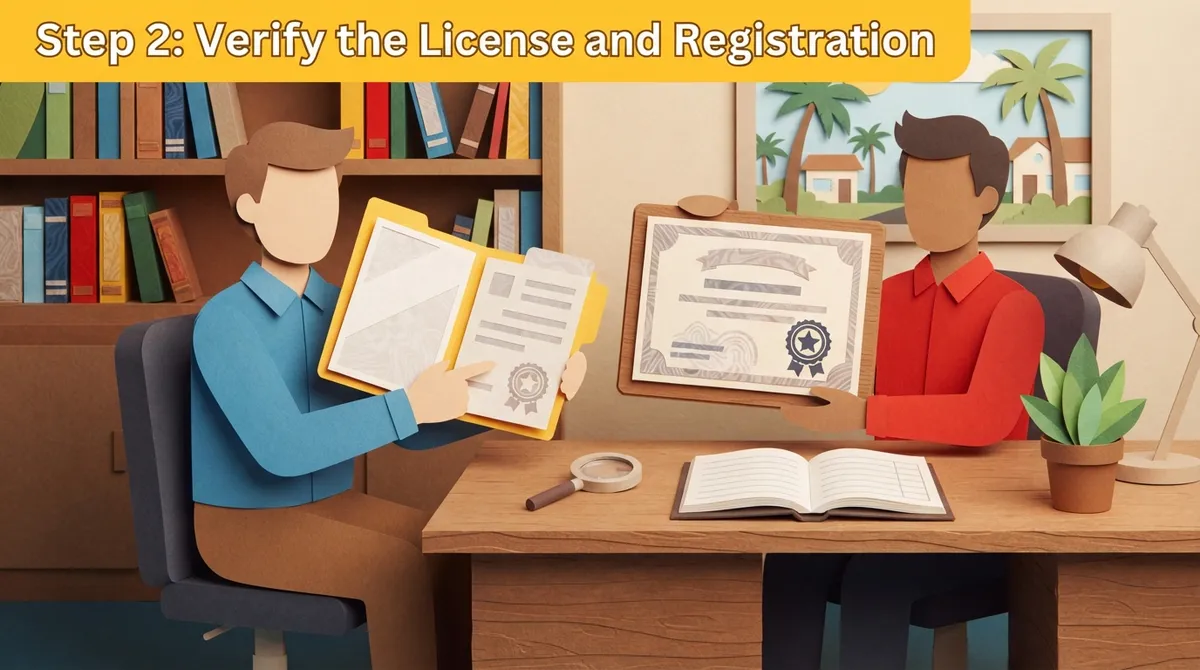
Step 2: Verify the License and Registration
This is the most important step in finding good movers in Lakeland. A friendly voice on the phone is nice, but a valid registration is what protects you.
For Moves Within Florida
Florida intrastate movers and moving brokers must register with FDACS. You can look up a company through the FDACS Moving Companies page or call 1-800-HELP-FLA (435-7352). Registration is renewed every two years, and FDACS lists a $600 fee for the two-year period. Keep in mind that state registration does not replace any local licensing rules that may apply.
For Moves Out of State
For interstate moves, check the mover's USDOT registration, household-goods authority, insurance, and complaint history using the FMCSA Protect Your Move tools. Also confirm that the company doing the work is the one authorized to transport your shipment, not just a broker who sells the job to someone else.
Want a deeper checklist? Our guide on 9 ways to spot licensed and insured movers in Polk County walks through it step by step.
Step 3: Get at Least Three Written Estimates
FDACS recommends having at least three moving companies look at your shipment and give you detailed estimates. This helps you see what is normal and what is way off.
To get estimates you can really compare, do these things:
- Make a full inventory of what you are moving, including garage items, patio furniture, and storage.
- Tell each company about stairs, long carries from the door to the truck, and tight driveways.
- Say whether you want packing, unpacking, storage, or special handling.
- Ask for an in-person or detailed virtual walkthrough when possible.
- Give every company the same information so the numbers match up.
Florida law requires a written estimate and contract before moving services begin. The paperwork must name the mover, list the move dates and addresses, itemize the services and charges, and explain payment methods. Both sides must sign or electronically acknowledge it. If a company says a handshake is enough, keep looking.
If you want to know what a good estimate looks like, read what to expect from a free moving estimate.
Step 4: Compare Apples to Apples
The lowest number is not always the best deal. Two quotes can look very different because they cover different work. Before you decide, line up the details side by side.
| What to Compare | Why It Matters |
|---|---|
| Binding vs. nonbinding estimate | A binding estimate fixes the price for the listed work. A nonbinding one can change. |
| Packing and materials | Boxes, tape, and wrap can add up fast if they are not included. |
| Stairs, long carries, shuttle fees | Access problems can raise the bill on moving day. |
| Storage options | Short-term storage may carry extra daily or monthly charges. |
| Damage coverage | Coverage limits differ and are not the same as full-value protection. |
| Payment terms | Large upfront deposits are a warning sign. |
For interstate moves, FMCSA notes that a mover generally cannot demand more than 110% of a nonbinding estimate at delivery. Any extra charges may be billed later under federal rules. It is good to know that rule before you sign.
Need help understanding how prices are built? Check out how movers charge in 2026.
Step 5: Ask About Damage Coverage and Claims
Nobody likes thinking about broken items. But asking about coverage before moving day is one of the smartest things you can do.
Florida intrastate movers must carry cargo legal-liability coverage of at least $10,000 per incident for loss or damage caused by the mover's negligence. That is a floor, not a promise that every item is covered at full value. If you own antiques, a piano, artwork, or other high-value pieces, ask extra questions.
- What does the mover's coverage include, and what does it leave out?
- Is there an option to increase protection for valuable items?
- How do I file a claim, and how long does it take?
- Who handles the claim, the mover or a third party?
Good movers answer these questions clearly and without pressure. For more on this topic, see how to choose insured movers you can actually trust.
Step 6: Read Reviews the Smart Way
Reviews are helpful, but only if you read them with care. One angry review does not tell the whole story. A pattern does.
Check several sources, not just one. Then look for repeated themes, such as:
- Did the crew show up on time?
- Were items damaged, and how was it handled?
- Did the final bill match the estimate?
- Was the office easy to reach before and after the move?
- Did the company respond fairly to problems?
For a sense of scale, one directory page updated in October 2026 listed 8,297 customer reviews across 33 local movers serving Lakeland. That is a directory-specific number, not an official industry statistic. Still, it shows how many voices are out there. Read the detailed ones, not just the star ratings. You can also see what DynaMight Movers customers say on Google to get a feel for real feedback from Lakeland-area families.
Step 7: Watch for Red Flags
Most movers are honest and hardworking. A few are not. Here are the warning signs that should make you pause.
- A quote that is far lower than the rest. If three companies say $1,800 and one says $700, something is off.
- Pressure to pay a big deposit upfront. Reasonable deposits exist, but demands for large cash payments do not.
- Vague or missing paperwork. You should get a clear written estimate and contract.
- No physical business address. A real company can tell you where it is located.
- Quotes given sight unseen with no questions asked. Good movers ask about your home and your items.
- No registration number. If they cannot give you one, walk away.
Want to dig into common errors? Our post on 14 mistakes to avoid when hiring local residential movers in Polk County covers more.
Step 8: Match the Mover to Your Situation
Every move is a little different. The best mover for one household may not be the best for another. Think about what matters most to you.
Retirees and Downsizers
If you are moving to a retirement home, look for patient crews who can handle heavy lifting and help you stay organized. Our guide to senior moving services in Polk County shares what to look for.
Large Homes and Family Estates
Bulky furniture, multiple rooms, and lots of boxes need a crew with the right equipment and enough hands. Ask how many movers will arrive and what they will bring.
Luxury Apartments and High-Value Homes
Elevators, loading dock rules, and building requirements can complicate a move. Choose a team that protects floors, walls, and doorways, and that knows how to handle property with extra care.
Specialty Items
Pianos, antiques, gun safes, hot tubs, and pool tables are not ordinary boxes. Ask whether the crew has real experience with your item. This guide to choosing specialty item movers can help.
Timing Matters Too
When you book can change both price and availability. Summer weekends and month-end dates fill up fast. If you can be flexible, you may get more choices and better rates. Read how far in advance you should book movers to plan your timeline. If you are in a pinch, there are options for last-minute movers in Polk County, too.
Why Local Knowledge Helps
A mover who knows Lakeland understands the neighborhoods, the traffic on major roads, the older homes with narrow doorways, and the newer communities with strict move-in rules. Local crews also tend to be easier to reach if something comes up after the move.
That is part of why local Lakeland moving companies are worth a close look. DynaMight Movers is a licensed and insured moving company serving Polk County. We handle local and long-distance residential moves, specialty items, and heavy lifting with transparent pricing and no surprise add-ons.
Your Quick Checklist
Keep this list handy while you shop around:
- Confirm whether your move is intrastate or interstate.
- Verify FDACS or FMCSA registration.
- Collect three detailed written estimates.
- Compare binding vs. nonbinding terms.
- Ask about damage coverage and the claims process.
- Read reviews from more than one source.
- Avoid big upfront payments and vague paperwork.
- Choose a crew that fits your type of move.
Ready to Start Your Move?
Finding good movers in Lakeland does not have to be stressful. Check the license, compare real estimates, ask about coverage, and trust your gut when something feels off. A little effort now means a smoother moving day later.
When you are ready for a clear price and a crew that treats your belongings like their own, get a free estimate from DynaMight Movers or call us at (866) 349-7719. We are happy to answer your questions and help you plan the next step.
FAQs
Q: How do I check whether a moving company in Lakeland, Florida, is licensed?
A: For a move entirely within Florida, look up the company through the FDACS Business License Lookup or call 1-800-HELP-FLA (435-7352). For a move across state lines, check USDOT registration and household-goods authority with FMCSA's mover search tools. It only takes a few minutes and gives you great peace of mind.
Q: How many moving quotes should I get before hiring a mover?
A: Aim for at least three written estimates. FDACS recommends this too, since comparing a few detailed quotes helps you spot prices that are too high or suspiciously low. Be sure each company gets the same inventory and details so the numbers are fair to compare.
Q: What is the difference between a binding and nonbinding moving estimate?
A: A binding estimate locks in the price for the work listed in your contract. A nonbinding estimate is a best guess and can change based on actual weight, time, or services. Ask each mover which type they are offering and what could change the final price.
Q: What damage coverage do Florida movers have to carry?
A: Florida intrastate movers must carry cargo legal-liability coverage of at least $10,000 per incident for loss or damage caused by their negligence. This is a minimum and is not the same as full-value protection for every item. If you have valuables, ask about extra coverage options before moving day.
Q: How can I tell if a Lakeland mover is a broker or the actual moving company?
A: Ask who will physically load, drive, and unload your belongings, and request their registration number. For interstate moves, confirm that the company named on your paperwork is authorized to carry your shipment. A real mover will answer this clearly and show you the proof.