

Key Takeaways
- Verify credentials before anything else: for interstate moves, check FMCSA registration; for local moves, check your state regulator's licensing and insurance records, and request proof of insurance in writing.
- Ask whether the company's own crew and trucks will do the work or whether it is a broker handing the move to another carrier, and get that carrier's credentials.
- Compare written estimates by inventory, labor, stair and elevator charges, packing, and specialty item fees, not just the bottom-line price; a low quote can hide missing services.
- Know the difference between binding and non-binding estimates; for interstate moves, delivery payment generally can't exceed 110% of a non-binding estimate.
- Understand valuation coverage: interstate movers must offer Full Value Protection, while Released Value Protection usually pays far less than an item is worth.
- Watch for red flags such as large upfront deposits, cash-only payment, blank paperwork, no written estimate, or big price jumps after loading, and note any damage on delivery paperwork before the crew leaves.
Moving is exciting, but the search can feel like a lot. You type "moving company in my neighborhood" into your phone, and suddenly you have dozens of names, star ratings, and promises. Which ones are real? Which ones will show up on time and treat your couch like it matters?
Here's the good news. You can sort the good from the shaky with a few simple checks. In 2024, about 11.8% of people in the United States moved to a different residence, according to the U.S. Census Bureau. That's millions of households going through the same search you are. Many learned the hard way what to look for, and now you get to skip those lessons.
This friendly guide walks you through the whole process. You'll learn how to check licenses, compare estimates, understand coverage, and spot red flags early. Whether you're a local homeowner, a retiree downsizing, or a family leaving a big house, you'll finish this article ready to pick a mover with confidence.

Why Searching for a Moving Company in My Neighborhood Makes Sense
A nearby mover often knows your streets, your gated communities, and your tight apartment elevators. They know which roads get busy and how summer storms in Central Florida can change a moving day. That local know-how saves time and stress.
A neighborhood mover also has a reputation to protect. Your neighbors may have used them, and word travels fast. That makes honesty and good service a big deal for local companies.
Most people also move close to home. In 2024, about 8.9% of people moved within the same state, while only 2.1% moved to a different state (U.S. Census Bureau). So a strong local mover fits what most households need.
Local Benefits You Can Count On
- Faster response: Local crews can often schedule quicker walk-throughs and estimates.
- Area knowledge: They understand HOA rules, building access, and parking limits.
- Community reputation: Reviews and neighbor referrals are easier to check.
- Simpler follow-up: If something goes wrong, you can reach a real person nearby.
Want a deeper look at nearby options? Our guide on how to find reliable local movers near me pairs well with this article.
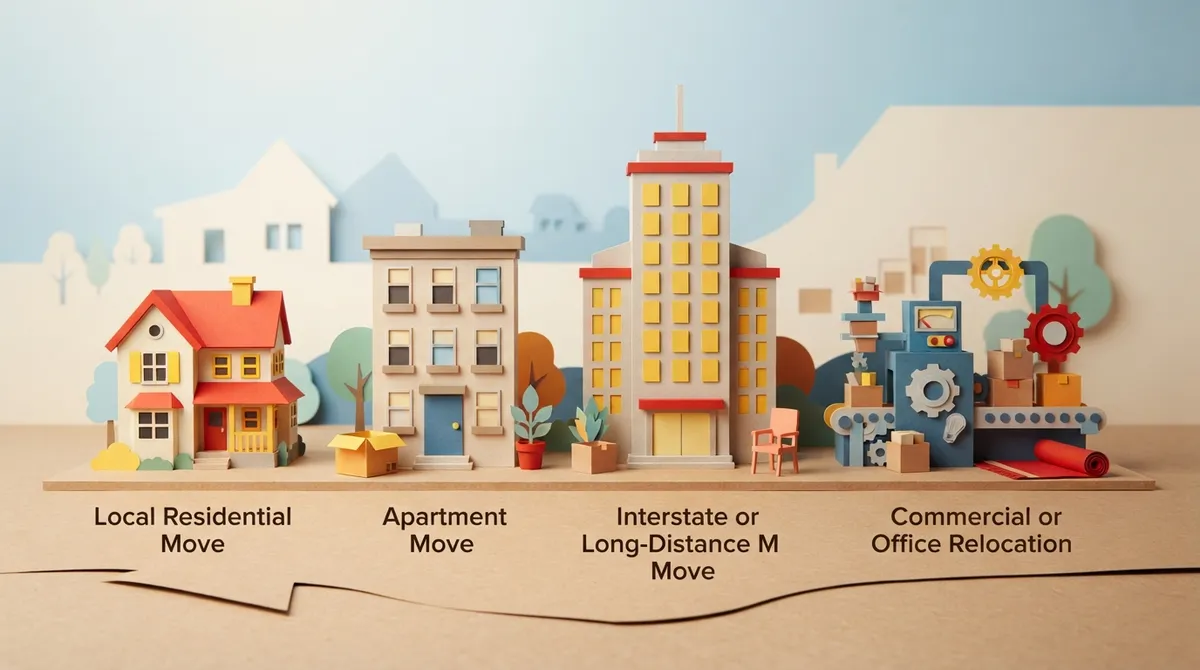
Step One: Know What Kind of Move You Have
Before you call anyone, figure out what type of move you're planning. This one detail decides which rules apply to your mover.
If your move stays inside one state, it's generally an intrastate move. State and local rules usually govern it. If your move crosses state lines, including some moves that start and end in the same state but pass through another one, federal rules from the FMCSA (Federal Motor Carrier Safety Administration) apply.
| Move Type | Who Sets the Rules | What to Check |
|---|---|---|
| Local or in-state move | State and local regulators | State licensing, insurance, written estimate terms |
| Interstate move | FMCSA (federal) | FMCSA registration, valuation options, binding or non-binding estimate |
| Move through another state en route | FMCSA (federal) | Same as interstate; confirm the carrier's authority |
Not sure which category you fall into? Just ask the mover. A trustworthy company will explain it clearly and without pressure.
Step Two: Check the Credentials First
This is the step people skip, and it's the most important one. A friendly voice on the phone is nice, but paperwork protects you.
For interstate moves, household-goods movers and brokers must be registered with the FMCSA. The agency runs a helpful consumer program called Protect Your Move, with tips for a safer, smoother relocation. For in-state moves, check your state's regulator or consumer-protection office for licensing and insurance rules.
A Simple Credential Checklist
- Ask for the company's license or registration number.
- Look that number up with the right agency (state office for local moves, FMCSA for interstate).
- Request proof of insurance in writing.
- Confirm the business name on the truck, the paperwork, and the website all match.
- Read recent customer reviews and look for repeating complaints.
If you want a deeper walkthrough, see 9 ways to spot licensed and insured movers in Polk County. It's full of easy checks you can do in a single afternoon.
Step Three: Mover or Broker? Ask the Question
Here's something many people don't realize. Some companies that answer the phone are not the ones who will actually load your truck. They're brokers who arrange the move and hand it off to another carrier.
Brokers aren't automatically bad. But you should know who is doing the work. For interstate moves, brokers must be registered with the FMCSA and should name the carrier handling your shipment.
Ask these questions plainly:
- "Will your own crew and trucks handle my move?"
- "If you use another company, who is it, and may I see their credentials?"
- "Who is my main contact if something changes on moving day?"
A clear, calm answer is a great sign. A vague or dodgy answer is a reason to keep looking.
Step Four: Get Written Estimates and Compare Them Fairly
Getting a few estimates is one of the best money moves you can make. But compare the details, not just the bottom-line number. A low price can hide missing services.
The FTC recommends that movers review your belongings in person, or through a detailed virtual walk-through, before giving an estimate. For interstate moves, the FMCSA says estimates must be written and based on a physical survey, which can be done virtually, unless you waive the survey in writing.
Binding vs. Non-Binding Estimates
| Estimate Type | How It Works | Good to Know |
|---|---|---|
| Binding | Limits what you owe at delivery to the estimated amount | Offers price certainty if your inventory stays the same |
| Non-binding | Not a guaranteed final price | For interstate moves, payment at delivery generally can't exceed 110% of the estimate; extra charges may be billed later |
State rules for local moves can differ from federal rules, so always confirm the estimate terms and payment plan in writing. Our post on what to expect from a free moving estimate explains the process step by step.
What to Compare Side by Side
- The full list of items included in the inventory
- Labor, truck, fuel, and travel charges
- Charges for stairs, long carries, or elevators
- Packing materials and packing labor
- Specialty item fees for pianos, safes, or antiques
- Coverage and claim details
Step Five: Understand Valuation and Damage Coverage
Nobody wants to think about a broken heirloom, but a little planning now saves heartache later. Ask every mover how they protect your belongings and what happens if something gets damaged.
For interstate moves, movers must offer Full Value Protection. Released Value Protection is a more limited option, and it usually pays far less than an item is worth. Ask what each option covers, what it costs, and how to file a claim.
This matters even more if you're moving fine furniture, a piano, or collectibles. If that sounds like you, read how to choose specialty item movers you can trust before you book.
Warning Signs to Watch For
Most movers are honest, hardworking folks. But a few red flags are worth knowing, so you can walk away early.
- Big deposit demands: Be careful if a company asks for a large payment upfront.
- Cash-only payment: This leaves you with little paper trail.
- Blank or incomplete paperwork: Never sign a form with empty fields.
- No written estimate: If they won't put it in writing, don't book them.
- Price jumps after loading: A big change once your boxes are on the truck is a serious warning.
Keep every signed document, inventory list, and receipt. If a dispute happens, those papers are your best friends. For more on common slip-ups, check out 14 mistakes to avoid when hiring local residential movers in Polk County, FL.
Tips for Different Kinds of Movers
Every household has its own needs. Here's how to tailor your search.
Retirees and Downsizers
If you're moving into a retirement home, look for a patient crew that helps with heavy lifting and careful packing. Ask whether they'll unpack and place furniture so you don't have to strain. Our guide to senior moving services in Polk County shares helpful ideas.
Luxury Apartment and Homeowner Moves
High-end buildings often need proof of insurance, elevator reservations, and floor protection. Ask the mover how they guard walls, floors, and doorways. Careful handling should be part of the promise, not an extra.
Large Families and Estate Moves
Big homes mean bulky furniture, many rooms, and lots of labor. Ask how many movers will come, how long the job should take, and whether they handle disassembly and reassembly. Experienced crews plan this out before moving day.
Long-Distance Movers
Leaving the area? Double-check FMCSA registration, ask about delivery windows, and get the estimate type in writing. See what you should know before a long-distance move for a handy planning list.
Why Local Reviews and Neighbor Referrals Matter
Online reviews are helpful, but read them with a smart eye. Look for patterns, not just star ratings. Do several people mention on-time arrivals and careful handling? Do others complain about surprise fees?
Ask neighbors, coworkers, and friends too. A recommendation from someone who watched the crew carry their sofa through a tight hallway is worth a lot. You can also see what customers say about us when you visit us on Google — DynaMight Movers.
How DynaMight Movers Fits Into Your Search
If you live in Polk County, you've got a neighborhood option worth a look. DynaMight Movers is a licensed and insured moving company serving Lakeland, Winter Haven, Davenport, Dover, and nearby areas. We handle local and long-distance residential moves, specialty items, and heavy lifting with clear, upfront pricing.
We believe your estimate should be your price. You can learn more about our approach in our professional moving company in Polk County overview, or see how to choose Polk County movers you can actually trust for a neutral checklist you can use with any company.
A Quick Plan to Choose Your Mover
- Decide whether your move is local, interstate, or crosses another state.
- Make a short list of three or four nearby companies.
- Verify licenses, registration, and insurance for each one.
- Ask whether they are the actual mover or a broker.
- Schedule in-person or virtual walk-throughs for written estimates.
- Compare inventory, services, and coverage, not just price.
- Review the paperwork carefully before you sign anything.
- Book early, especially for weekends and end-of-month dates.
Timing helps your budget and your peace of mind. Learn when to schedule a move for the best results and plan ahead.
If Something Goes Wrong
Even with great planning, bumps can happen. If your belongings are damaged or the final bill surprises you, stay calm and act quickly.
- Note any damage on the delivery paperwork before the crew leaves.
- Take clear photos of damaged items and packaging.
- File a written claim as soon as possible, following the mover's process.
- Keep your estimate, inventory, and receipts handy.
- If you can't resolve it, contact your state consumer office or, for interstate moves, the FMCSA.
The FMCSA also explains how to avoid fraud and file complaints on its consumer protection FAQ page.
Ready to Find Your Mover?
Finding a moving company in your neighborhood doesn't have to feel overwhelming. Confirm your move type, check credentials, ask about mover versus broker, compare written estimates, and review coverage. Follow those steps, and you'll be well ahead of most people.
If you're in Polk County and want a friendly, licensed, and insured team with transparent pricing, we'd love to help. Get a free estimate today, or call us at (866) 349-7719 to talk through your move. Your next chapter is waiting, and we'll help you get there with care.
FAQs
Q: How do I find a reliable moving company in my neighborhood?
A: Start by asking neighbors and friends for referrals, then read recent reviews to spot patterns. Verify each company's license, registration, and insurance before you ask for a written estimate. A reliable mover will welcome those questions and answer them clearly.
Q: How can I check whether a local moving company is licensed and insured?
A: For in-state moves, check your state regulator or consumer-protection office for licensing and insurance rules. For interstate moves, confirm the company's FMCSA registration. Always ask the mover for proof of insurance in writing and make sure the business name matches across all paperwork.
Q: What is the difference between a binding and non-binding moving estimate?
A: A binding estimate limits what you owe at delivery to the estimated amount. A non-binding estimate isn't a guaranteed final price. For interstate moves, payment at delivery generally can't exceed 110% of a non-binding estimate, with any extra charges billed later under federal rules.
Q: How do I know whether I'm hiring a mover or a moving broker?
A: Simply ask whether the company's own crew and trucks will handle your move. Brokers arrange the transportation and hand your shipment to another carrier. For interstate moves, brokers must be registered with the FMCSA and should tell you which carrier will do the work.
Q: What should I do if my belongings are damaged or the final bill is higher than expected?
A: Note any damage on the delivery paperwork, take photos, and file a written claim quickly using the mover's process. Keep your estimate, inventory, and receipts as proof. If you can't settle it, contact your state consumer office or, for interstate moves, the FMCSA.