
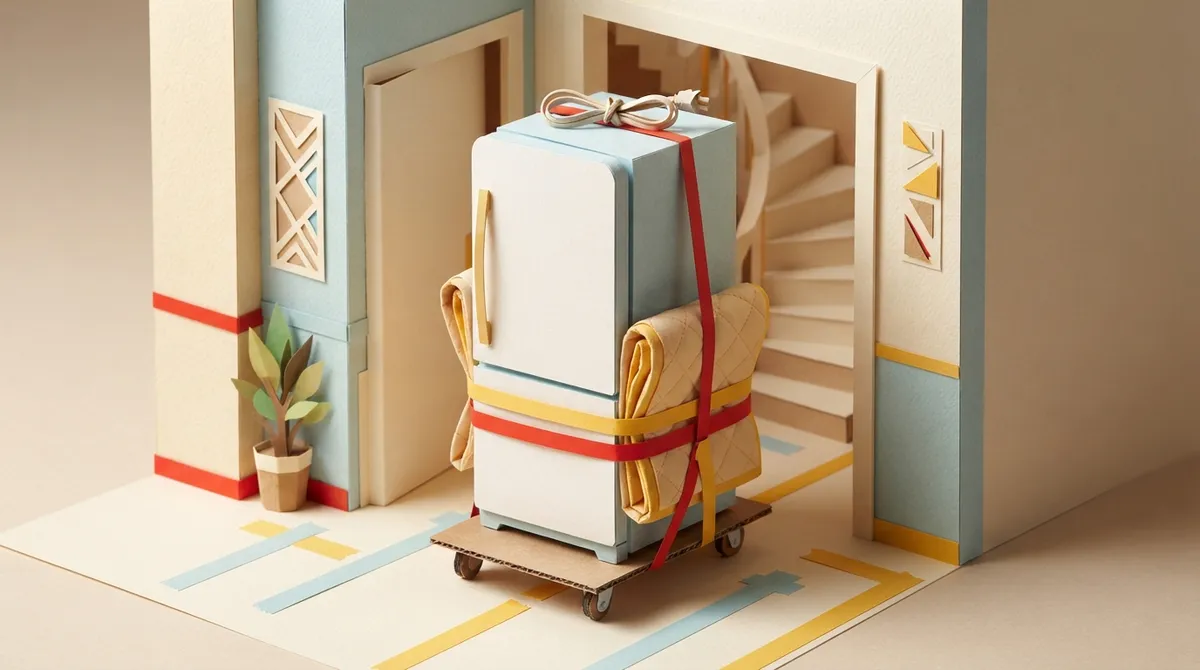
Key Takeaways
- Confirm upfront that movers handle refrigerators and what's included, since most appliance movers transport and position the unit but do not handle plumbing, electrical, or gas hookups.
- Empty, unplug, and defrost the fridge at least 24 hours before moving, disconnect the water line, and secure shelves, drawers, doors, and the power cord.
- Keep the fridge upright whenever possible, and check your owner's manual before moving day, since side transport can stress the compressor and some manufacturers discourage it.
- Wait before plugging the fridge back in, following your model's guidance; one maker suggests about 2 hours after upright transport and at least 12 hours after side transport.
- Measure the fridge and every doorway, hallway, and stairwell beforehand, and disclose tight turns or stairs when booking so the crew brings the right size and equipment.
- Get a written estimate that specifies carrying, padding, placement, and extra labor, and verify the mover is licensed, insured, and offers valuation coverage.
Let's be honest: your refrigerator is probably the heaviest, bulkiest, and most awkward thing in your kitchen. It's also full of stuff you'd rather not spill all over your new floors. If you've ever stared at that big appliance and wondered how on earth it's getting out the door, you're not alone. That's exactly where refrigerator movers come in.
Refrigerator movers are moving pros who transport refrigerators and freezers, either as part of a full household move or as a standalone job. They use the right gear, the right know-how, and a lot of careful teamwork. For a lot of us, that means fewer scraped walls, fewer sore backs, and a lot less stress.
Whether you're a Polk County homeowner moving across town, a family leaving a big estate, a retiree downsizing, or someone settling into a new apartment, this guide walks you through what to expect. We'll cover how pros do it, how to prep, what it costs, and how to avoid common mistakes. Grab a cold drink (while your fridge still works!) and let's get into it.

What Do Refrigerator Movers Actually Do?
Refrigerator movers handle the heavy lifting, safe carrying, and protective wrapping of your fridge or freezer. They do not just grab it and go. A good crew plans the route, protects the appliance, and secures it in the truck so nothing shifts during the drive.
Here's what a typical refrigerator moving job includes:
- Measuring doorways, hallways, and stairwells before the lift
- Using appliance dollies, straps, and padding to control the weight
- Covering floors, walls, and door frames to prevent scuffs
- Securing the doors and power cord so nothing swings open
- Loading the unit upright and strapping it against shifting
- Placing it in your new kitchen or chosen spot
One thing worth knowing: appliance movers typically transport and position the unit. They may not handle plumbing, electrical, or gas hookups. So if your fridge has a water line for the ice maker, plan for a plumber or technician to reconnect it. Always confirm the service scope when you book.
Why Not Just Rent a Dolly and Do It Yourself?
We totally get the DIY urge. A dolly rental is cheap, and your buddy has a truck. But refrigerators are tricky. They are top-heavy, awkward, and packed with delicate parts. One bad tilt on the stairs and you could damage the appliance, your floors, or your back.
Professional movers bring practice, extra hands, and proper equipment. They also bring insurance or valuation coverage options, which matters if something goes wrong. If you're curious how the two paths compare for a bigger move, take a look at hiring vs. DIY for a Polk County residential move.
For seniors and retirees especially, this is a heavy-lifting job best left to the pros. If that's you or someone you love, our guide to senior moving services in Polk County is a great next read.
How Should You Prepare Your Fridge Before Movers Arrive?
A little prep goes a long way. Preparing your refrigerator helps the crew work faster and protects the appliance. It also keeps your new home free of unwanted surprises, like mystery puddles.
Follow these steps in the days before your move:
- Plan your food. Start eating down your fridge and freezer a week or two ahead. Less food means less waste.
- Empty everything. Remove all food, drinks, shelves with items, and condiments. Pack perishables in coolers for the trip.
- Unplug the unit. Do this at least 24 hours before moving day when you can.
- Defrost if needed. Let the freezer thaw and place towels around the base to catch water.
- Clean and dry the inside. Wipe it down so no moisture or odors get trapped behind closed doors.
- Secure loose parts. Remove or tape down shelves, drawers, and bins so they don't rattle or crack.
- Disconnect the water line. If you have an ice maker or water dispenser, shut off and disconnect the line.
- Secure the doors and cord. Use tape or straps that won't harm the finish, and tuck the power cord safely.
Finally, clear the path from your kitchen to the truck. Move rugs, small furniture, and anything else that could trip a crew carrying a heavy load.
Can a Refrigerator Be Moved on Its Side?
This is one of the most common questions we hear, and the honest answer is: it depends on your model. Whenever possible, refrigerators should travel upright. Tipping or laying one down can stress the compressor and move oil where it shouldn't be.
Some manufacturers allow side transport if you follow the right steps. Others strongly discourage it. The safest move is to check your owner's manual or the maker's support page before moving day. If the unit must be tilted for a tight stairwell or doorway, the crew should know about it ahead of time so they can plan carefully.
Here's a good rule of thumb: tell your movers about any tight turns, narrow doors, or stairs when you book. That way they can bring the right crew size and equipment and choose the safest carry plan.
How Long Should You Wait Before Plugging It Back In?
You're in the new place, boxes are everywhere, and you're dying to get that fridge cooling. Hold on a moment. Waiting before you plug in can protect the compressor.
There's no one-size-fits-all answer, because manufacturers give different advice. Here are a few examples drawn from published guidance:
| Manufacturer Guidance | After Upright Transport | After Side Transport |
|---|---|---|
| Liebherr | Wait about 2 hours | Wait at least 12 hours (24 hours for older models) |
| LG (model-specific) | Can plug in once vibration stops | Wait at least 2 hours |
Notice how those differ? That's why your own manual wins. Look up your specific model and follow its instructions. If you can't find them, a longer wait is the safer bet. Let the fridge sit upright, give it time, then plug it in and let it cool down before restocking.
How Much Do Refrigerator Movers Cost?
Pricing varies by location, distance, and difficulty. Online marketplaces offer rough ballparks. One platform's U.S. page reports a typical local refrigerator-moving range of about $100 to $200. Its broader appliance-moving page lists about $70 to $180, with larger appliances like refrigerators tending toward the higher end. These are marketplace estimates, not industry-wide rates, so treat them as a starting point.
Several things can nudge your price up or down:
- Distance: Across the room, across town, or across the state
- Stairs and access: Multiple flights, narrow doorways, and tight turns take more time
- Elevators: Apartment and condo moves may add scheduling or time factors
- Appliance size: Big French-door or side-by-side models are heavier
- Crew size: Tougher jobs may need more hands
- Standalone vs. bundled: A fridge-only job can cost differently than adding it to a full move
When you request a quote, ask exactly what's included. Does it cover carrying, padding, placement, and any extra labor? A clear, written estimate keeps surprises away. If you want to know how pricing works across the board, our 2026 moving pricing guide breaks it down in plain language.
Standalone Fridge Move vs. Part of a Full Move
Sometimes you just need the fridge moved. Maybe you bought a new one, you're shifting it to the garage, or you're sending one to a family member. Other times it's one piece of a full household relocation. Both are doable.
| Factor | Standalone Fridge Move | Part of a Full Move |
|---|---|---|
| Best for | One-off appliance or room-to-room moves | Whole-home relocations |
| Scheduling | Often flexible and quick | Planned around your move date |
| Crew focus | Just the appliance | All furniture, boxes, and appliances |
| Pricing style | Often a flat or minimum charge | Usually hourly or estimate-based |
If you're not sure which fits, ask your mover. Many local crews will happily fold a fridge into a bigger job, which can be the smoothest way to go. For help sorting out the right service level, check out full service vs. labor only moving in Winter Haven.
What Should You Check Before Booking Refrigerator Movers?
Not all moving companies are the same, and you want a team you can trust with a heavy, expensive appliance. Before you book, run through this quick checklist:
- Confirm they handle refrigerators. Not every crew moves large appliances.
- Ask about equipment. Appliance dollies, straps, and padding should be standard.
- Check licensing and insurance. This protects you and your home.
- Ask about valuation coverage. Know what happens if something is damaged.
- Measure everything. Know the fridge size and the width of every doorway and hall.
- Disclose access challenges. Mention stairs, tight corners, or long carries up front.
- Get a written estimate. Make sure it spells out what's included.
Verifying credentials takes just a few minutes, and it's worth it. Our article on spotting licensed and insured movers in Polk County shows exactly what to look for. You can also learn about protecting your move from the Federal Motor Carrier Safety Administration for additional guidance on hiring a legitimate mover.
How Do Movers Protect Your Home During the Carry?
Your fridge isn't the only thing that needs protecting. Floors, walls, and door frames take a beating when a heavy appliance rolls through. Good refrigerator movers think about the whole path, not just the object.
Here's how pros usually handle it:
- Walk the route first. They spot tight turns and tricky thresholds before lifting.
- Lay down floor protection. Runners or boards shield hardwood, tile, and carpet.
- Pad the appliance. Moving blankets and wrap keep the finish scratch-free.
- Strap it to the dolly. The unit stays steady and balanced.
- Use spotters on stairs. Extra hands help control the weight on each step.
- Secure it in the truck. Straps and load bars keep it upright and stable.
This kind of careful, step-by-step approach is especially valuable in luxury homes and high-end apartments, where polished floors and fine finishes deserve extra care. If you're moving into a building with elevators and loading rules, take a peek at our apartment movers in Polk County overview for helpful tips.
Common Fridge-Moving Mistakes to Avoid
After helping so many families, we've seen the same slip-ups pop up again and again. The good news is they're all easy to dodge once you know about them.
- Skipping the measurements. A fridge that won't fit through the door is a very bad surprise.
- Moving it with food inside. Spills, spoiled items, and extra weight make everything harder.
- Forgetting the water line. A connected ice-maker line can leak and flood your floor.
- Laying it down without checking the manual. This can harm the compressor.
- Plugging in too soon. Give it time to settle, following your model's guidance.
- Not telling the movers about stairs. Hidden obstacles lead to delays and extra charges.
For a wider look at things that can trip up a move, our post on mistakes to avoid when hiring local residential movers in Polk County is full of useful reminders.
Moving a Refrigerator in Polk County: Local Considerations
Central Florida moves come with their own flavor. Heat and humidity can make a long carry feel even longer, and many homes have tile floors, tight garage entries, or stairs leading to upper units. Planning your move for cooler morning hours can help everyone stay comfortable and focused.
If you're relocating within Lakeland, Winter Haven, Davenport, or Dover, a local crew already knows the neighborhoods, street layouts, and building rules. That local know-how saves time and reduces surprises on moving day. Heading farther out? Plan early so your fridge and everything else gets a smooth, well-coordinated trip.
At DynaMight Movers, we're a licensed and insured moving company that handles heavy lifting and specialty items with care. You can see what neighbors say about us when you visit us on Google — DynaMight Movers. We believe your estimate should be your price, with no hidden fees waiting on moving day.
Wrapping It Up: Let the Pros Handle the Heavy Stuff
Moving a refrigerator doesn't have to be a nightmare. With the right prep, clear communication, and a skilled crew, it becomes just another checkbox on your moving list. Empty it, unplug it, secure the loose parts, disconnect the water line, and let experienced refrigerator movers do what they do best.
Remember to follow your manufacturer's guidance on keeping the unit upright and on how long to wait before plugging it back in. Ask about pricing details up front, share any access challenges, and choose a mover that's licensed and insured. Do that, and your fridge will arrive ready to keep your groceries cold and your new kitchen humming.
Ready to take the weight off your shoulders? Get a free estimate from DynaMight Movers today, or call us at (866) 349-7719 to talk through your move. We're happy to help, and we promise to treat your fridge, and your home, with the care they deserve.
FAQs
Q: How much does it cost to hire refrigerator movers?
A: Costs depend on distance, stairs, access, and appliance size. One marketplace reports a typical local range of about $100 to $200 for a refrigerator move, but that's only an estimate. Ask for a written quote so you know exactly what's included.
Q: Do refrigerator movers disconnect and reconnect water lines?
A: Usually, you'll want to disconnect the ice-maker or water line yourself before the crew arrives. Many appliance movers transport and position the unit but don't do plumbing or electrical hookups. Confirm the service scope when you book so there are no surprises.
Q: Can movers transport a refrigerator on its side?
A: It depends on the model, so check your owner's manual first. Upright is best whenever possible, since tilting can stress the compressor. If a tight stairwell or doorway forces a tilt, let your movers know in advance so they can plan the safest way.
Q: How long should I wait to plug in a refrigerator after moving it?
A: Follow your manufacturer's guidance, since it varies by brand and model. For example, one maker suggests about 2 hours after upright transport and at least 12 hours after side transport, while another says certain models can be plugged in sooner. When in doubt, a longer wait is safer.
Q: How do I prepare my refrigerator for professional movers?
A: Empty it, unplug it, defrost if needed, and clean and dry the inside. Remove or secure shelves and drawers, disconnect the water line, and tape the doors and cord safely. Then clear a path so your crew can move smoothly.