
Key Takeaways
- Florida household movers must register with the Florida Department of Agriculture and Consumer Services under Chapter 507; verify registration numbers on contracts and trucks before booking to ensure legitimacy and legal compliance.
- Local Central Florida movers offer faster scheduling, transparent pricing, and neighborhood expertise with narrow driveways and HOA rules, while national chains may subcontract locally anyway and layer on hidden fees for fuel and distance.
- Typical costs range from $850-$1,600 for local 2-3 bedroom moves and $2,200-$6,500+ for long-distance moves; get itemized written estimates from 2-3 companies to spot unusually low quotes hiding extra fees.
- Always ask about insurance coverage (minimum $0.60 per pound for intrastate moves), whether the company is a mover or broker, deposit policies, and how they handle stairs, elevators, and HOA restrictions specific to your neighborhood.
Picking a moving company can feel like a big decision. You want someone who shows up on time, treats your grandmother's china like gold, and doesn't hit you with surprise fees. If you're searching for central Florida movers right now, you've probably noticed two very different paths: hiring a local, hands-on crew or going with a big national chain. Both can get your boxes from point A to point B, but the experience along the way can look wildly different.
We wrote this guide to help you compare your options with a clear head. Whether you're a homeowner in Lakeland, a retiree heading to a quieter community, or a family moving out of a big estate full of specialty furniture, this article walks you through what really matters. Let's dig in together, friend to friend, so you can make the choice that fits your move, your budget, and your peace of mind.

What "Central Florida Movers" Actually Means
When people search for central Florida movers, they're usually looking for residential or commercial moving companies that serve the greater Orlando area and the communities around it. This includes cities like Kissimmee, Winter Park, Sanford, Lake Mary, Altamonte Springs, Clermont, Lakeland, Daytona Beach, Deltona, Leesburg, The Villages, and Ocala.
These movers typically offer a wide range of help, including:
- Local and long-distance moves for homes and apartments
- Office and small business relocations
- Packing and unpacking services
- Loading and unloading help
- Short-term and long-term storage
- Furniture disassembly and reassembly
- Specialty-item handling for pianos, safes, and antiques
Central Florida is a mix of dense apartment buildings, quiet suburban neighborhoods, retirement communities, and busy business districts. That means a good mover needs real experience with elevators, HOA rules, gated entrances, and tight parking. Not every crew is ready for that kind of variety, which is exactly why comparing your choices matters so much.
Local Movers vs. National Chains: The Real Differences
Let's get to the heart of the comparison. Both options have their place, but they serve different needs.
Local, Independent Moving Companies
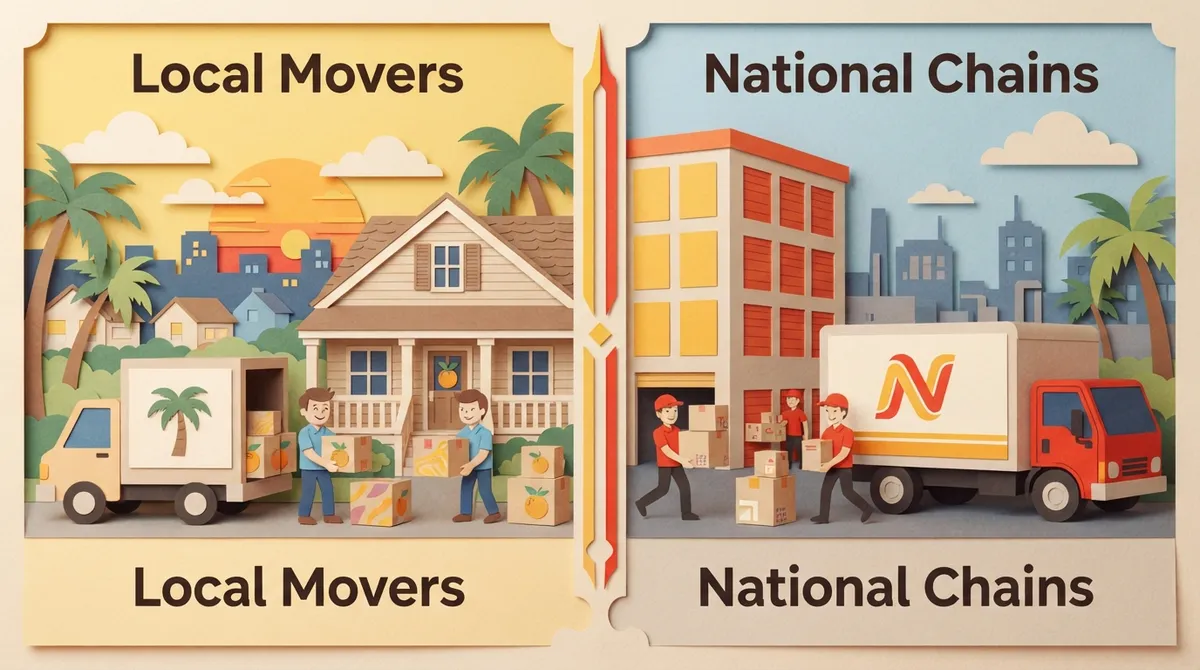
Local movers usually know the area inside and out. They understand which neighborhoods have narrow driveways, which apartment complexes require elevator reservations, and how traffic patterns shift during peak season. Many local companies, including DynaMight Movers, build their reputation on personal service, transparent pricing, and a crew that treats every home like it's the only one on the schedule that day.
Local companies often offer:
- Flexible scheduling, including weekends and last-minute moves
- Direct communication with the same team from quote to delivery
- Better familiarity with Polk County and surrounding neighborhoods
- Pricing that's easier to negotiate and adjust to your specific needs
National Moving Chains
Big national companies bring name recognition and sometimes more resources for very long interstate moves. However, they may subcontract your job to a local crew anyway, which means you're not always getting the brand experience you expected. Pricing structures can also be harder to pin down, since national companies often layer on fees for fuel, distance, and additional services.
If you're weighing your options for a bigger move, it helps to read up on hiring vs. DIY for a Polk County residential move before deciding how much help you actually need.
Florida Regulations Every Mover Must Follow
Here's something a lot of people don't know. Florida household movers and moving brokers must register with the Florida Department of Agriculture and Consumer Services under Chapter 507 of Florida law. This applies to moves within the state, known as intrastate moves.
According to a Florida Senate analysis of Chapter 507, there were 1,348 registered movers and 39 registered moving brokers active in the state as of December 2023. Registration costs $300 per year for each mover or broker, and registered companies must show their registration number on their trucks, contracts, and advertising.
Before you book, verify a company's registration and ask these key questions:
- Is the company registered with FDACS, and can they show you the number?
- Are they a licensed mover, or are they acting as a broker who hires out the job?
- What kind of insurance or valuation coverage do they carry?
- Do they provide a written estimate that spells out every fee?
- What are their deposit and cancellation policies?
For Florida moves within the state, basic liability protection is often set at $0.60 per pound per article. That's the minimum, so it's smart to ask about additional valuation coverage if you have higher-value belongings. If your move crosses state lines, federal rules apply instead of just Florida's intrastate requirements, so ask about federal registration too.
How Much Do Central Florida Movers Cost?
Pricing depends on a lot of moving parts, literally. Your final cost is shaped by how much stuff you have, how far you're going, how many stairs or elevators are involved, and whether you need packing help or storage.
| Move Type | Typical Cost Range (2026) |
|---|---|
| Local move (2-3 bedroom home) | $850 - $1,600 |
| Two-bedroom apartment move | $1,000 - $2,200 |
| Hourly rate (2-mover crew and truck) | $95 - $150 per hour |
| Long-distance or interstate move | $2,200 - $6,500+ |
These numbers come from current Florida pricing guides and can shift based on season, crew size, and any minimum-hour policies a company uses. A 2026 Florida moving cost guide breaks this down further if you want to dig into the details.
If you're trying to stretch your budget, check out these 15 tips for finding cheap movers in Polk County. A little planning goes a long way toward keeping costs down without sacrificing quality.
Choosing the Right Mover for Your Situation
Not every move looks the same, and that's okay. Here's how different situations call for different approaches.
Homeowners and Families Moving Locally
If you're staying within Polk County or nearby, a local team that knows the streets and neighborhoods will likely save you time and headaches. Local movers can often schedule faster and adjust to same-day requests. Learn more about how to choose residential movers in Polk County before signing anything.
Long-Distance and Out-of-State Moves
If you're heading further away, ask detailed questions about how the company handles interstate logistics, storage during transit, and delivery windows. Review what you should know before a long-distance move so you're not caught off guard by timing or paperwork.
Retirees and Seniors
Moving into a retirement community often means downsizing and needing extra patience during the process. A caring crew that offers heavy lifting support and careful packing makes all the difference. Take a look at these senior moving services in Polk County that help if this sounds like your situation.
Owners of Specialty Items
Pianos, antiques, gun safes, and pool tables need more than muscle. They need experience. If you own valuable or awkward pieces, look for specialty item movers you can trust who bring the right gear and training to the job.
Questions to Ask Before You Book
A little homework before moving day saves a lot of stress later. Here are the essentials to cover:
- Do you provide a written, itemized estimate?
- Are you a mover or a broker, and how does that affect my service?
- What insurance or valuation coverage is included?
- How do you handle stairs, elevators, or HOA restrictions?
- What happens if my move date changes?
Comparing at least two or three written estimates is one of the smartest things you can do. It helps you spot unusually low quotes that might hide extra fees later. For more guidance, check out these smart ways to get a free moving quote in 2026.
Why Local Expertise Matters in Central Florida
Central Florida isn't just one big city. It's a patchwork of apartment communities, retirement villages, gated neighborhoods, and sprawling family homes. A mover who only knows the highways won't know which parking garages require reservations or which HOAs enforce strict move-in windows.
That local knowledge translates into a smoother day for you. Fewer surprises, faster loading, and a crew that already knows how to navigate tricky driveways or narrow hallways. This is one reason why so many residents lean toward companies with strong regional roots rather than a distant call center handling their booking.
Curious what real customers say about working with a hometown crew? You can visit DynaMight Movers on Google to read honest reviews from folks who've been exactly where you are now.
Final Thoughts: Local Expertise or National Reach?
So, local movers or national chains? For most Central Florida families, the answer comes down to trust, transparency, and how well a company understands the neighborhoods you're moving into or out of. Local companies tend to offer more personal attention, clearer pricing, and faster scheduling, while national chains may only make sense for very long interstate relocations with complex logistics.
Whatever you decide, always verify registration, ask for a detailed written estimate, and don't be afraid to ask hard questions. Your belongings, your time, and your peace of mind are worth it.
If you're ready to make your next move simple and stress-free, our friendly team is here to help. Get a free estimate today, or call us at (866) 349-7719 to talk through your moving plans with a real person who cares.
FAQs
Q: How much do movers cost in Central Florida?
A: It really depends on your home size and distance, but local moves typically run about $850 to $1,600, while long-distance moves can range from $2,200 to $6,500 or more. The best way to know your exact cost is to get a written estimate, so you're never guessing on moving day.
Q: What cities do Central Florida movers typically serve?
A: Most Central Florida movers cover the Orlando metro area along with nearby communities like Kissimmee, Winter Park, Sanford, Lakeland, and The Villages. Many companies, including ours, also serve Polk County towns like Winter Haven, Davenport, and Dover, so you're in good hands no matter where you're headed.
Q: How can I verify a Florida moving company is registered?
A: You can check a mover's registration status through the Florida Department of Agriculture and Consumer Services, since all household movers must register under Chapter 507. It's a quick step that gives you real peace of mind before you hand over your belongings.
Q: What's the difference between a moving company and a moving broker?
A: A moving company owns the trucks and does the actual work, while a broker arranges for another company to handle your move. Knowing which one you're hiring helps you understand who's truly responsible for your belongings on moving day.
Q: How far in advance should I book Central Florida movers?
A: We always recommend booking at least three to four weeks ahead, especially during busy summer months when everyone seems to be moving at once. If you're in a pinch, though, don't worry, many local crews can still work with shorter notice.