
Key Takeaways
- Appliance movers transport the unit, but disconnecting and reconnecting water, electrical, and gas lines is often a separate service, so confirm in writing who handles each connection before booking.
- Gas-line disconnect and reconnect should be done by a qualified, licensed technician, so plan that visit early if you have a gas range or gas dryer.
- Keep refrigerators upright whenever possible; if one must be moved on its side, follow the manufacturer's guidance and let it stand upright before plugging it in.
- Before disconnecting any appliance, photograph the back of the unit so reconnecting it later is far easier.
- Get a written estimate based on your actual access details, including stairs, long carries, and tight doorways, since these factors commonly raise the price.
- Verify that the mover is licensed and insured, ask how damage claims work, and understand what valuation coverage applies to high-value appliances, since full value is not always automatic.
Let's be honest. Nobody wakes up excited to haul a refrigerator down a hallway. Appliances are heavy, awkward, and surprisingly easy to damage. One bad pivot on a staircase and you could have a dented fridge, a scratched floor, or a sore back that lasts for weeks.
That's where an appliance moving company comes in. These are moving professionals who know how to handle big household equipment safely, whether it's part of a full home move or a single-item job. If you're planning a move in Polk County or anywhere in Central Florida, understanding what these pros do can save you money, time, and stress.
In this guide, we'll walk through what an appliance moving company actually does, how to prepare your appliances, what it may cost, and how to pick a team you can trust. Think of it as a friendly chat with someone who has seen a lot of washers and dryers in a lot of tight laundry rooms.

What Does an Appliance Moving Company Do?
An appliance moving company is a moving-service provider that transports large household appliances. Common items include refrigerators, freezers, washers, dryers, dishwashers, and ranges. The service may be part of a household move or a standalone local job.
A good crew does more than carry the item out the door. Here is what typical handling looks like:
- Assess the path. The crew checks doorways, hallways, stairs, and the truck route.
- Measure the appliance. They compare its size with every tight spot along the way.
- Protect everything. Pads and wraps cover the appliance, and floors, walls, and door frames get protection too.
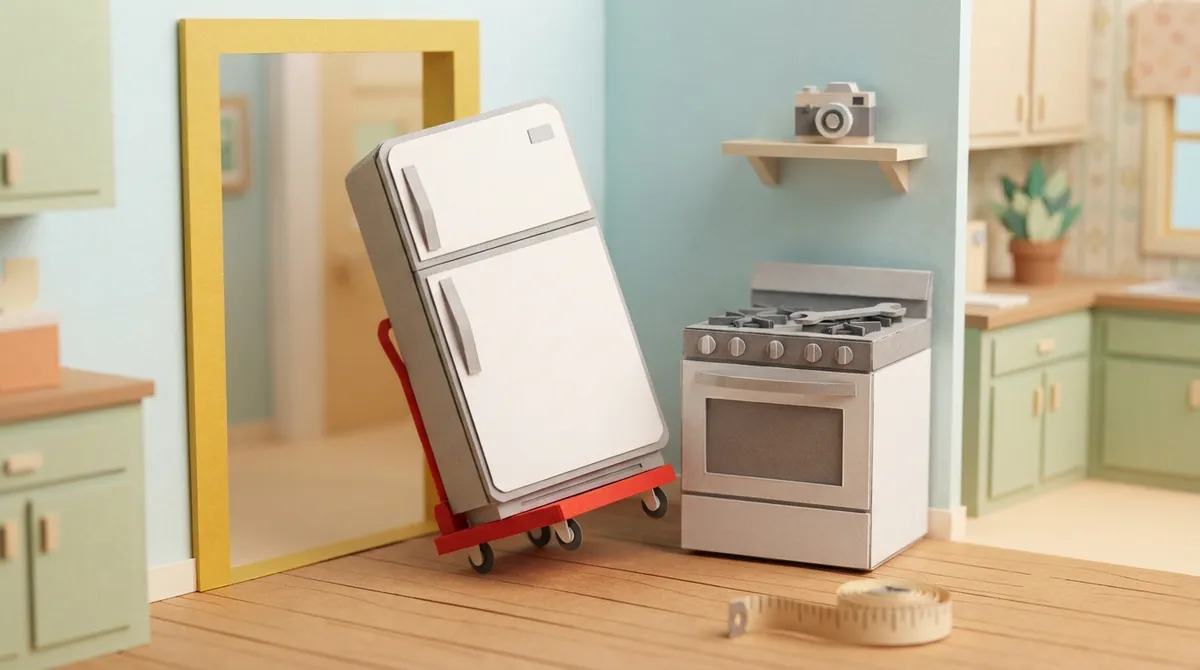
- Use the right gear. An appliance dolly and straps keep heavy units steady and controlled.
- Load and secure. The appliance is placed in the truck and strapped so it can't shift or tip.
- Place it at the new home. The crew sets it where you want it, ready for you or a technician to connect.
That last step matters. Moving an appliance and installing an appliance are not always the same service. We'll cover that below.

Why Appliances Need Special Handling
Appliances are not like sofas or bookshelves. They have heavy motors, delicate internal parts, glass doors, water lines, and sometimes sharp edges. A refrigerator can weigh several hundred pounds. A washer drum can be damaged if it isn't secured the right way.
Here's why professional handling pays off:
- Safety. Heavy lifting is the number one cause of moving injuries. Trained crews use proper technique and equipment.
- Protection for your home. Tight turns and stairs can chip paint, gouge hardwood, and crack tile.
- Protection for the appliance. Dents, bent doors, and cracked panels can turn a working unit into a costly replacement.
- Efficiency. A skilled team can move a full set of appliances in a fraction of the time it takes two friends and a borrowed dolly.
For families leaving a large home or estate, the load can include a double-door fridge, a second garage freezer, and a full laundry pair. That's a lot of weight. For retirees downsizing into a smaller place, hiring help means you never have to lift a thing. And for anyone moving into a luxury apartment, careful floor and elevator protection is a big deal.
Moving vs. Utility Work: Know the Difference
This is one of the most common points of confusion. Many movers will transport your appliance but will not disconnect or reconnect it. Utility work is often separate.
Here is a simple way to think about it:
| Task | Usually Handled By | Notes |
|---|---|---|
| Carrying and loading the appliance | Moving crew | Core appliance moving service |
| Transporting to the new home | Moving crew | Strapped and padded in the truck |
| Placing the appliance in the new space | Moving crew | Confirm placement in your estimate |
| Water line connections | Varies | Ask who is responsible before booking |
| Electrical connections | Varies | Plug-in units are simple; hardwired units need a pro |
| Gas line disconnect and reconnect | Licensed technician | Should be done by a qualified, licensed professional |
The big safety takeaway is this: gas-line work should be handled by a qualified, licensed technician. If you have a gas range or gas dryer, plan for that early. Also, ask your mover exactly who is responsible for water, electrical, and gas connections. Get the answer in writing so there are no surprises on moving day.
How to Prepare Your Appliances for a Move
Preparation depends on the appliance and the manufacturer. Always check your owner's manual first, and ask your mover what they require. That said, here are common steps that make moving day go smoothly.
Refrigerators and Freezers
- Empty the unit and toss anything that won't be moved.
- Clean the inside to prevent odors and mold.
- Defrost freezers when needed, and let melted water dry out.
- Disconnect and cap water lines for ice makers.
- Secure shelves, drawers, and loose parts so they don't rattle or break.
- Tape or strap doors shut so they don't swing open.
Washers and Dryers
- Disconnect water hoses and drain them completely.
- Secure the washer drum following the manufacturer's instructions.
- Clean the lint trap and dryer vent area.
- Wrap cords and tape them to the back of the unit.
Dishwashers and Ranges
- Remove racks and loose parts, and pack them separately.
- Drain any leftover water from dishwasher lines.
- Take out oven racks and cooktop grates to prevent scratches.
- Arrange professional disconnection for gas ranges.
A quick tip from the moving world: take photos of the back of each appliance before you disconnect it. Those pictures make reconnecting so much easier later.
Can Movers Transport a Refrigerator on Its Side?
This is a super common question. The safest answer is to keep refrigerators upright whenever possible. Moving one on its side can cause oil from the compressor to shift into places it doesn't belong, which may affect how the unit runs later.
If a unit must be moved on its side, follow the manufacturer's guidance and let it stand upright for a while before plugging it in. A professional crew will usually know the right approach for your specific model. When in doubt, ask them before moving day.
How Much Does an Appliance Moving Company Cost?
Prices depend on where you live and what's included. There's no single national number that fits everyone. Here are the most common pricing models:
- Hourly rates. You pay for a crew and truck by the hour, often with a minimum.
- Job-based quotes. The company gives you one price for the whole job based on details you share.
To give you a sense of how much it varies, one on-demand service shows sample appliance moves ranging from roughly $50 to $276. A local mover in another state lists rates starting at $149 per hour with a three-hour minimum for a two-person crew and truck. Both figures are company-specific examples, not market averages, so please don't treat them as a guarantee of what you'll pay.
Here are the things that commonly raise or lower the price:
| Factor | How It Can Affect Price |
|---|---|
| Stairs | More labor and time, especially with heavy units |
| Long carries | Extra distance from truck to door adds time |
| Tight access | Narrow doors or halls may need extra care or door removal |
| Heavy or built-in units | May need more crew members and special handling |
| Disconnect and reconnect | Often priced separately or handled by a technician |
| Distance | Longer drives mean higher costs |
The smartest move is to get a written estimate based on your actual situation. If you'd like a clear number without pressure, you can get a free estimate from our team. For a deeper look at how pricing works, our guide on how movers charge is a helpful read.
Questions to Ask Before You Book
Not every mover handles appliances the same way. Before you sign anything, ask these questions:
- Do you have experience with my specific appliance? Built-in, French-door, and commercial-style units can be tricky.
- How big is the crew, and what equipment do you bring? Look for appliance dollies, straps, and floor protection.
- How do you protect floors and doorways? A careful team has a clear answer.
- What's included in the price? Confirm in writing whether packing, stairs, door removal, and setup are covered.
- Are there extra fees? Ask about stairs, long carries, and access charges.
- How do damage claims work? Know the process before you need it.
- What coverage do you offer? Understand the valuation options.
- Are you licensed and insured for this type of move? This one is non-negotiable.
If you want to double-check credentials, our article on spotting licensed and insured movers in Polk County walks you through exactly what to look for.
Understanding Licensing, Estimates, and Coverage
Here's a helpful note on federal rules. For interstate household moves in the United States, the Federal Motor Carrier Safety Administration advises consumers to make sure the mover is registered, review a written estimate and bill of lading, and understand the mover's liability options. The FMCSA also states that interstate household-goods movers must provide written estimates, and you should read both the estimate and the bill of lading before your move.
These federal requirements apply to interstate household-goods moves. Local rules and protections can differ, so always ask your mover what applies to your specific job. If you're moving out of the area, our post on what to know before a long-distance move can help you plan.
As for insurance, many people assume their appliance is automatically covered for full value. That's not always the case. Coverage varies by mover and by the valuation option you choose. Ask what's included, what the limits are, and whether you can add more protection for high-value items like a premium refrigerator or a professional-grade range.
Appliance Moving for Different Types of Movers
Every household is different, so let's look at a few common situations.
Local Homeowners
If you're moving across town in Lakeland, Winter Haven, or Davenport, a local crew can often handle appliances as part of a standard residential move. Short drives and flexible scheduling keep things simple. See our tips on choosing residential movers in Polk County for more.
Long-Distance Movers
For farther moves, ask whether your appliances are worth moving at all. Sometimes selling an older unit and buying new at your destination costs less than shipping it. If you do bring them, proper prep and secure loading matter even more over long miles.
Luxury Apartment Residents
High-end buildings often have elevator reservations, loading dock rules, and strict floor protection requirements. Choose a crew that treats common areas like they're their own. Our guide to apartment movers in Polk County covers what to expect.
Retirees and Families Downsizing
If you're moving into a retirement home, you shouldn't be lifting anything heavier than a coffee mug. A patient, experienced crew can handle every appliance with care. Our senior moving services in Florida page shares how a calm, supportive move can work.
Large Families and Estate Owners
Bigger homes often mean more appliances, including secondary fridges, chest freezers, wine coolers, and commercial-style ranges. A team with the right manpower makes a huge difference. Pair appliance moving with bulky furniture and specialty pieces, and you'll want a crew built for heavy lifting.
Red Flags to Watch Out For
Most movers are honest and hardworking. But a few warning signs are worth knowing:
- A quote with no written details or no inspection of your access points
- A price that seems far lower than every other estimate
- No proof of license or insurance when you ask
- No clear answer on who handles disconnects and reconnects
- Pressure to pay a large cash deposit upfront
If something feels off, trust your gut. Our article on mistakes to avoid when hiring local residential movers is a great checklist to keep handy.
A Quick Moving-Day Checklist for Appliances
Use this simple list in the days leading up to your move:
- Confirm the date, time, and crew size with your mover.
- Schedule any gas-line or utility technician visits.
- Empty, clean, and defrost refrigerators and freezers.
- Disconnect and drain water lines.
- Secure doors, shelves, and washer drums.
- Clear hallways, stairs, and doorways.
- Measure doorways and compare them with appliance sizes.
- Take photos of connections before disconnecting.
- Review the written estimate one more time.
Little steps like these keep your move moving and your appliances safe.
Why Choose DynaMight Movers for Appliance Moves
At DynaMight Movers, we're a licensed and insured moving company serving Polk County, Florida, including Lakeland, Winter Haven, Davenport, and Dover. We handle heavy lifting, specialty items, and big household pieces with care, and we keep our pricing transparent so you always know what to expect.
Curious what other customers think? You can visit us on Google — DynaMight Movers to see what neighbors in our community are saying. And if you're planning an appliance move in Lakeland specifically, our guide on how to hire appliance movers in Lakeland, Florida has local tips worth reading.
Ready to Move Your Appliances Without the Stress?
Moving appliances doesn't have to be a headache. With the right preparation, clear communication, and a crew that knows what it's doing, even the heaviest fridge can glide into its new spot without a scratch.
Do your homework, ask good questions, and get everything in writing. That's the secret to a smooth move. When you're ready to talk through your appliances, stairs, and timeline, get a free estimate or call us at (866) 349-7719. We'd love to help you move with confidence.
FAQs
Q: What does an appliance moving company do?
A: An appliance moving company safely transports large household items like refrigerators, washers, dryers, dishwashers, and ranges. The crew assesses access, protects the appliance and your home, uses dollies and straps, and loads and places the item at your new address. It can be a standalone service or part of a full household move.
Q: Do appliance movers disconnect and reconnect washers, dryers, or refrigerators?
A: Not always, and that's a great thing to ask about upfront. Some movers transport appliances without handling water, electrical, or gas connections. Gas-line work should be done by a qualified, licensed technician, so confirm in writing who is responsible for each connection.
Q: How much does it cost to hire appliance movers?
A: It depends on your location and what's included. Common pricing models are hourly crew-and-truck rates or a job-based quote, and things like stairs, tight access, and heavy or built-in units can raise the price. The best way to know your cost is to get a written estimate for your specific job.
Q: How should I prepare a refrigerator or washer before moving?
A: For a refrigerator, empty and clean it, defrost if needed, disconnect water lines, and secure the doors and shelves. For a washer, drain the hoses and secure the drum following the manufacturer's manual. Always ask your mover what preparation they require.
Q: How do I choose a reliable appliance moving company?
A: Look for a licensed and insured company with experience moving your type of appliance. Ask about crew size, equipment, floor protection, damage-claim steps, valuation coverage, and any extra fees. A clear written estimate is a great sign you're working with pros.