
Key Takeaways
-
Thoroughly empty the gun safe and remove all interior components before moving to reduce weight and prevent internal damage.
-
Measure all doorways, hallways, and staircases precisely, adding 2 inches of clearance to ensure safe passage of the safe.
-
Use specialized heavy-duty appliance dollies rated for over 1,000 pounds and proper furniture straps to safely transport gun safes.
-
Protect floors and walls with plywood, moving blankets, and padding to prevent costly damage during the move.
-
Professional movers recommend at least three people coordinate the move, using progressive positioning and careful weight distribution.
-
Wear steel-toed boots and heavy work gloves, and never attempt to manually lift a gun safe due to injury risks.
-
For moves involving stairs or safes over 500 pounds, hire professional movers with specialized equipment and insurance coverage.
-
Verify moving company credentials and request a detailed written estimate that includes all potential charges and equipment fees.
Moving a gun safe ranks among the most challenging household tasks you will ever face. These steel fortresses weigh anywhere from 200 to 2,000 pounds, and one wrong move can crack your flooring, punch holes in your walls, or cause serious injury. Most homeowners underestimate what it takes to relocate these massive security boxes safely.
You need more than brute strength to move a gun safe properly. You need the right tools, the right technique, and most importantly, the right team. This guide walks you through everything you need to know about moving gun safes, from preparation to final placement, so you can protect your home and your valuable firearms during the relocation process.
Why Gun Safes Are So Difficult to Move
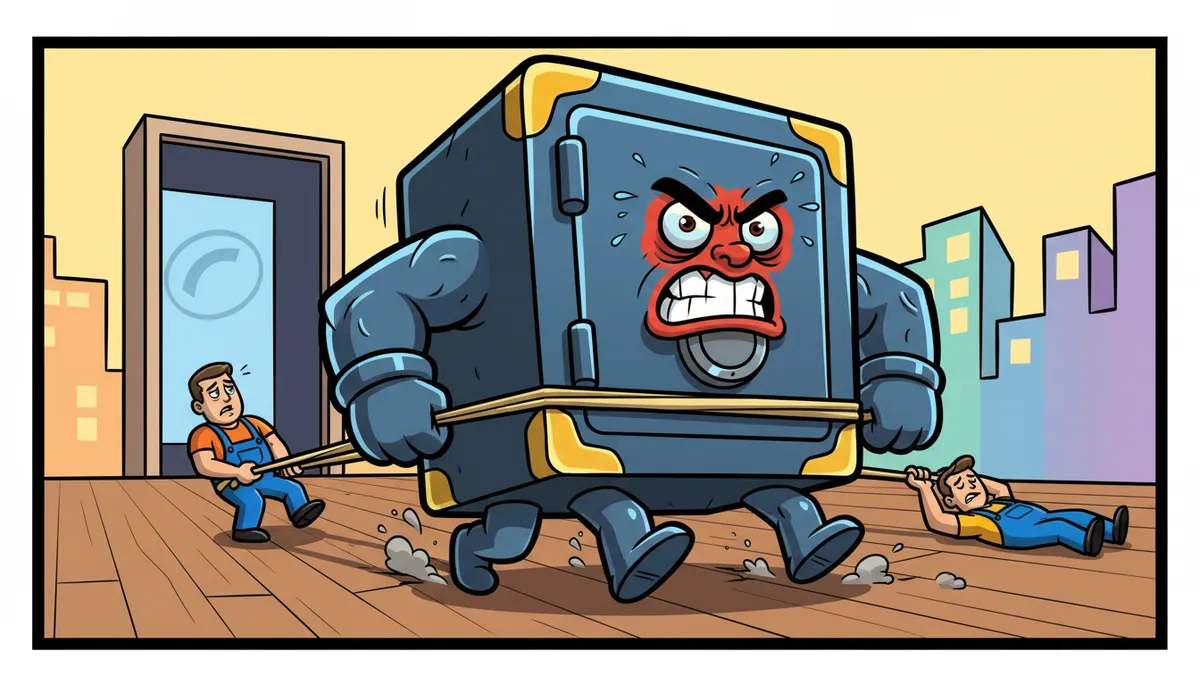
Gun safes are built like tanks because that is their job. They protect your firearms from theft, fire, and unauthorized access. The thick steel walls and fire-resistant materials that keep your guns secure also make these safes incredibly heavy and awkward to handle.
The average gun safe weighs between 400 and 800 pounds when empty. Add your firearms and ammunition, and you could be looking at over 1,000 pounds. That weight concentrates in a relatively small footprint, creating enormous pressure on floors and making the safe extremely difficult to balance and maneuver.
The shape presents another challenge. Gun safes are tall, narrow, and top-heavy. This design makes them prone to tipping during transport. One small mistake on a staircase or doorway can send hundreds of pounds crashing down, causing thousands of dollars in damage to your home and potentially injuring anyone nearby.
Common Mistakes That Lead to Damage
Many homeowners make the same errors when attempting to move gun safes themselves. Understanding these mistakes helps you avoid them during your own move.
The first mistake is underestimating the weight. People see a safe that is only four feet tall and assume they can handle it with a friend or two. This miscalculation leads to strained backs, dropped safes, and damaged homes. Professional movers know that gun safes require specialized equipment and trained crews.
Another common error is using inadequate equipment. Standard furniture dollies cannot handle the concentrated weight of a gun safe. You need heavy-duty appliance dollies with proper straps and weight ratings. Trying to move a 600-pound safe on a dolly rated for 300 pounds is asking for disaster.
Finally, many people fail to protect their home during the move. Gun safes can gouge hardwood floors, dent drywall, and crack tile with minimal contact. Without proper floor protection and wall padding, you will spend more repairing damage than you would have spent hiring professionals in the first place.
What Equipment Do You Need for Moving Gun Safes?
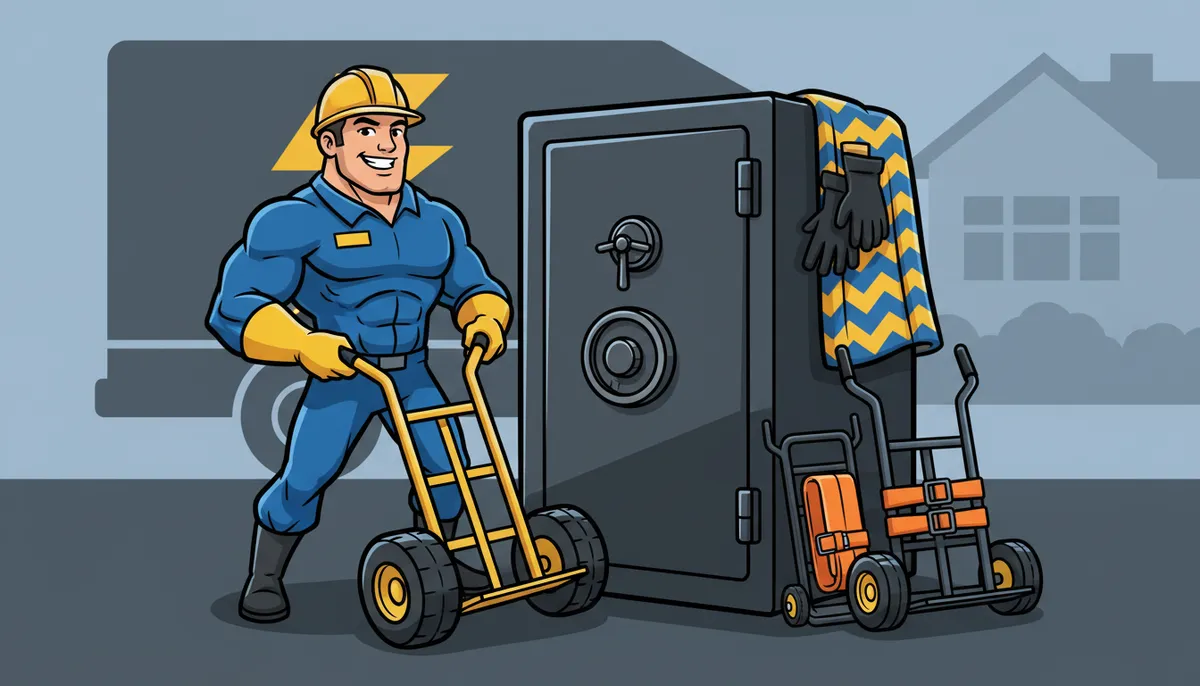
Professional safe movers rely on specialized tools that most homeowners do not own. These tools make the difference between a smooth relocation and a disaster. Here is what the job requires:
- Heavy-duty appliance dolly rated for at least 1,000 pounds
- Furniture straps or ratchet straps to secure the safe during transport
- Floor protection including plywood sheets and moving blankets
- Stair-climbing dolly for multi-level homes
- Moving blankets to protect walls and doorframes
- Measuring tape to confirm clearances before moving
Beyond basic equipment, you also need the right vehicle. Most gun safes will not fit through the door of a standard pickup truck. You need a moving truck with a loading ramp and tie-down points. The truck bed must be tall enough to accommodate the safe standing upright, as laying a gun safe on its side can damage internal components.
If you plan to tackle this job yourself, factor in equipment rental costs. A stair-climbing dolly alone can cost $75 to $150 per day to rent. By the time you add floor protection, straps, and a truck rental, you may find that professional specialty item movers offer better value and far less risk.
Safety Equipment You Cannot Skip
Moving a gun safe is dangerous work. Proper safety equipment protects you and your moving team from injury. Steel-toed boots are essential because if a gun safe tips or rolls, regular shoes offer zero protection. One wrong move could crush your foot.
Heavy work gloves give you better grip and protect your hands from sharp edges and pinch points. Gun safes have numerous places where fingers can get caught during lifting and positioning. Gloves also prevent blisters during the long process of maneuvering the safe.
Back support belts help maintain proper lifting posture, but they are not a substitute for proper technique. Even with a support belt, you should never attempt to lift a gun safe manually. These belts work best when combined with mechanical lifting equipment and multiple helpers.
Step-by-Step Guide to Preparing Your Gun Safe for Moving
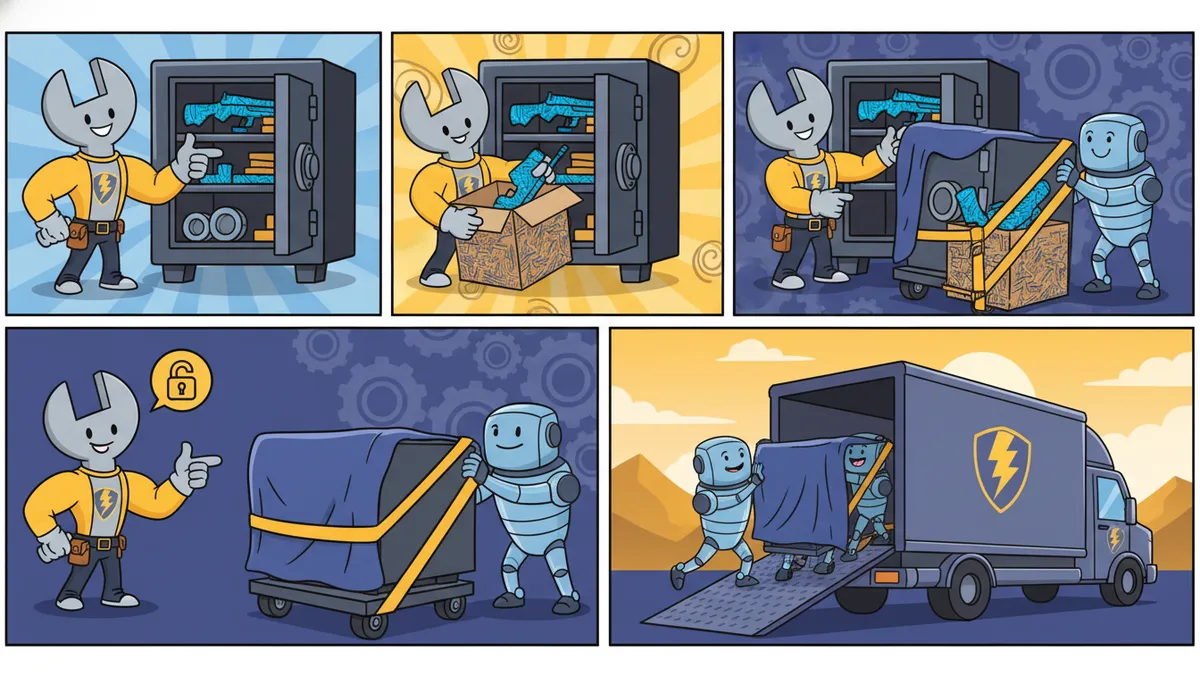
Preparation determines whether your gun safe move succeeds or fails. Take these steps before you attempt to move the safe even one inch:
1. Empty the Safe Completely
Remove all firearms, ammunition, documents, and valuables from the safe. Even a few rifles can add 50 to 100 pounds to the total weight. Every pound matters when you are trying to maneuver through tight doorways and around corners.
After removing the contents, check shelves and compartments. Many gun safes have removable interior components that can shift during transport and damage the locking mechanism. Remove dehumidifiers, LED lights, and any aftermarket accessories that could come loose during the move.
Store your firearms securely in a separate location during the move. Never transport loaded firearms, and follow all FMCSA “Consumer Rights and Responsibilities” guidelines if your move crosses state lines.
2. Measure Everything Twice
Measure your gun safe dimensions including height, width, and depth. Then measure every doorway, hallway, and stairwell along the planned route. Add at least two inches of clearance on all sides to account for the dolly and your hands.
Pay special attention to door frames and corners. A safe might fit through a doorway when moving straight, but the angle required to navigate a corner often requires more space. Many moves fail because the safe gets wedged in a doorway or stairwell landing.
Check ceiling heights in hallways and staircases. When you tilt a tall gun safe to navigate stairs, the top of the safe swings up and out. A safe that is 72 inches tall might require 90 inches of clearance when tilted at an angle on stairs.
3. Create a Clear Path
Remove all obstacles from the moving route. This includes furniture, rugs, decorations, and anything else that could interfere with the move. What seems like enough space when the room is furnished becomes dangerously tight when you are wrestling a 700-pound steel box through it.
Take doors off their hinges if needed. Removing a door adds several inches of clearance and eliminates the risk of damaging the door or frame. Most interior doors come off with just two screws per hinge. The few minutes spent removing doors can prevent thousands in repair costs.
Protect your floors from the starting point to the final destination. Lay down plywood sheets or heavy cardboard to create a smooth path. Even with a dolly, the weight of a gun safe can dent hardwood, crack tile, or tear vinyl flooring.
How Do Professionals Move Gun Safes Safely?
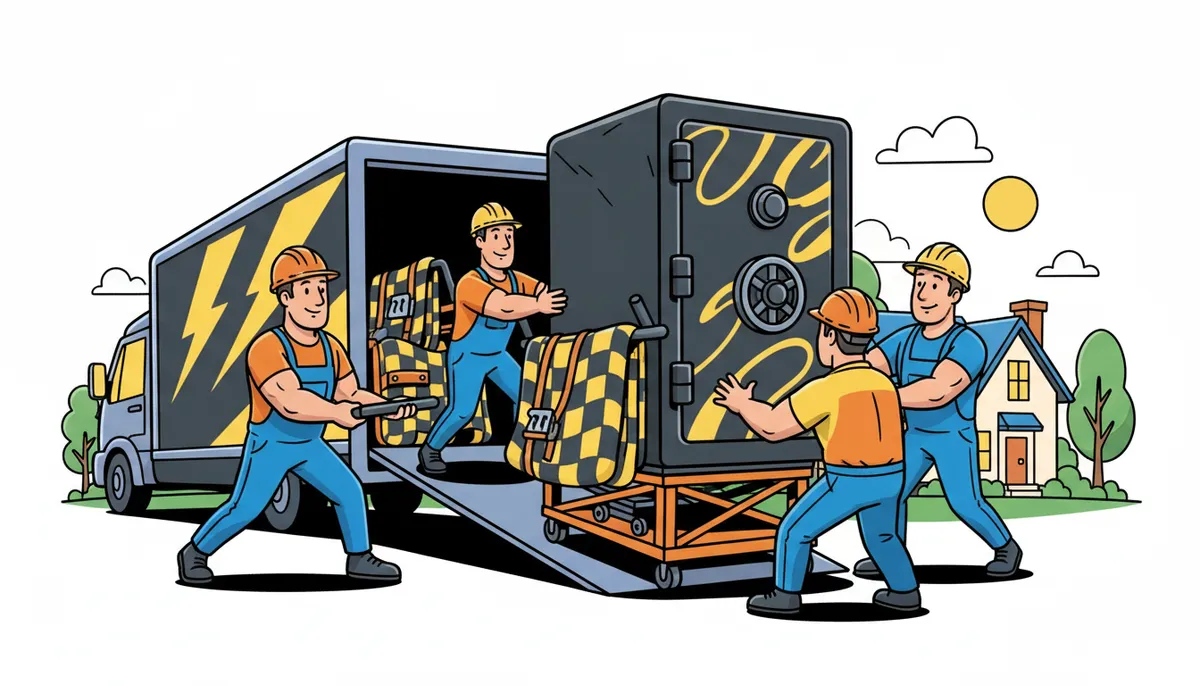
Professional movers who specialize in gun safes use techniques that most homeowners never consider. These methods reduce risk and prevent damage to both the safe and your home. Understanding professional techniques helps you appreciate why hiring experts makes sense for this particular job.
The first professional technique involves team coordination. Moving a gun safe requires at least three people working in perfect sync. One person guides from the front, one controls the dolly, and one stabilizes from behind. This coordination prevents sudden shifts that could cause the safe to tip or fall.
Professionals also use progressive positioning. Instead of trying to move the safe from point A to point B in one continuous motion, they work in stages. Move ten feet, stop, reassess, adjust, then move another ten feet. This methodical approach might seem slow, but it dramatically reduces the risk of accidents.
Weight distribution is another professional secret. Experienced movers know exactly where to position straps and how to balance the safe on the dolly. They understand that the center of gravity shifts as the safe tilts, and they adjust their technique accordingly. This knowledge comes from moving hundreds of safes and cannot be learned from a YouTube video.
Navigating Stairs With Gun Safes
Stairs represent the most dangerous part of any gun safe move. The risk of the safe tipping, rolling, or falling multiplies when you add stairs to the equation. Professional movers use stair-climbing dollies designed specifically for this challenge.
These specialized dollies feature rotating wheels or treads that allow the dolly to climb or descend stairs one step at a time. The operator maintains control while the dolly does the heavy lifting. Without this equipment, moving a gun safe up or down stairs becomes extremely dangerous.
For particularly challenging staircases, professionals may use a crane or liftgate. When stairs are too narrow or have sharp turns, the only safe option is to lift the safe through a window or over a balcony using mechanical lifting equipment. While this adds cost, it eliminates the risk of destroying your staircase or injuring your moving crew.
If your move involves stairs and you lack experience with heavy safe transport, hiring labor services from a professional team becomes essential rather than optional.
What Are the Risks of DIY Gun Safe Moving?
Attempting to move a gun safe yourself carries significant risks that extend beyond simple property damage. Understanding these risks helps you make an informed decision about whether to tackle this job yourself or hire professionals.
Physical Injury Risks
The most serious risk is personal injury. Gun safes cause thousands of emergency room visits every year. Crushed fingers, broken toes, strained backs, and even more serious injuries happen when people underestimate the difficulty of this task.
A falling gun safe can cause life-threatening injuries. If a 600-pound safe tips while you are trying to steady it, you cannot stop it. The momentum will knock you down and potentially crush you. This is not an exaggeration, this is physics. Professional movers understand these risks and use equipment specifically designed to prevent tipping.
Repetitive strain injuries also occur during DIY safe moves. The process of slowly maneuvering a heavy safe through a house can take hours. Even if you use proper lifting technique, the sustained effort strains muscles and joints. Professional movers rotate tasks and take breaks to prevent these injuries.
Property Damage Costs
The financial risk of DIY gun safe moving often exceeds the cost of professional help. A single gouge in hardwood flooring can cost hundreds to repair. A cracked tile or damaged wall easily runs into thousands when you factor in matching materials and professional repair work.
Doorways and frames are particularly vulnerable. The corners of a gun safe can punch through drywall like a battering ram. Repairing structural damage to door frames requires carpentry skills and might involve replacing entire sections of wall. These repairs cost far more than the few hundred dollars you saved by moving the safe yourself.
Damage to the gun safe itself represents another financial risk. If you drop or tip the safe, you might damage the locking mechanism, bend the door, or compromise the fire seal. These repairs can cost as much as replacing the safe entirely, especially for high-end models with electronic locks and custom interiors.
When Should You Hire Professional Gun Safe Movers?
Some gun safe moves are reasonable DIY projects, while others absolutely require professional help. Understanding the difference protects your home, your health, and your wallet. Consider hiring professionals if any of these conditions apply to your move:
- Your gun safe weighs more than 500 pounds
- The move involves stairs of any kind
- You have hardwood, tile, or other delicate flooring
- Doorways and hallways offer minimal clearance
- You lack specialized moving equipment
- You have fewer than three strong adults available to help
- Your safe has an electronic lock or complex internal components
Even if your move seems manageable, professional help provides insurance against disaster. At DynaMight Movers, we specialize in moving items that other companies walk away from. Our team has the equipment, training, and experience to move gun safes of any size safely and efficiently.
Professional movers also carry insurance that protects you from liability. If someone gets injured during a DIY move, you might face medical bills and potential lawsuits. Professional moving companies carry workers compensation insurance and liability coverage, transferring that risk away from you.
What to Look for in a Gun Safe Moving Company
Not all moving companies have the expertise to handle gun safes properly. When selecting professional movers, ask these important questions:
- Do you have experience moving gun safes specifically?
- What equipment do you use for heavy safe transport?
- Are your movers trained in safe handling techniques?
- Do you carry adequate insurance for high-value items?
- Can you provide references from previous gun safe moves?
- What is your policy if damage occurs during the move?
Request a detailed written estimate that includes all potential charges. Some companies advertise low hourly rates but add fees for stairs, long carries, and equipment use. A transparent estimate protects you from surprise costs on moving day. DynaMight Movers believes in charging with clarity, so you know exactly what to expect before we start work.
According to Florida Statutes Chapter 507 (Household Moving Services), all professional movers operating in Florida must maintain proper licensing and insurance. Verify your moving company holds current credentials before hiring them for your gun safe relocation.
How Much Does Professional Gun Safe Moving Cost?
Professional gun safe moving costs vary based on several factors. Understanding these factors helps you budget appropriately and compare quotes from different companies. While we cannot provide specific pricing, we can explain what influences the final cost.
Weight is the primary cost driver. A 300-pound safe requires less equipment and fewer movers than a 1,200-pound model. Most companies base their estimates on the safe’s weight combined with the complexity of the move. Heavier safes require more labor hours and specialized equipment, increasing the overall cost.
Distance and accessibility also affect pricing. Moving a gun safe 20 feet across a garage costs significantly less than transporting it up two flights of stairs and through multiple rooms. Long carries, tight corners, and stairs all add time and difficulty to the job.
Additional Cost Factors
Several other elements can impact the final price of professional gun safe moving:
- Geographic location and local labor rates
- Time of year and scheduling availability
- Need for specialized equipment like cranes or stair-climbing dollies
- Insurance coverage for high-value safes
- Distance of the move for relocations to new homes
- Removal and reinstallation of doors or other obstacles
Many homeowners find that professional gun safe moving costs less than they expected, especially when they factor in equipment rental, time investment, and risk of damage. A typical local gun safe move costs a fraction of what you would pay to repair flooring damage or medical bills from a DIY accident gone wrong.
For local moving services in Hillsborough, Polk, and Pasco counties, DynaMight Movers offers competitive rates and transparent pricing. We provide detailed estimates that include all costs upfront, so you never face surprise charges on moving day.
Special Considerations for Long-Distance Gun Safe Moves
Moving a gun safe across town presents challenges, but relocating one across state lines adds another layer of complexity. Long-distance gun safe moves require additional planning and compliance with various regulations. If you are moving to a new state, you need to understand both transportation requirements and destination state laws.
Interstate moves fall under federal transportation regulations. You must follow moving checklist guidelines provided by the Federal Motor Carrier Safety Administration. These rules ensure safe transport and protect consumers during long-distance relocations.
For long distance moving, professional movers use different equipment and techniques than local moves. The safe must be secured inside the moving truck with multiple tie-down points to prevent shifting during highway transport. Improper securing can cause the safe to tip or slide, potentially damaging other belongings or causing dangerous load shifts.
Packing Your Firearms Separately
Never leave firearms inside your gun safe during a long-distance move. Federal law requires firearms and ammunition to be transported separately and legally. Most professional moving companies will not transport loaded safes due to liability concerns and legal restrictions.
Pack firearms separately according to federal and state regulations. Use appropriate cases, trigger locks, and separate ammunition storage. If you are transporting firearms personally, research the laws in every state along your route. What is legal in Florida might be restricted in other states you pass through.
Document the condition of your gun safe before the long-distance move. Take photos from all angles, noting any existing scratches or damage. This documentation protects you if damage occurs during transport and you need to file an insurance claim. Professional movers should provide insurance options specifically for high-value items like gun safes.
Installing Your Gun Safe in Its New Location
Getting the gun safe to your new home is only half the battle. Proper installation ensures your safe functions correctly and provides maximum security. Many homeowners overlook this final step, leaving their expensive safe vulnerable to theft or tipping hazards.
First, choose the right location for your gun safe. Ideally, place it on a concrete slab or reinforced floor that can support the concentrated weight. Second-floor installations require professional assessment to ensure the floor joists can handle the load. A 1,000-pound safe can exceed the weight capacity of standard residential flooring.
Most gun safes should be bolted to the floor or wall for security and stability. This anchoring prevents thieves from tipping the safe to access the back panel or simply wheeling it away on a dolly. Floor anchoring also prevents the safe from tipping if someone climbs on it or pulls on an open door.
Leveling and Adjustment
A level gun safe functions better and lasts longer. If the safe sits at an angle, the door may not seal properly, compromising fire protection and humidity control. The locking mechanism can also bind or wear unevenly on an unlevel safe.
Use a quality level to check the safe in both directions. Shim the safe as needed using metal shims, never wood or cardboard. Organic materials compress over time and absorb moisture, causing the safe to shift. Metal shims maintain their shape and provide stable, long-term support.
After leveling, test the door operation. The door should swing smoothly and close with minimal effort. If you need to push hard to close the door, the safe is not properly leveled. Adjust the shims until the door operates effortlessly, which indicates proper alignment.
Maintaining Your Gun Safe After Moving
The stress of moving can affect your gun safe’s operation and longevity. After relocating your safe, perform these maintenance tasks to ensure it continues protecting your firearms properly.
Inspect the locking mechanism carefully. Moving can jar internal components, potentially affecting electronic locks or causing mechanical locks to bind. Test the lock several times to verify smooth operation. If you notice any resistance or unusual sounds, contact the manufacturer before the issue worsens.
Check the door seal and weatherstripping. This seal provides fire protection and keeps moisture out of the safe. Moving can damage or dislodge the seal, compromising the safe’s protective capabilities. Replace damaged seals immediately to maintain fire ratings and prevent rust damage to your firearms.
Recalibrate electronic features if your safe includes them. Digital locks, interior lighting, and dehumidifiers can malfunction after moving. Reset electronic components according to the manufacturer’s instructions and replace batteries in battery-powered features.
Re-Establishing Humidity Control
Gun safes require proper humidity control to prevent rust and corrosion. Moving disrupts your humidity management system, so re-establish it quickly after installation. Place fresh desiccant packs or install a new dehumidifier rod inside the safe.
Monitor humidity levels closely for the first few weeks after moving. Your new location might have different humidity conditions than your previous home. Adjust your dehumidification accordingly to maintain the ideal 30-50% humidity range for firearms storage.
Consider upgrading to a better humidity control system if you experienced any issues with your previous setup. The move provides an opportunity to install more advanced dehumidification that better protects your valuable firearms collection.
Protect Your Investment With Professional Gun Safe Moving
Moving a gun safe challenges even the most capable homeowners. The combination of extreme weight, awkward dimensions, and high value makes this one household task where professional help truly pays for itself. Attempting to save a few hundred dollars by moving the safe yourself can result in thousands in damage and potential injury.
Professional gun safe movers bring specialized equipment, trained crews, and insurance protection that DIY moves cannot match. They understand weight distribution, proper strapping techniques, and how to navigate tight spaces without damaging your home. Most importantly, they take on the liability and risk, protecting you from financial and physical harm.
Whether you are moving across town or across the country, proper gun safe relocation requires planning, preparation, and the right expertise. Take measurements, clear pathways, and empty your safe completely before attempting any move. When stairs, long distances, or heavy safes enter the equation, professional help becomes essential rather than optional.
At DynaMight Movers, we have the power and precision to handle gun safes of any size. Our team has moved hundreds of safes throughout Hillsborough, Polk, and Pasco counties without a single incident. We treat your valuable safe with the respect it deserves and your home with the care it requires. Get a free estimate today and experience the DynaMight difference. You can also call us at 866-349-7719 to discuss your gun safe moving needs with our experienced team. Check out what our satisfied customers say about our service when you visit us on Google.
FAQs
Q: Can I move a gun safe by myself?
A: Moving a gun safe alone is extremely dangerous and not recommended. Even small gun safes weigh 200-400 pounds, which requires at least three strong adults and specialized equipment. Attempting a solo move risks serious injury and property damage. Professional movers have the tools and training to handle gun safes safely.
Q: How much does it cost to have professionals move a gun safe?
A: Professional gun safe moving costs vary based on weight, distance, and complexity. While specific pricing depends on your situation, most local moves cost less than repairing damage from a DIY accident. Factors include stairs, long carries, and the safe’s weight. Contact DynaMight Movers for a transparent, detailed estimate with no hidden fees.
Q: Do I need to empty my gun safe before moving it?
A: Yes, you must completely empty your gun safe before moving. Firearms and ammunition add significant weight and create legal issues during transport. Remove all contents, including shelves, dehumidifiers, and accessories that could shift and damage the locking mechanism. Store firearms separately following all federal and state transportation laws.
Q: What equipment do I need to move a gun safe?
A: Moving a gun safe requires a heavy-duty appliance dolly rated for at least 1,000 pounds, furniture straps, floor protection like plywood sheets, moving blankets, and potentially a stair-climbing dolly. You also need steel-toed boots and work gloves for safety. Without this specialized equipment, attempting to move a gun safe becomes extremely risky.
Q: Can a gun safe damage my floors during a move?
A: Gun safes can absolutely damage floors, especially hardwood, tile, and vinyl. The concentrated weight creates enormous pressure that can crack tiles, gouge wood, or tear vinyl. Always use floor protection like plywood sheets or heavy cardboard along the entire moving path. Professional movers know how to protect your floors throughout the moving process.