

Key Takeaways
- Florida law requires estate movers to be registered with the Department of Agriculture and Consumer Services, carry specific liability insurance or bonding, and provide written estimates before work begins—always verify registration and insurance before hiring.
- Estate liquidation moves differ from standard moves because they involve multiple destinations (family members, storage units, donation centers) and require coordination; experienced movers who can handle multi-stop deliveries are essential.
- Distinguish between three separate services: moving companies (transport goods), estate sale companies (sell items on-site), and cleanout crews (remove junk)—mixing them up can waste time and money, so hire the right specialist for your needs.
- Get written approval from the executor for all items before moving day, document who receives what, and never allow crews to decide what counts as trash or donation to protect sentimental and valuable estate property.
- Lakeland estate cleanout costs vary significantly based on volume, distance, and services; typical starting rates are around $300 for four cubic yards, but always request itemized written estimates tailored to your specific situation.
- Ask movers upfront about registration status, insurance coverage, multi-destination handling, specialty item care, damage liability, and payment methods (Florida law requires at least two payment options) before signing any contract.
Sorting through a loved one's home after a loss is hard enough. Add in furniture, boxes, and years of memories, and it can feel overwhelming fast. That's where estate liquidation movers in Lakeland come in. They help families sort, pack, load, and deliver household items to wherever they need to go, whether that's a sibling's house, a storage unit, or a donation center. This guide breaks down exactly what to expect, what Florida law requires, and how to pick a team you can trust with something this personal.
Whether you're an executor closing out an estate, a family downsizing a parent's home, or someone managing a property after a foreclosure, this article will walk you through the process step by step. We'll also share a helpful checklist so you know exactly what to ask before signing anything.

1. Understand What Estate Liquidation Movers Actually Do
In Lakeland, "estate liquidation movers" usually means a moving company that helps sort, pack, load, transport, store, donate, or dispose of household items. This often happens after a death, a downsizing decision, a foreclosure, or a big life change. It's different from a normal move because there might be several stops instead of just one.
A single estate job might involve delivering furniture to three different family members, dropping boxes at a storage facility, and hauling old items to a donation center. That takes more coordination than a typical home-to-home move. It's also why picking an experienced crew matters so much.
Common Services Included
- On-site walkthrough and item inventory
- Careful packing of fragile and valuable belongings
- Furniture disassembly and reassembly
- Loading and transport to multiple destinations
- Temporary or long-term storage coordination
- Donation drop-off or junk removal (if offered)
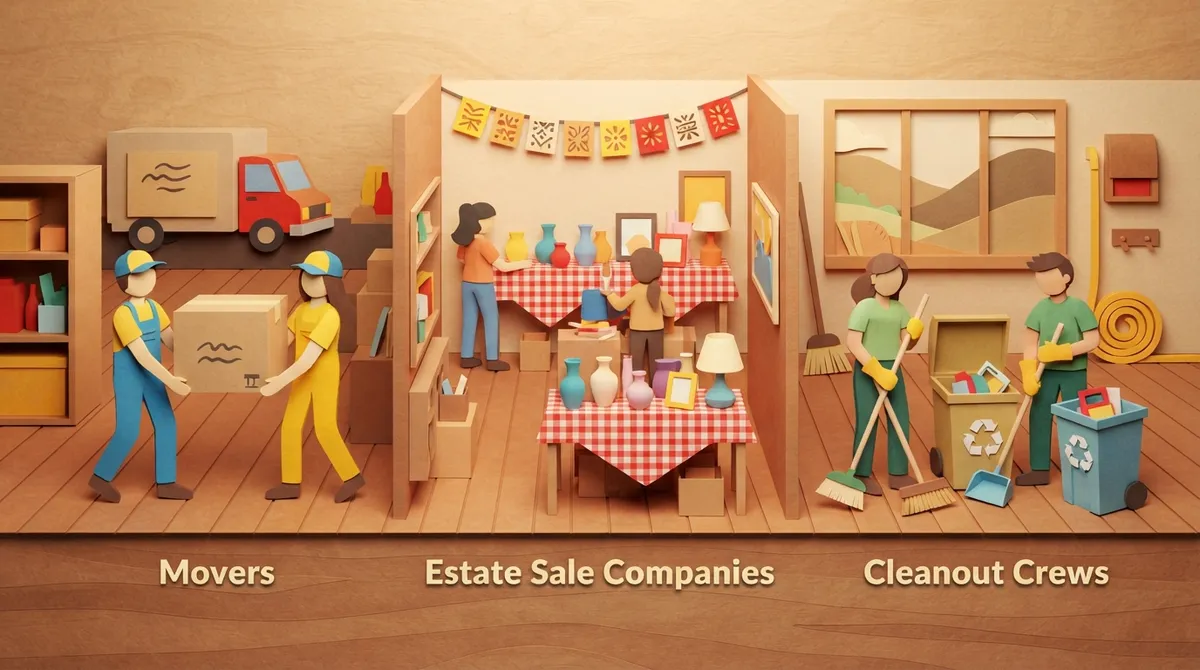
2. Know the Difference Between Movers, Estate Sale Companies, and Cleanout Crews
This is one of the biggest points of confusion for families in Polk County. These are three separate specialties, and mixing them up can cost you time and money.
| Service Type | What They Do | What They Don't Do |
|---|---|---|
| Moving Company | Packs, loads, transports, and delivers household goods | Usually doesn't sell items or manage an estate sale |
| Estate Sale Company | Prices and sells household items on-site | Doesn't provide licensed transport or hauling |
| Cleanout Crew | Removes unwanted items, junk, and debris | May not offer careful packing or delivery to specific addresses |
Local directories list companies like Mid Florida Estate Sales, At Your Service Estate Sales Florida, and Florida Estate Sale Pros for selling estate property. But being listed as an estate sale company doesn't mean they're a licensed mover. If you need items physically moved, hauled, or delivered, you want a registered moving company. Our guide on packing and moving services in Polk County breaks down what full-service packing actually includes.
3. Check That Your Mover Is Registered With Florida
Florida takes household moving seriously. Under Chapter 507 of Florida law, any company moving household goods within the state must register annually with the Florida Department of Agriculture and Consumer Services. This isn't optional paperwork; it's the law.
As of December 2023, Florida had 1,348 registered movers and 39 registered moving brokers, according to a Florida Senate bill analysis. Registration costs $300 per year, and movers must carry specific insurance or bonding depending on their fleet size.
Insurance Requirements to Know
- Movers with more than two vehicles need liability coverage of at least $10,000 per shipment.
- Coverage must be at least 60 cents per pound per article, per the Florida Senate analysis.
- Smaller movers (fewer than two vehicles) may use a $25,000 performance bond or certificate of deposit instead.
- All liability limits and valuation options must be disclosed before you sign the contract.
You can always ask a company directly for their registration number and proof of insurance. A trustworthy team won't hesitate to share it. If you want a deeper dive into verifying credentials, check out how to verify licensed movers in Lakeland before you book.
4. Get Everything in Writing Before Moving Day
Florida law requires movers to give you a written estimate and contract (sometimes called a bill of lading) before work begins. This isn't just a formality. It protects you if something goes wrong.
What Your Estimate Should Include
- The mover's name, address, and contact information
- Proposed pickup and delivery dates
- Every pickup and delivery address (important for multi-stop estate moves)
- An itemized list of services and their costs
- Storage location details, if storage is part of the plan
- Accepted payment methods
Speaking of payment, Florida law requires movers to accept at least two of three payment types: cash or equivalent, a personal check, or a credit card. If a company only wants cash and won't put anything in writing, that's a red flag. For more on comparing pricing structures, take a look at how much moving costs in Polk County FL in 2026.
5. Plan for Multiple Destinations and Family Coordination
Estate moves rarely go from Point A to Point B. More often, it's Point A to five different points: a sister's house, a storage unit, a donation center, maybe even an out-of-state sibling. This is where experience really counts.
Good movers will ask upfront:
- How many pickup and drop-off locations are involved?
- Which items go where, and who has approved that plan?
- Is storage needed short-term or long-term?
- Are any items headed out of state, requiring long-distance coordination?
If your estate move stretches beyond Polk County, our team can help coordinate long-distance logistics too. Take a look at long distance movers in Lakeland Florida: what to know for details on cross-state planning.
6. Protect Valuable and Sentimental Items
Estate moves often involve antiques, jewelry, family heirlooms, or pieces with deep sentimental value. These items need extra care and, more importantly, clear authorization before anyone touches them.
Steps to Protect What Matters Most
- Have the executor or authorized family member approve the full inventory before moving day
- Document who receives which items in writing
- Ask movers about their process for handling fragile or high-value pieces
- Never let a crew decide on their own what counts as trash or donation
Movers should never distribute or dispose of estate property without documented approval. If your estate includes pianos, antiques, or other specialty pieces, our article on how to protect antiques with Lakeland moving pros offers helpful tips.
7. Compare Estate Cleanout Costs and Services
Pricing for estate cleanouts and liquidation moves in Lakeland varies quite a bit. It depends on volume, distance, packing needs, and whether donation or disposal is part of the job.
| Service Element | What Affects the Price |
|---|---|
| Volume of Items | Measured in cubic yards or truckloads; more content means higher cost |
| Type of Material | Heavy or bulky material often costs more than standard household goods |
| Number of Destinations | Multiple drop-off points increase labor and travel time |
| Packing Services | Full packing adds cost but saves families time and stress |
| Timing | Same-day or rush jobs may cost more depending on availability |
Some Lakeland-area cleanout providers advertise starting rates around $300 for the first four cubic yards of standard household contents, with higher rates for heavier material. These are provider-specific prices, not a fixed market standard, so always ask for a written estimate tailored to your situation. For general pricing guidance, see our post on smart ways to get a free moving quote in 2026.
8. Ask the Right Questions Before You Hire
A good estate liquidation move starts with the right questions. Executors and family members should feel confident asking movers about every part of the process before signing anything.
Questions Every Executor Should Ask
- Are you registered with the Florida Department of Agriculture and Consumer Services?
- What insurance or bonding do you carry?
- Can you provide a written estimate with itemized costs?
- Do you handle multiple destinations, including storage and donation drop-offs?
- Who decides what gets kept, donated, or disposed of?
- What happens if an item is damaged during the move?
- Can you move items to another state if needed?
- Do you offer packing and disassembly services, or just transport?
Taking the time to ask these questions upfront saves headaches later. If you're weighing whether to hire full help or just extra hands, our comparison on full-service vs. labor-only residential moving can help clarify your options.
Why Families Across Polk County Trust DynaMight Movers
At DynaMight Movers, we understand that estate moves are personal. They're not just about boxes and furniture. They're about honoring a family's history while making the process as smooth as possible. We're a licensed and insured moving company serving Lakeland, Winter Haven, Davenport, Dover, and the surrounding Polk County area.
We offer transparent, written estimates with no hidden fees, so you always know what to expect. Our team handles specialty items with care, coordinates multi-stop deliveries, and works around your family's schedule, including weekends and after-hours moves. You can also visit us on Google to see what our DynaMight Movers customers say about their experience working with our crew.
If you're managing a bigger estate with heavy furniture, antiques, or bulky specialty pieces, check out our tips on heavy lifting moving tips to prepare your home before the truck arrives.
Final Thoughts on Choosing the Right Estate Liquidation Movers
Estate liquidation moves in Lakeland take more planning than a typical relocation. Between multiple destinations, sentimental items, and Florida's legal requirements for movers, it pays to work with a team that knows what they're doing. Always verify registration, get a written estimate, and make sure every item's destination is approved before the truck loads up.
When you're ready to take the stress out of your family's estate move, our team is here to help every step of the way. Get a free estimate today or call us at (866) 349-7719 to talk through your specific needs with a friendly member of our Polk County team.
FAQs
Q: What do estate liquidation movers in Lakeland, FL do?
A: They help sort, pack, load, and transport household items after a death, downsizing, or big life change. This can include delivering items to multiple family members, storage units, or donation centers. It's a bit more involved than a standard home move, so experience really matters here.
Q: How much does an estate cleanout and move cost in Lakeland?
A: Costs depend on volume, distance, and services needed, so there's no one-size-fits-all number. Some local providers start around $300 for smaller loads, but a written estimate tailored to your situation is always your best bet. We're happy to walk you through pricing during a free estimate.
Q: What's the difference between an estate sale company and a moving company?
A: An estate sale company prices and sells items on-site, while a moving company packs, loads, and transports belongings. They're two completely different specialties, so you may need both if you're selling some items and moving others. Always check which service you're actually hiring.
Q: Can Lakeland movers deliver estate items to multiple family members and storage units?
A: Yes, many movers, including our team, can coordinate multi-stop deliveries to family members, storage facilities, and donation centers. Just be sure to confirm this upfront since not every mover handles multiple destinations. Clear communication makes the whole process much smoother.
Q: How can I verify a Florida moving company is registered and insured?
A: You can ask the company directly for their state registration number and proof of insurance. Florida requires movers to register annually with the Department of Agriculture and Consumer Services. A trustworthy company will share this information without hesitation.