

Key Takeaways
- Storage in transit (SIT) is not a self-storage unit: your mover's staff or agent handles your goods under your bill of lading, so ask about access rules before signing.
- Get all SIT charges in writing, including storage rate, warehouse handling, pickup, and redelivery fees, plus the time limit, since verbal promises often lead to surprise bills.
- If the mover delivers more than 24 hours early without your agreement, it is generally responsible for storage and redelivery costs. Save emails and texts documenting your agreed dates.
- For interstate moves, FMCSA rules require notice at least 10 days before SIT expires (one day if the period is under 10 days). Mark the expiration date and read the notice immediately.
- Released Value Protection is free but caps coverage at 60 cents per pound per article, so a 10-pound item may only be covered for $6. Consider Full Value Protection for high-value items.
Picture this: the moving truck is packed, your keys are handed over, and then you learn your new home won't be ready for two more weeks. Don't panic. This happens more often than you'd think, and storage in transit movers exist for exactly this moment.
Storage in transit, often called SIT, is a service where your mover holds your belongings in a warehouse between pickup and final delivery. It is not the same as a self-storage unit you rent on your own. It is part of your move, and it comes with its own rules, charges, and timelines.
The trouble is that many families skip the fine print. They assume everything is covered, only to face surprise fees or confusing notices later. Whether you are a Polk County homeowner relocating down the road, a retiree downsizing, or a family leaving a big estate, knowing the pitfalls can save you real money and stress.
Let's walk through the five biggest mistakes people make with storage in transit movers, and how you can sidestep every one of them.

What Is Storage in Transit, Really?
Before we dive into mistakes, let's get clear on the basics. Storage in transit is temporary warehouse storage of household goods while they wait for further transportation to your delivery address. It is different from permanent storage, where you simply park your items long term.
People usually need SIT in a few common situations:
- Your new home closing date slipped or the home is not move-in ready.
- You are between leases or waiting on renovations to finish.
- You cannot accept delivery on the agreed date.
- You are downsizing and need time to decide where things will go.
For interstate moves, federal guidance from the Federal Motor Carrier Safety Administration (FMCSA) lays out how movers must handle notices, charges, and liability. You can read the official consumer handbook on the FMCSA Protect Your Move site to see your rights in plain terms.
If you are weighing whether storage fits into your plan, our guide on how to choose moving and storage services in Polk County, FL is a helpful companion read.
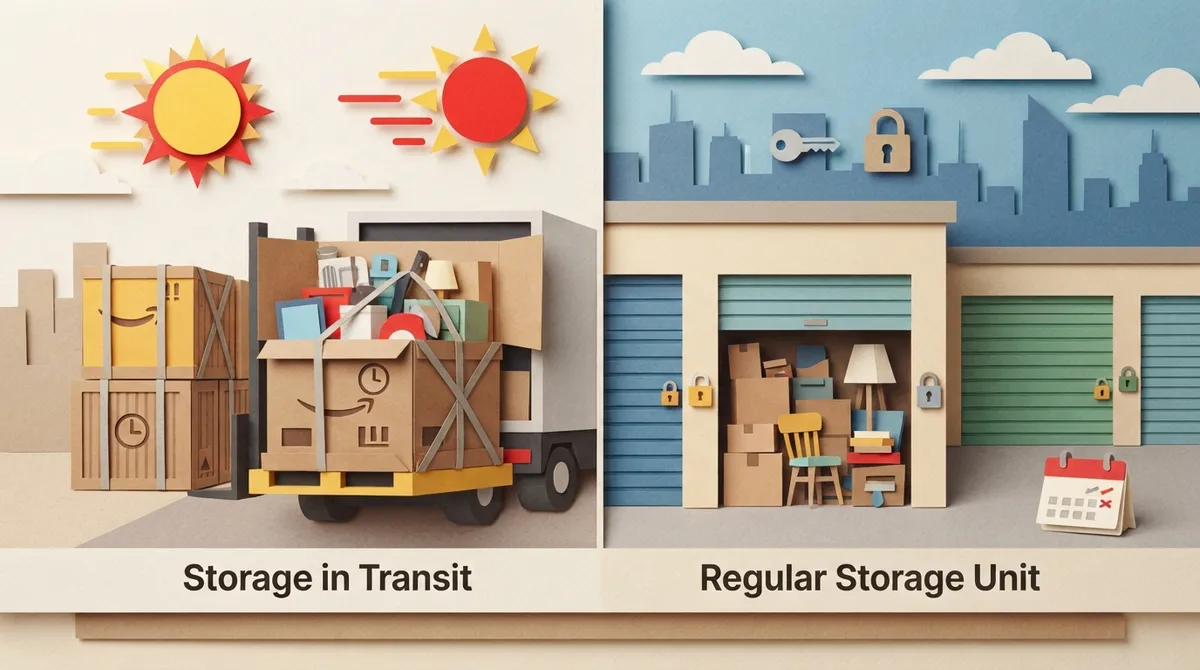
Mistake #1: Confusing Storage in Transit With a Regular Storage Unit
This is the most common slip-up. Many people hear "storage" and picture a rental unit with their own lock and key. SIT works differently.
With storage in transit, your goods stay in your mover's care. They are usually handled by the moving company or its agent, kept in a warehouse, and tied to your bill of lading. A self-storage unit, on the other hand, is a space you rent and manage yourself.
Why the Difference Matters
The two options differ in cost structure, access, and responsibility. Here is a simple comparison:
| Feature | Storage in Transit | Self-Storage or Permanent Storage |
|---|---|---|
| Who handles your items | Your moving company or its agent | You, or a separate storage facility |
| Purpose | Short-term hold before delivery | Long-term or open-ended storage |
| Access during storage | Usually limited | Often flexible, depending on the facility |
| Governing paperwork | Estimate, bill of lading, mover tariff | Separate rental agreement |
| Delivery | Redelivered to your new address by the mover | You arrange pickup and transport |
If you treat SIT like a self-storage unit, you might assume you can swing by and grab a box anytime. That is usually not the case. Ask your mover what access rules apply before you sign anything.
Mistake #2: Skipping the Written Estimate and Fine Print
Storage in transit can involve more than just a monthly warehouse fee. Charges can include storage, warehouse handling, pickup and delivery, and redelivery. Each of these may be priced differently.
If you rely on a verbal promise, you are setting yourself up for sticker shock. Always get the details in writing. Your estimate, bill of lading, and the mover's tariff should spell out the applicable rates and terms.
What to Look For in Your Paperwork
- The storage rate. Is it per month, per day, or per hundred pounds?
- Handling charges. Moving items in and out of a warehouse takes labor, and that can show up as a separate line.
- Redelivery costs. Getting your goods from the warehouse to your new home may carry its own fee.
- The SIT time limit. How long can your items stay before the service ends or converts?
- Valuation coverage. What protection applies while your goods sit in the warehouse?
Not sure how quotes should look? Our breakdown of what you should expect from a free moving estimate walks through the line items so nothing catches you off guard. And if pricing is your biggest worry, take a peek at what factors determine moving company pricing in 2026.
At DynaMight Movers, we believe your estimate should be your price. Transparent pricing means no add-on surprises after the truck pulls up.
Mistake #3: Ignoring Who Pays for What
Here is where things get a little tricky, and where a lot of people get burned. The answer to "who pays for storage in transit?" depends on why your goods went into storage in the first place.
According to FMCSA guidance, here is how it generally breaks down:
- You requested SIT or could not accept delivery. If your items go into storage because you asked for it, or because you cannot take delivery on the agreed date, you may be responsible for storage, handling, and final-delivery charges.
- The mover could deliver more than 24 hours early. If the mover stores your goods because it could deliver early and you did not agree to early delivery, the mover is generally responsible for storage, handling, and redelivery charges.
That second point is a little-known protection. If a mover tries to charge you for storage after pushing delivery earlier than you agreed, ask them to point to the rule in writing.
Quick Tip for Staying Protected
Keep a record of your agreed delivery dates and any date changes. Save emails and text messages. If a dispute pops up, a clear paper trail makes the conversation so much easier.
Mistake #4: Missing the SIT Expiration Notice
Storage in transit does not last forever. For interstate household-goods moves, FMCSA rules require your mover to give you advance notice as SIT nears its end. Generally, that notice is due at least 10 days before the applicable expiration date. If the SIT period is shorter than 10 days, notice is due one day before it expires.
This notice is important. It explains conversion to permanent storage, claims timing, liability, and the warehouse's rules and charges. Many families toss it aside as junk mail. Please do not.
What Happens When SIT Converts to Permanent Storage?
Once SIT converts, the warehouse's own terms and charges may apply, and your mover's liability may end as described in the notice. That is a big shift. Before conversion, your mover generally stays responsible for your shipment under the bill of lading and valuation terms.
Here is how to stay ahead of it:
- Mark your SIT expiration date on your calendar the day you book.
- Ask your mover how and when they will send the notice.
- Read the notice the moment it arrives, front to back.
- Decide early whether you want delivery, an extension if available, or permanent storage.
- Confirm any claims deadlines. FMCSA guidance describes a nine-month window after conversion for filing claims for loss or damage during transportation or SIT, but always verify the current rules with your mover.
If your timing is up in the air, you may also like our tips on when you should schedule a move for the best results.
Mistake #5: Overlooking Protection and Coverage While Items Sit in Storage
Out of sight, out of mind, right? Not when it comes to your belongings. Many people assume their goods are fully insured the moment a mover picks them up. In reality, the coverage depends on what you selected.
Interstate movers must offer two types of protection: Full Value Protection and Released Value Protection. Released Value Protection comes at no additional charge, but it is limited to just 60 cents per pound per article. That means a 10-pound item worth hundreds of dollars may only be covered for $6.
For families moving a piano, antiques, electronics, or heirloom furniture, that gap can hurt. This is especially true for luxury homeowners, estate owners, and anyone with high-value pieces.
Smart Questions to Ask About Coverage
- Which protection level is on my bill of lading?
- Does my coverage continue while my goods are in SIT?
- What is the claims process and deadline?
- Is my mover licensed and insured?
Verifying credentials is just as important as asking about coverage. Our guide to 9 ways to spot licensed and insured movers in Polk County gives you a simple checklist. You can also dig deeper into how to choose insured movers you can actually trust.
How Storage in Transit Fits Different Moves
Every household is different, so let's look at how SIT plays out for the people we serve most.
Local Homeowners and Large Families
If your closing is delayed by a week or two, short-term SIT can bridge the gap so you are not stuck living among stacked boxes. Large families with bulky furniture especially benefit, since there is no room to store everything in a garage.
Retirees and Downsizers
Moving from a big home to a retirement community often means sorting through decades of belongings. SIT gives you breathing room to decide what comes along. Our resource on senior moving services in Polk County, FL offers more ideas for a calm transition.
Long-Distance Movers
When you are heading out of the area, timing mismatches are common. Your goods may arrive before your new place is ready. Understanding SIT notices and FMCSA rules matters even more here. Take a look at what you should know before a long distance move for extra planning help.
Luxury Homeowners and Specialty Item Owners
High-value items need careful handling in and out of storage. Ask how your mover protects fragile or oversized pieces in the warehouse. If you own a piano, antiques, or art, read up on how to choose specialty item movers you can trust.
How to Arrange Storage in Transit the Smart Way
Ready to set it up? Here is a simple step-by-step approach:
- Tell your mover early. Mention any possible delay when you request your first estimate, not on moving day.
- Request everything in writing. Rates, time limits, handling fees, and redelivery costs should all be on paper.
- Confirm the SIT time limit. Ask what happens if you need more time.
- Choose your protection level. Review Full Value Protection versus Released Value carefully.
- Note your key dates. Track the expiration date and the notice window.
- Plan your redelivery. Confirm who delivers, when, and at what cost.
Want to line up the right team? Browse our advice on how to hire movers, and if you are comparing service styles, our piece on full service versus labor only residential moving can help you pick the right fit.
If you are still researching, you can also check the Federal Trade Commission's tips for choosing a moving company and the FMCSA Rights and Responsibilities handbook for a deeper look at your protections.
A Quick Note on Local Moves
Here in Polk County, many of our moves are local or intrastate, and the rules can differ from interstate shipments. The FMCSA guidance applies to interstate household-goods moves, so always confirm which rules govern your specific move with your mover. A good company will explain the difference without making you feel rushed.
Looking for a team you can lean on? Read what makes a professional moving company in Polk County stand out, or see how to choose Polk County movers you can actually trust.
Wrapping It Up: Make Storage in Transit Work for You
Storage in transit can be a lifesaver when your move timeline hits a bump. The key is knowing the rules, reading the paperwork, and asking good questions. Remember the five mistakes: confusing SIT with a storage unit, skipping the fine print, ignoring who pays, missing the expiration notice, and overlooking your protection level.
You do not have to figure it all out alone. DynaMight Movers is a licensed and insured moving company serving Lakeland, Winter Haven, Davenport, Dover, and the rest of Polk County. We offer transparent pricing, careful handling of specialty items, and strong heavy-lifting help for local and long-distance moves. Curious how others feel about us? See what our DynaMight Movers customers say on Google by visiting us on Google, DynaMight Movers.
Ready to plan a move with no surprises? Get a free estimate today, or call us at (866) 349-7719 and let's talk through your timeline together.
FAQs
Q: What does storage in transit mean when moving?
A: Storage in transit, or SIT, is when your mover temporarily holds your belongings in a warehouse between pickup and final delivery. It is often used when your new home is not ready yet. Think of it as a short pause button on your move, not the same as renting your own storage unit.
Q: How long can movers keep my belongings in storage in transit?
A: The time limit depends on your agreement and the mover's tariff, so check your bill of lading. For interstate moves, FMCSA guidance says your mover must send notice at least 10 days before SIT expires, or one day before if the period is shorter than 10 days. Always confirm your exact dates in writing.
Q: Who pays for storage in transit and redelivery charges?
A: It depends on why your goods went into storage. If you request SIT or cannot accept delivery on the agreed date, you may owe storage, handling, and final-delivery charges. If the mover stores your items because it could deliver more than 24 hours early and you did not agree, the mover is generally responsible for those costs.
Q: Are my belongings insured while they are in storage in transit?
A: During SIT, your mover generally stays responsible for your shipment under the bill of lading and your chosen valuation coverage until final delivery. Released Value Protection is limited to 60 cents per pound per article, while Full Value Protection offers more coverage. Review which one you selected and ask how it applies in storage.
Q: What happens when storage in transit converts to permanent storage?
A: Once SIT converts, the warehouse's own rules and charges may apply, and your mover's liability may end as described in your notice. FMCSA guidance describes a nine-month claims window after conversion, but you should verify current rules with your mover. Read your conversion notice carefully so there are no surprises.