

Key Takeaways
- Start planning 3-6 months ahead for small to medium offices; larger moves need 6-12 months of lead time to avoid last-minute scrambling and compare movers effectively.
- Professional packing services cost $300-$4,000 depending on volume and complexity; peak-season or weekend moves add 10-25% to standard rates, so schedule mid-week for budget savings.
- IT coordination is critical—safely disconnect servers and equipment, back up data beforehand, and test all systems before reopening to prevent costly downtime.
- Small offices budget $750-$20,000, medium offices $5,000-$50,000, and large offices $15,000+ for relocations; get at least three binding written estimates before deciding.
- Hybrid approach works well: let employees pack personal desk items to save costs, but hire professionals for furniture, electronics, and sensitive files to protect equipment.
- Choose movers with proven commercial experience, proper licensing/insurance, clear claims procedures, and strong project management skills who coordinate directly with building management.
Moving a business is nothing like moving a house, and if you've ever tried to wing it, you already know that. Desks need to come apart just right. Computers and servers need careful handling. And your team still needs to answer phones and hit deadlines while boxes pile up around them. That's exactly why office relocation services exist, and why so many Polk County business owners are searching for a mover who actually understands commercial moves, not just residential ones.
Here's the good news: you don't have to figure this out alone. Whether you're running a small law office in downtown Lakeland or managing a growing team near Winter Haven, there's a clear path to a smooth move. In this guide, we'll walk through four essential office relocation services every business should know about, plus real numbers, planning timelines, and answers to the questions we hear most often. Grab a coffee, and let's get your move sorted out together.
What Are Office Relocation Services, Exactly?
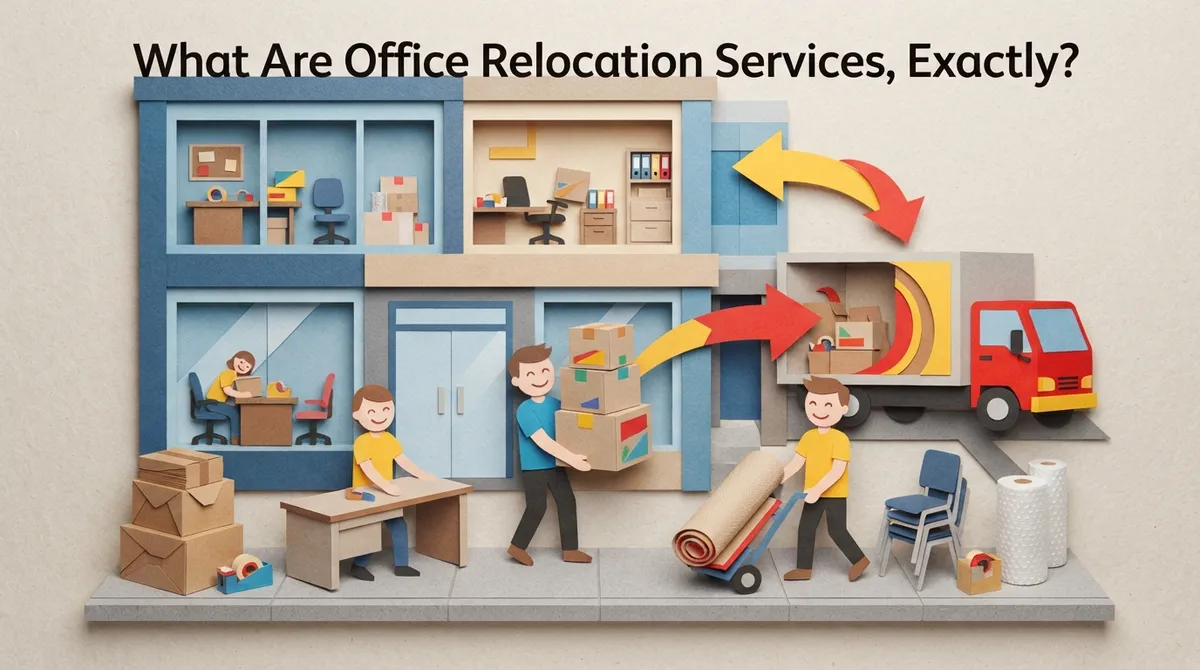
Office relocation services are specialized moving services built to move a business from one workplace to another with as little disruption as possible. Unlike a typical home move, these services focus on keeping your operations running smoothly during the transition.
A full-service office move typically covers project management, inventory planning, packing, furniture disassembly and reassembly, transportation, unpacking, and even post-move support. Many moving companies also help coordinate IT equipment, server rooms, records storage, furniture donation, temporary storage, and cleanup at the old location. It's a lot more than just loading a truck. It's a coordinated plan that keeps your business moving forward.

4 Office Relocation Services Every Business Should Know About
Not all office moves look the same, and that's a good thing. Below are the four core service categories that make the biggest difference in how smoothly your relocation goes.
1. Project Management and Planning Support
A good office relocation starts long before moving day. Professional movers help you map out a timeline, assign an internal point person, and audit everything you own, from desks to file cabinets. This planning phase is where most of the stress gets eliminated, because everyone knows exactly what happens and when.
According to the Extra Space commercial relocation guide, small offices with fewer than 25 employees should start planning around three months out. Medium-sized offices, somewhere between 25 and 100 employees, usually need about six months. Larger or more technically complex moves can take anywhere from six to twelve months of lead time. Starting early gives you room to compare movers, plan around your lease, and avoid last-minute scrambling.
2. Packing, Furniture Handling, and Transportation
This is the part most people picture when they think of a move, but there's real skill involved. Office movers handle everything from packing supplies and labeling systems to disassembling conference tables and cubicles, then putting it all back together at the new space.
Professional packing services generally run between $300 and $4,000, depending on how much stuff you have and how complex it is to pack, according to that same 2026 Extra Space guide. If your office has specialty equipment, oversized furniture, or delicate electronics, it's worth reading up on what to expect from furniture moving services before you book your move date.
3. IT Equipment and Technology Coordination
Nothing stalls a business faster than a network that won't come back online. That's why IT coordination is such a critical piece of any commercial move. This includes safely disconnecting and packing computers, servers, and networking gear, then reconnecting and testing everything at the new location before your team walks in.
Smart businesses schedule IT shutdowns carefully, back up important data beforehand, and test phones, internet, and security systems before reopening. If you're weighing whether to handle this yourself or bring in professionals, this comparison of DIY office moves versus commercial moving services in Polk County breaks down the tradeoffs pretty clearly.
4. Building Coordination and Post-Move Support
Your move doesn't just involve your stuff. It involves elevators, loading docks, parking restrictions, and building management at both the old and new locations. Experienced office movers coordinate all of this ahead of time so you're not stuck waiting for an elevator reservation on moving day.
Post-move support matters too. This can include unpacking, furniture setup, debris removal, and even coordinating furniture donation or liquidation for items you're leaving behind. A thoughtful mover treats the close-out of your old space with the same care as the move-in at your new one.
What Drives the Cost of an Office Move?
Office relocation pricing varies a lot, and for good reason. No two businesses have the same setup. Here are the main factors that shape your final bill:
- Office size and inventory volume: More furniture and equipment means more time and labor.
- Employee count: Larger teams usually mean larger, more complex moves.
- Distance: A move across town costs less than one across the state.
- Packing requirements: Full-service packing costs more than doing it yourself, but it saves your team's time.
- Specialty equipment: Servers, medical devices, or heavy machinery require extra care.
- Access conditions: Stairs, long carries, and limited parking can add fees.
- Timing: Evenings, weekends, and peak season moves often cost more.
Speaking of timing, that Extra Space guide noted that peak-season, evening, or weekend scheduling can add roughly 10% to 25% on top of standard rates. If your budget is tight, ask about mid-week or off-peak scheduling options.
Typical Office Relocation Costs by Business Size
To help you plan your budget, here's a general breakdown based on 2025-2026 industry cost guides. Remember, these are broad planning ranges, not fixed quotes.
| Office Size | Employee Count | Estimated Cost Range |
|---|---|---|
| Small Office | Fewer than 25 | $750 – $20,000 |
| Medium Office | 25 – 100 | $5,000 – $50,000 |
| Large Office | 100 – 200+ | $15,000 – $100,000+ |
These figures come from a 2025 Extra Space commercial relocation cost guide. Every business is different, so the best way to know your real number is to get a free estimate tailored to your specific space and timeline.
A Simple 8-Step Office Relocation Checklist
Feeling a bit overwhelmed? That's normal. Here's a simple checklist to keep your move organized from start to finish.
- Define your move scope, budget, and target date.
- Appoint an internal move coordinator to be your point person.
- Audit your furniture, equipment, and files to know what's moving.
- Select a commercial mover with relevant office-moving experience.
- Design your new floor plan and confirm building access rules.
- Communicate the timeline clearly with employees and stakeholders.
- Pack and label everything with a clear system.
- Execute the move, then test systems before reopening for business.
This process mirrors what's recommended in most professional relocation guides, and it works because it keeps everyone on the same page. If you want more localized guidance, check out this resource on how to hire commercial movers in Polk County the right way.
Why Business Continuity Matters So Much
Here's something a lot of business owners underestimate: downtime is expensive. Every hour your team can't work is an hour of lost productivity. That's why the International Facility Management Association identified cost reduction as one of the top drivers behind office relocation decisions in its 2025 workplace report.
The commercial moving industry has taken notice too. A 2025 market report from Worldwide Market Reports valued the commercial moving and business relocation market at approximately $14.8 billion in 2024, with projections reaching $25.6 billion by 2031. That's an estimated 8.2% annual growth rate, showing just how much demand there is for smart, disruption-minimizing relocation services. Numbers like these vary by source and definition, but they all point in the same direction: businesses want moves that protect their bottom line.
Choosing the Right Office Moving Partner
Not every moving company is set up to handle commercial relocations well. Here's what to look for before you sign a contract:
- Proven experience with office and commercial moves, not just households
- Proper licensing and insurance coverage
- Trained crews who know how to handle office furniture and electronics
- Clear claims procedures in case something goes wrong
- Strong project-management skills to keep your timeline on track
- Ability to coordinate directly with building management at both locations
Always ask for a detailed written estimate. It should spell out labor, transportation, packing materials, storage, insurance or valuation coverage, specialty handling, and any potential surcharges. Most relocation guides, including the one from Extra Space, recommend getting at least three binding estimates before you decide. That way, you're comparing apples to apples, not just guessing based on a phone quote.
DynaMight Movers has built a reputation across Lakeland, Winter Haven, Davenport, and Dover for transparent pricing and dependable service. If you'd like to see what real customers have to say, visit us on Google — DynaMight Movers and read their experiences for yourself.
Should Employees Pack Their Own Desks?
This is a question we hear a lot, and the answer really depends on your timeline and budget. Letting employees pack personal items can save money and gives them a sense of ownership over their own workspace. But shared equipment, sensitive files, and IT gear should always go to trained movers. A hybrid approach works well for many offices. Employees handle their personal desk items, while professionals take care of furniture, electronics, and anything fragile or heavy. This keeps costs reasonable without putting your equipment at risk.
Final Thoughts on Your Office Move
Relocating your business doesn't have to feel like chaos. With the right planning, the right team, and a clear checklist, you can move your office without losing a single billable hour or upsetting your staff. The key is starting early, asking the right questions, and choosing movers who genuinely understand commercial relocations, not just residential ones.
If you're planning an office move anywhere in Polk County, our team is ready to help make it smooth from the very first box to the last piece of furniture in place. Reach out today to get a free estimate or simply call us at (866) 349-7719 to talk through your timeline. We're here, we're ready, and we'd love to help your business make its next move a great one.
FAQs
Q: How much do office relocation services cost?
A: Costs vary quite a bit depending on your office size and needs. Small offices typically run $750 to $20,000, medium offices $5,000 to $50,000, and larger offices $15,000 or more. The best way to get an accurate number is to request a detailed written estimate from your mover.
Q: How far in advance should I book an office moving company?
A: It's smart to start planning early, even if the actual move is months away. Small offices should plan about three months ahead, medium offices around six months, and larger or more complex moves may need six to twelve months of lead time.
Q: What is included in professional office relocation services?
A: A full-service office move usually covers project management, packing, furniture disassembly and reassembly, transportation, IT coordination, and unpacking at your new space. Many movers also help with temporary storage, cleanup, and coordinating with building management.
Q: How can a business move offices without disrupting operations?
A: The secret is careful planning and clear communication. Schedule your move around slower business periods, back up your data before any IT shutdown, and keep employees informed every step of the way so nobody's caught off guard.
Q: What insurance and liability coverage should I verify before hiring commercial movers?
A: Always confirm your mover is licensed and insured, and ask specifically about valuation or liability coverage for your equipment and furniture. A trustworthy company will explain their claims process clearly before you ever sign a contract.