

Key Takeaways
- Most movers will only transport plants on short local moves (under 150 miles) with same-day delivery; long-distance and interstate moves frequently exclude plants due to liability and state plant-import restrictions.
- Transport plants yourself in a climate-controlled vehicle if your mover refuses them, keeping them in the passenger area rather than the trunk to maintain stable temperatures and monitor their condition.
- Ask your moving company in writing before booking about their specific plant policy, liability coverage, and damage procedures, since policies vary significantly between companies and move types.
- Prepare plants 1-2 days before moving by removing dead leaves, checking for pests, avoiding heavy watering, and packing them upright in cushioned boxes with clear labels for careful handling.
- Winter Haven's mild winters (average lows around 49.5°F) are favorable, but keep houseplants between 65-80°F during transport and protect them from cold snaps if moving to colder regions.
- Unpack plants immediately upon arrival and keep them away from cold drafts and temperature changes, giving them several days to adjust before repotting or heavy watering.
Packing up your home is stressful enough without wondering what happens to your favorite fern or that tomato plant you've babied all summer. If you're asking whether movers can move your plants in Winter Haven, you're not alone. It's one of the most common questions we hear from local families getting ready for moving day. The honest answer? It depends on your mover, your route, and a few other details we'll walk you through below.
At DynaMight Movers, we believe in giving straight answers instead of vague promises. So let's talk about what really happens with houseplants on moving day, why some movers say no, and what you can do to keep your green friends happy and healthy through the whole process. Whether you're moving across town in Polk County or heading out of state, this guide will help you plan ahead with confidence.

Can Movers Move My Plants in Winter Haven? The Short Answer
Yes, sometimes. But it's not a guarantee. Whether a moving company will take your plants depends on the company's own policy, how far you're moving, and even the destination state's rules. Many movers exclude live plants from standard household shipments simply because plants are fragile and sensitive to temperature swings. They also may not be covered under a mover's standard valuation or liability terms, which means damage to a plant might not be reimbursed the same way a broken lamp would be.
Local moves within Winter Haven or nearby Polk County towns are usually more flexible than long-distance ones. Some moving companies allow plants on short trips, often defined as around 150 miles or less, with delivery happening within 24 hours and no overnight storage involved. But this isn't an industry-wide rule. It's a company-specific policy, so you always need to ask your mover directly before you assume your plants are coming along for the ride.
Why Some Moving Companies Say No to Plants
It might seem odd that a mover who can handle a piano or a grandfather clock draws the line at a potted plant. But there are real reasons behind this.
- Plants are living things that need airflow, light, and stable temperatures, which a moving truck often can't provide for long stretches.
- Extended time in a dark, sealed trailer can cause wilting, mold, or pest problems.
- Insurance and valuation coverage typically doesn't extend to living items, leaving movers exposed to liability they'd rather avoid.
- Interstate moves may involve crossing state lines with plant-import restrictions or quarantine rules that vary by state and plant type.
If you're planning a long-distance move, it's smart to check both your mover's policy and the destination state's agricultural rules. The USDA Plant Hardiness Zone Map can also help you understand how your plants might adjust to a new climate zone once you arrive.
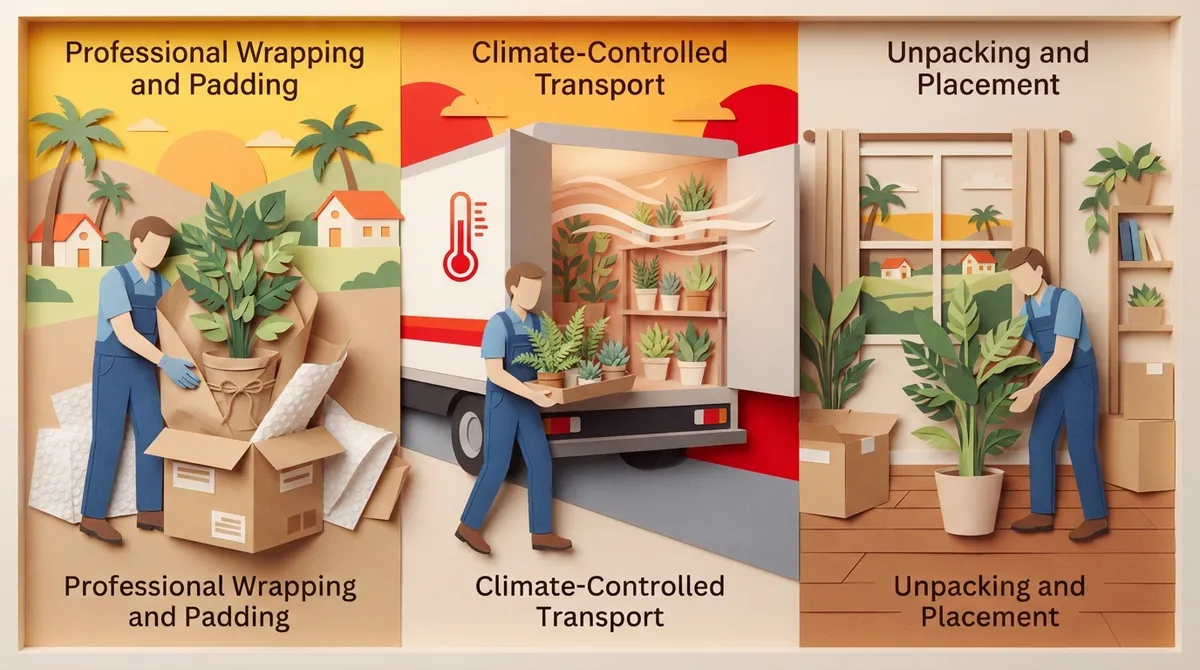
3 Ways Movers Can Help With Your Plants in Winter Haven
Here are three realistic scenarios for how a moving company might handle your plants, depending on your situation.
1. Short Local Moves Within Polk County
If you're moving within Winter Haven, Lakeland, Davenport, or another nearby Polk County town, some movers will transport your plants along with the rest of your household goods. This works best when the drive is short and delivery happens the same day. Since the truck isn't sitting overnight or traveling hundreds of miles, plants have a much better chance of arriving in good shape.
Even with a short move, it helps to confirm this in writing with your moving company. Ask what happens if a plant tips over or gets damaged during transport. A good mover will be upfront about what's covered and what isn't. If you're comparing options, our guide on how to choose full-service movers in Polk County covers questions worth asking any company before you book.
2. Long-Distance and Interstate Moves
This is where things get trickier. Many carriers simply will not load live plants for long-distance or interstate trips. The risk of damage is too high, and the liability concerns are real. If you're moving from Winter Haven to another state, ask your mover before booking so you're not caught off guard on moving day.
For a long-distance move, it's worth reading up on what you should know before a long-distance move so you can plan every detail, plants included, well ahead of time.
3. Transporting Plants Yourself
If your mover won't take your plants, the most practical solution is to transport them yourself in a climate-controlled vehicle. This gives you full control over temperature, sunlight, and handling. It also means your plants never sit unattended in a hot or cold truck for hours at a time.
Here's a simple approach many Winter Haven families use:
- Pack plants last so they spend the least time in transit.
- Place them upright in boxes with cushioning to prevent tipping.
- Keep them in the passenger area of your car, never in an unheated trunk.
- Take breaks to check on them during longer drives.
- Bring them inside immediately if you stop overnight.
Winter Haven's Weather and Your Plants
Winter Haven has generally mild winters, which is good news for plant owners. According to local climate data, January's average low sits around 49.5°F, with an average high near 72°F. That's fairly gentle compared to much of the country. Still, cold snaps happen, and temperatures along your travel route, especially if you're heading north for a long-distance move, can dip much lower than what you're used to here in Central Florida.
Plant care experts generally recommend keeping most houseplants in temperatures between 65 and 80°F, according to a Washington Post feature on moving with plants. That range isn't a guarantee for every species, but it's a solid guideline for tropical houseplants that are common in Florida homes. If your move includes a stretch of colder weather, plan extra precautions like insulating boxes or timing your travel around the warmest part of the day.
| Move Type | Typical Plant Policy | Best Practice |
|---|---|---|
| Local move (under 150 miles) | Sometimes allowed, same-day delivery | Confirm policy in writing with your mover |
| Long-distance move | Often excluded by carriers | Transport plants yourself in your vehicle |
| Interstate move | Frequently restricted or prohibited | Check destination state plant rules first |
How to Prepare Your Plants for Moving Day
Whether your mover agrees to take your plants or you're driving them yourself, a little prep work goes a long way. Here's a simple checklist to follow in the days before your move.
- Remove any dead leaves or wilted foliage a day or two before moving day.
- Check for pests so you're not bringing unwanted hitchhikers into your new home.
- Avoid heavy watering right before travel, especially if cold weather is expected.
- Pack plants upright in sturdy boxes with cushioning material to prevent shifting.
- Label boxes clearly so movers and family members know to handle them with care.
If you're worried about a brief cold snap during transport, light insulation can help protect leaves. Just be careful that heat packs never touch the foliage or the pot directly, since direct heat can cause more harm than the cold itself.
What Happens After You Arrive
Once you reach your new home, bring plants inside as soon as possible. Unpack them right away and keep them away from cold drafts, air vents, or sudden temperature changes. Give them a few days to adjust before repotting or heavy watering, since plants can be a little stressed after a move, just like the rest of us.
Questions to Ask Your Mover Before Moving Day
Before you book your move, it helps to get clear answers about plants and any other special items you're bringing along. Consider asking these questions:
- Do you accept live plants on local moves, and what's your policy for longer trips?
- Is there any coverage or liability protection for plants during transport?
- What's your process if a plant is damaged during the move?
- Do you have restrictions based on plant size or type?
- Can you recommend how to prepare plants for our specific move distance?
Getting these details in writing protects both you and the moving company. It also helps you plan your own transportation for anything the movers can't take. If you're weighing your options for packing help alongside plant care, our packing and moving services in Polk County guide walks through what full-service packing typically includes.
Why Local Expertise Matters
Every moving company handles plants a little differently, and local knowledge makes a real difference. A mover familiar with Winter Haven's climate and typical travel routes can give you better guidance than a national call center reading from a script. That's part of why so many Polk County families trust experienced local teams for their residential moves.
DynaMight Movers is proud to serve Winter Haven, Lakeland, Davenport, Dover, and the surrounding communities with licensed, insured, and transparent moving services. We handle everything from heavy furniture to specialty items, and we're always happy to have an honest conversation about what we can and can't transport, plants included. You can visit us on Google — DynaMight Movers to see what our neighbors in Polk County have to say about working with our team.
Final Thoughts on Moving Plants in Winter Haven
So, can movers move your plants in Winter Haven? The honest answer is that it depends on your mover's policy, your travel distance, and how far you're going. Local, same-day moves have a better chance of including your plants than long-distance or interstate relocations. When in doubt, ask questions early, get answers in writing, and have a backup plan ready to transport your plants yourself if needed.
Moving is already a big job, and your plants deserve the same care and attention as the rest of your belongings. If you're planning a move in Polk County and want a team that gives you straight answers about what we can handle, reach out today. You can get a free estimate or call us at (866) 349-7719 to talk through your moving day plans, plants and all.
FAQs
Q: Will a moving company move houseplants in Winter Haven, Florida?
A: It depends on the company! Many local movers will take plants on short, same-day trips, but policies vary quite a bit. Always ask your mover directly before moving day so you know exactly what to expect.
Q: Can movers transport plants on a long-distance or interstate move?
A: Usually not. Most carriers avoid loading live plants on long trips because of temperature swings, liability concerns, and destination-state plant rules. Plan to transport plants yourself in a climate-controlled vehicle for these longer moves.
Q: Why do moving companies refuse to move live plants?
A: Plants are fragile, sensitive to temperature, and often not covered under a mover's standard insurance. A sealed truck can also lack the airflow and light plants need to stay healthy over long distances.
Q: How should I move houseplants during cold weather?
A: Keep plants insulated but never let heat packs touch the leaves or pot directly. Pack them last, keep them upright, and bring them inside quickly once you arrive at your new home.
Q: What is the safest way to transport plants if movers will not take them?
A: Carry them yourself in your own car, ideally in the passenger area rather than the trunk. This keeps temperatures stable and lets you check on them throughout the trip, which gives everyone a little peace of mind.