
Key Takeaways
- Short term moving storage bridges gaps between move-out and move-in dates caused by closing delays, renovations, or downsizing, and the right option depends on your belongings, access needs, and handling preferences.
- A mover's warehouse is the most hands-off choice with lower repeated handling and strong fit for heavy items, but access to belongings is usually limited, so it suits those who won't need frequent retrieval.
- Portable containers offer flexible loading on your own schedule, but they are not automatically climate controlled, so confirm environmental protections in writing for wood furniture and electronics.
- Self-storage offers the easiest access and climate-controlled options, but you handle all loading and unloading, which means more handling and physical strain unless you hire help.
- Storage-time coverage can differ from transit coverage, so review the bill of lading, storage agreement, valuation selection, and exclusions, and get written answers on claims before committing.
- Request an itemized written quote separating pickup, handling, storage, redelivery, and minimum terms, and ask about late fees and extension policies to avoid surprise charges.
Here's a situation that catches a lot of families off guard. The closing on your new home slips by two weeks, but your lease at the old place ends on Friday. Or maybe your kitchen remodel is running behind. Or you're selling a big family home and downsizing, and the new place just isn't ready for a full truck of furniture yet. Suddenly, you need somewhere safe for your belongings, and you need it fast.
That's exactly where short term moving storage comes in. It's a temporary holding solution that bridges the gap between move-out and move-in dates. The good news? You have real options, and the right one depends on how much you own, how often you need access, and how much handling you're comfortable with.
In this guide, we'll walk through the 3 most common choices, compare them side by side, and share the questions to ask before you sign anything. Whether you're a Polk County homeowner making a local move, a retiree downsizing, or a family leaving a big estate, you'll walk away feeling ready to choose with confidence.
What Is Short Term Moving Storage, Really?
Short term moving storage is a temporary place to keep your belongings while your move is in progress. It's typically used when your move-out and move-in dates don't line up. It can also help with renovations, closing delays, downsizing, or travel gaps.
Movers sometimes call this "storage-in-transit," or SIT. The exact meaning and rules can vary by contract and by state, so always read the paperwork. One state consumer guide, for example, describes SIT as storage for up to 180 days under that state's rules. That limit is specific to that guidance and does not apply everywhere, so don't assume it covers your move.
Storage is more common than you might think. The Self Storage Association's 2025 Demand Study reports that about 16.7 million U.S. households rented self-storage in 2024, roughly 12.6% of all households. That figure covers all kinds of storage use, not just moving. Still, it shows you're far from alone if you need some extra space for a while.
3 Short Term Moving Storage Options
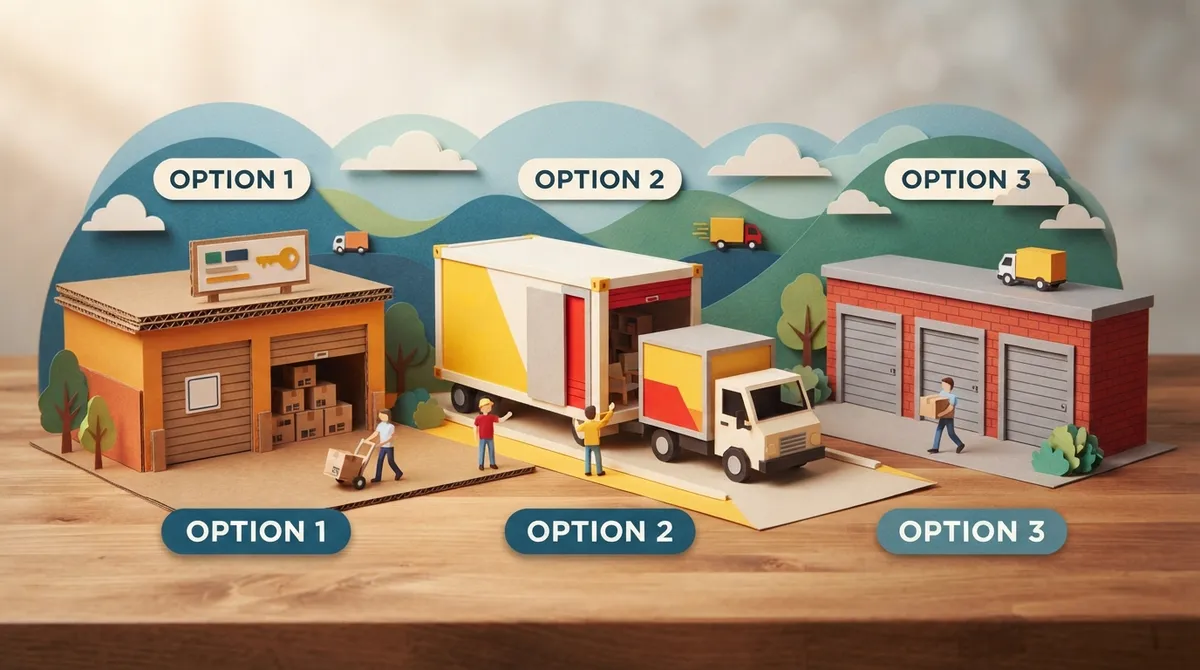
Let's break down the three most popular ways to store your belongings during a move. Each one has its own strengths, and one of them is likely a great fit for your situation.
1. A Moving Company's Warehouse or Storage Vault
With this option, your mover picks up your belongings, inventories them, and stores them in the company's warehouse or in storage vaults. When you're ready, they deliver everything to your new home. It's the most hands-off choice, and for many families it's the least stressful.
Here's why people like it:
- One team handles everything. The same professionals who load your truck also store and redeliver your items.
- Less repeated handling. Your belongings are packed and loaded once, then delivered when you're ready.
- Great for heavy or bulky items. Large furniture, specialty pieces, and heavy lifting are already part of what movers do.
The tradeoff is access. Because your items are stored in a warehouse, you usually can't just drop by and grab a box. If you think you'll need frequent access, this may not be the best fit. Also, ask whether pickup, handling, inventory, storage, and redelivery are all included or billed separately.
If you're weighing this route, our guide on how to choose moving and storage services in Polk County, FL walks through what to look for locally.
2. A Portable Storage Container
A portable container is dropped off at your home. You load it at your own pace, then it's either kept on your property or taken to a storage facility. When you're ready, it's delivered to your new address.
Why it works well for some households:
- Load on your schedule. There's no rush on a single moving day.
- Fewer touchpoints. Your items can stay in the same container from start to finish.
- Convenient for gradual packing. This is nice if you're clearing out a big home over several days.
Keep a few cautions in mind. Access varies depending on whether the container stays at your home or goes to a facility. Also, a weather-sealed container is not automatically climate controlled. If you're storing wood furniture, electronics, or other sensitive items, confirm the environmental protections in writing.
The heavy lifting is the other piece to plan for. Loading a container takes real muscle, especially with appliances and big furniture. Many people hire help for that part, and we explain how it works in how to use PODS loading services for a stress-free move.
3. A Self-Storage Unit
With self-storage, you rent a unit at a facility, move your items in, and manage everything yourself. It's a popular choice for smaller moves or for people who want regular access to their belongings.
The big pros:
- Easy access. Many facilities let you visit during set hours.
- Flexible sizes. You can often choose a unit that fits what you need.
- Climate-controlled options. Some facilities offer them for sensitive items.
The big catch is that you do the work. You'll need to transport your belongings to the facility, unload them, and later bring them to your new home. That's extra loading and unloading, which means extra handling of your items and extra strain on your back. The wider market is also busy. One 2025 industry report estimated about 10.3 million U.S. self-storage units and a 13.8% vacancy rate. That's a broad market snapshot, not specific to moves, but it suggests you'll likely have choices.
If you go this route, hiring a crew just for the heavy parts can save your back. Our article on what labor services in moving are and whether you need them explains that option.
Side-by-Side Comparison
Here's a quick look at how the three options stack up. Keep in mind that details vary by provider, so confirm everything in writing.
| Factor | Mover's Warehouse | Portable Container | Self-Storage Unit |
|---|---|---|---|
| Who handles loading | Moving crew | You or hired help | You or hired help |
| Access to belongings | Usually limited | Varies by setup | Often easy |
| Repeated handling | Lower | Lower | Higher |
| Climate protection | Ask the provider | Not guaranteed | Available at some facilities |
| Best for | Full-service moves, bulky items | Flexible loading schedules | Smaller moves, frequent access |
What Affects the Cost of Short Term Moving Storage?
Nobody likes surprise bills, so let's talk about what drives the price. Storage pricing generally depends on several factors:
- Shipment size or weight. More belongings usually mean a higher cost.
- Storage duration. Some providers bill monthly, some prorate, and some use other billing periods.
- Location. Where your items are stored can affect pricing.
- Access needs. Easy, frequent access may cost more than limited access.
- Climate control. Temperature and humidity protection often comes at a premium.
- Handling and transport. Pickup, delivery, and movement of items may be billed separately.
- Timing of the move. Busy periods can influence availability and cost.
Because there are so many moving parts, ask for an itemized written estimate. Our breakdown of what factors determine moving company pricing in 2026 can help you understand what you're reading. And if you want a quick starting point, you can get a free estimate with no obligation.
How to Choose the Right Option: A Simple 5-Step Process
Feeling a bit overwhelmed? Totally normal. Here's an easy way to narrow it down.
- Figure out your timeline. Write down your move-out date, your expected move-in date, and a buffer in case things slip. Delays are common, so build in some breathing room.
- Take stock of what you're storing. Standard furniture and boxes are one thing. Antiques, electronics, pianos, and other sensitive or high-value pieces may need extra protection.
- Decide how much access you need. Will you need to pull items out mid-storage? If yes, lean toward a container or self-storage. If no, a warehouse may be the smoothest path.
- Compare itemized quotes. Ask each provider to list pickup, handling, storage, redelivery, and any minimum terms separately.
- Confirm protection in writing. Get clear answers on coverage, exclusions, and claims before you commit.
Questions to Ask Before You Book
A little homework now saves a lot of headaches later. Whichever option you choose, ask these questions and get the answers in writing:
- Where exactly will my belongings be stored, and who operates the facility?
- How is access arranged, and are there fees or notice requirements?
- What security and environmental protections are in place?
- Is the storage charge monthly, prorated, or billed another way?
- Are there minimum terms, late fees, or redelivery fees?
- What happens if I need to extend my storage period?
It also pays to confirm that your mover is properly credentialed. Our list of 9 ways to spot licensed and insured movers in Polk County is a great place to start. For a deeper look at what to ask during your search, see 7 questions to ask movers before you book in 2026.
Understanding Protection and Insurance During Storage
This is the part many people skip, and it's one of the most important. A mover's liability and coverage during storage can be different from coverage during transit. Don't assume your protection is the same at every stage.
Review these documents carefully:
- The bill of lading
- The storage agreement
- Your valuation or protection selection
- Any insurance terms, including exclusions
Also ask how claims work and whether separate coverage is available. For general consumer guidance on interstate moves, the Federal Motor Carrier Safety Administration's Protect Your Move resource is a helpful official reference. For interstate moves in the United States, federal rules and your mover's documents govern the move, though state-specific storage-in-transit rules may differ.
Who Benefits Most From Short Term Moving Storage?
Different households use storage for different reasons. Here are a few common scenarios we see in Central Florida.
Local Homeowners and Large Families
If you're leaving a big home before the new one is ready, storage buys you flexibility. Large families with lots of bulky furniture often benefit from a mover-managed option, since it limits repeated handling. Our piece on how to plan a large family move in Polk County offers more planning ideas.
Retirees and Downsizers
Moving from a long-time family home into a smaller retirement space is a big emotional and physical step. Short-term storage lets you move at a comfortable pace and decide what to keep, donate, or pass down. If that sounds like you, our guide to senior moving services in Polk County may help.
Luxury Apartment and Home Owners
High-end moves often involve valuable furnishings, art, and specialty items. Temporary storage can protect them while a new space is prepared. For these moves, ask specifically about handling methods, protection, and climate considerations.
Long-Distance Movers
When you're moving out of the area, timing gaps are even more common. A delayed closing or a late-arriving home can leave your belongings in limbo. Storage can keep your move on track. Learn more in what you should know before a long-distance move.
Tips to Make Short Term Moving Storage Go Smoothly
A few small habits can make a big difference once your things are in storage.
- Make an inventory. List what you're storing, and take photos before everything is loaded.
- Label clearly. Mark boxes by room and contents so you can find what you need.
- Protect fragile and sensitive items. Use quality packing materials, especially for electronics and wood furniture.
- Keep essentials with you. Set aside documents, medications, and a few days' worth of necessities.
- Leave space and order. If you'll need access, load so that frequently needed items are reachable.
- Track your dates. Mark your storage end date and any notice requirements on your calendar.
Good packing makes storage safer, too. If you'd like help, our rundown of packing and moving services in Polk County explains what's available.
Common Mistakes to Avoid
Even smart planners trip up now and then. Here are the mistakes we'd love for you to skip:
- Booking without an itemized quote. Vague pricing leads to surprise charges.
- Assuming a container is climate controlled. Weather-sealed is not the same thing.
- Ignoring coverage during storage. Transit protection and storage protection may differ.
- Underestimating how long you'll need. Build in a buffer for delays.
- Forgetting about access. Check how and when you can reach your items.
For more ways to protect yourself, see 14 mistakes to avoid when hiring local residential movers in Polk County, FL.
How DynaMight Movers Can Help
At DynaMight Movers, we're a licensed and insured moving company serving Lakeland, Winter Haven, Davenport, Dover, and the rest of Polk County. We handle local and long-distance residential moves, specialty items, and heavy lifting, all with transparent pricing and no hidden fees. When your dates don't line up, we're happy to talk through your options and help you build a plan that fits your timeline.
Curious how neighbors feel about their moves? You can see what our DynaMight Movers customers say on Google.
Ready to Bridge the Gap?
Short term moving storage doesn't have to be stressful. Once you know your timeline, understand your options, and ask the right questions, you can choose with confidence. Whether a mover's warehouse, a portable container, or a self-storage unit fits best, the goal is the same: keep your belongings safe until your new home is ready.
Ready to take the next step? Get a free estimate from DynaMight Movers, or call us at (866) 349-7719 to talk through your move. We'd love to help you make this transition feel a whole lot easier.
FAQs
Q: What is short term moving storage, and when do I need it?
A: Short term moving storage is a temporary place to keep your belongings when your move-out and move-in dates don't match up. Many people use it for closing delays, renovations, downsizing, or travel gaps. If your new home isn't ready when your old one is, storage can keep your move on track.
Q: How much does short term moving storage cost?
A: Cost depends on how much you're storing, how long you need it, where it's kept, and whether you want climate control or easy access. Handling and transport can also be billed separately. The best move is to ask for an itemized written estimate so you can see exactly what you're paying for.
Q: Is it better to use a moving company's warehouse, a portable container, or a self-storage unit?
A: It really depends on your needs. A mover's warehouse is the most hands-off, a portable container offers flexible loading, and a self-storage unit usually gives you the easiest access. Think about how much handling you want to do and how often you'll need your belongings.
Q: Are my belongings insured while they're in storage?
A: Not automatically in the same way as during transit. A mover's liability and coverage during storage can differ from coverage while your items are on the truck. Ask for written confirmation of your protection, exclusions, and claims process, and find out whether separate coverage is available.
Q: How long can a moving company store my belongings?
A: It varies by contract and by jurisdiction. One state consumer guide describes storage-in-transit as up to 180 days under its rules, but that limit isn't universal. Check your storage agreement and ask about minimum terms and what happens if you need to extend.