
Key Takeaways
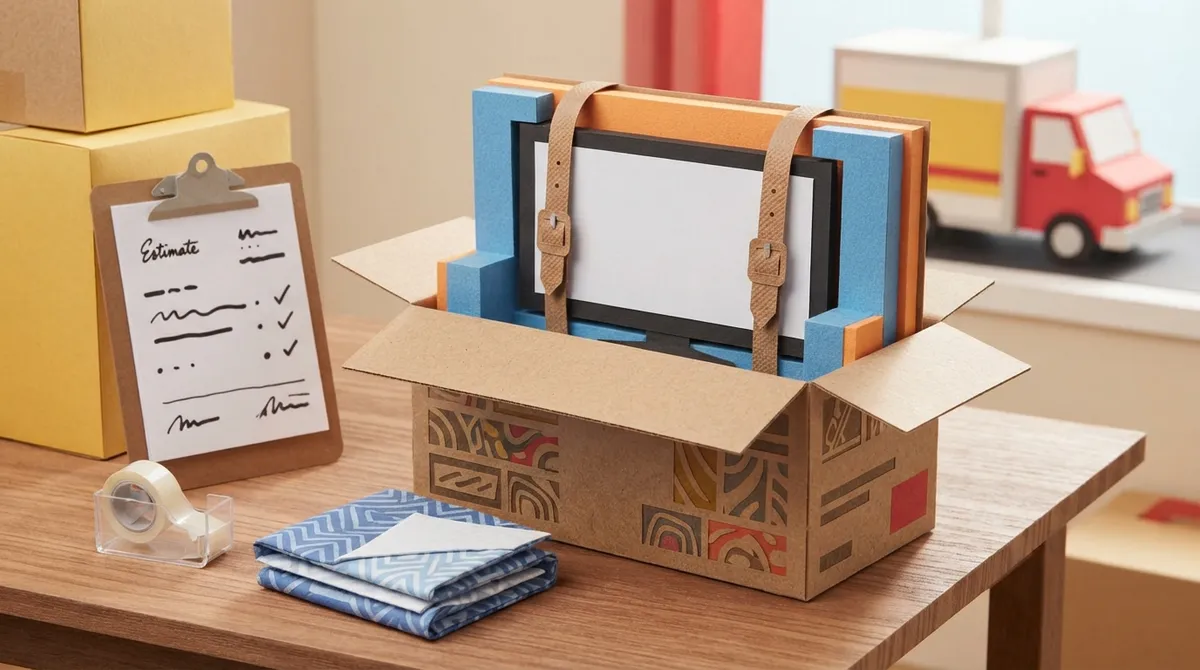
- Confirm exactly what each mover includes for TVs, such as disconnecting cables, padded wrapping, TV cartons, wall-mount removal, and reinstallation, and get the answer in writing.
- Use the original TV box with its foam inserts if you still have it, since it is designed for your exact screen; otherwise ask the mover for a correctly sized carton, padded tote, or crate.
- Never lay a flat screen on its back or side and never rely on blankets alone; the TV should travel upright, secured, with nothing heavy pressing against it.
- For interstate moves, Released Value covers only 60 cents per pound per article, so a 25-pound TV would receive at most $15; consider paying for Full Value Protection.
- Request an itemized written estimate listing packing materials, labor, special handling, and mounting charges, and provide screen size, weight, model, and wall-mount details for an accurate quote.
- Photograph the TV and your cable setup before moving day, label every cord, and inspect the screen immediately at delivery, noting damage promptly, since interstate claims generally must be filed within nine months.
Your TV is probably one of the most expensive things in your living room. It is also one of the easiest to break. One bump against a doorframe, one shift in the truck, and that gorgeous screen could be toast. No wonder so many people type tv movers near me into a search bar when moving day gets close.
Here's the good news. You don't need a special "TV-only" company. You need a local moving crew that knows how to pack, load, and transport flat screens the right way. In this friendly guide, we'll walk you through 10 practical tips for finding the right help, getting an honest quote, and keeping your TV safe from the old house to the new one.
Whether you're moving across Lakeland, downsizing into a retirement home, or heading out of state, these tips will help you feel calm and confident. Let's get your screen there in one piece!

1. Understand What "TV Movers Near Me" Really Means
When people search for tv movers near me, they usually mean a local household-goods mover that can handle televisions as part of a bigger move. It is not a separate type of business. A good moving company already has the tools, padding, and training to move a flat screen safely.
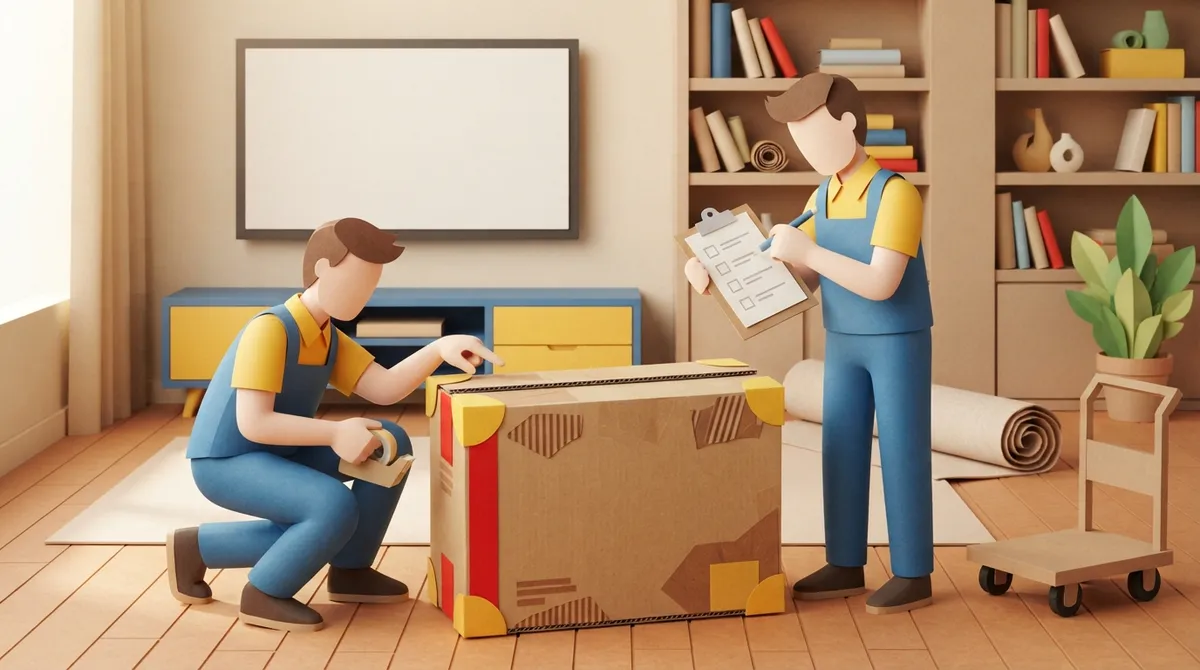
Before you hire anyone, ask what is actually included. Some movers handle the whole job. Others only load and haul. Here are the TV-related tasks worth asking about:
- Disconnecting and labeling cables
- Wrapping the screen in protective padding
- Supplying TV-specific cartons or padded totes
- Loading, transporting, and delivering the TV
- Taking the TV off a wall mount (and putting it back up)
Never assume. A quick question now can save you a big headache later. If you're still comparing options, our guide on how to find reliable local movers near me is a great starting point.
2. Check Whether Your Original Box Still Exists
Here's a little secret: the box your TV came in is often the best packing option. It was designed for that exact screen, with foam inserts that hold it snugly in place.
If you still have the original box and it's in good shape, use it. Tape the bottom well and keep the foam pieces together. If you tossed it (no judgment, we all do!), ask your mover about other choices. Many crews can provide a correctly sized TV carton, a padded tote, or even a custom crate for large or long-distance shipments.
3. Know How a TV Should Be Packed and Positioned
Flat screens hate pressure. Pushing on the glass or stacking heavy things against it can crack the panel. A TV should travel upright, never flat on its back or side, and it should be secured so it can't slide around.
Don't assume ordinary moving blankets alone will do the job. Blankets help, but a real TV box or padded protection is much safer. When you talk to a mover, ask these simple questions:
- How will you pack my TV?
- Will it ride upright?
- How will you secure it in the truck?
- Will anything heavy sit against it?
A professional crew will have clear answers. If they hesitate, that's a gentle red flag.
4. Gather the Details Movers Need for an Accurate Quote
Quotes are only as good as the information you give. Before you call, have these details ready:
- Screen size and approximate weight
- Model number or dimensions
- Whether you still have the original box
- Pickup and delivery addresses
- Whether the TV is wall-mounted and needs disconnecting
- Any extras like mounting or setup at the new place
With this info, a mover can give you a number you can trust. If you'd like help with that, you can get a free estimate from DynaMight Movers with no obligation. For more ideas on what a good estimate looks like, check out what you should expect from a free moving estimate.
5. Ask for an Itemized, Written Estimate
Costs for moving a TV vary quite a bit. They depend on your location, the TV's size, the packing method, the distance, and whether you want special handling or installation. That's why a single "standard price" doesn't really exist.
Instead of chasing one number, ask for an itemized written estimate. It should clearly list:
- Packing materials
- Labor
- Special handling fees
- Setup or mounting charges
When everything is spelled out, there are no surprises on moving day. DynaMight Movers is built around that idea of transparent pricing. You can read more about what factors determine moving company pricing in 2026 to understand why quotes differ.
6. Compare Common TV Moving Options Side by Side
Not every TV needs the same level of protection. A small bedroom TV is a different story than a 75-inch living room screen headed across the country. This table can help you decide.
| Packing Option | Best For | Things to Know |
|---|---|---|
| Original box with foam | Most TVs, local or long-distance | Great fit, but only if intact and still available |
| Mover-supplied TV carton | TVs without the original box | Ask that it matches your exact screen size |
| Padded tote | Local moves, repeated handling | Check how it secures the screen upright |
| Custom crate | Very large or high-value TVs, long-distance | Strongest protection, often costs more |
| Blankets only | Rarely recommended | Not enough on its own for a flat screen |
If your TV is large, expensive, or traveling far, lean toward the stronger options. A little extra protection costs far less than a new television.
7. Ask About Disconnecting, Mounting, and Reinstalling
This is where plans often get fuzzy. Do your movers take the TV off the wall? Will they handle the bracket and screws? Will they hang it again at your new home?
Some crews do all of this. Others stick to loading and unloading. Ask directly, and get the answer in writing. Also ask who is responsible if the TV is damaged after you pack it yourself. Many movers limit their responsibility for items the customer packs, so it's worth knowing before moving day.
Quick tip: take a photo of your cable setup before unplugging anything. Label each cord with painter's tape. Your future self will thank you when it's time to hook everything back up!
8. Understand Liability and Valuation Coverage
This part isn't the most exciting, but it matters a lot. For interstate moves, the Federal Motor Carrier Safety Administration (FMCSA) requires movers to offer two protection levels: Full Value Protection and Released Value.
Here's the catch with Released Value. It is limited to just 60 cents per pound per article. So a 25-pound TV would be covered for a maximum of $15, no matter what you paid for it. Ouch! Full Value Protection is much more complete, though it may cost extra.
These are mover-liability options, which are not the same thing as the company's business insurance. You can read the details directly from the FMCSA's tips for a successful move. For a closer look at insured companies, see how to choose insured movers you can actually trust.
9. Verify Credentials Before You Sign Anything
A friendly voice on the phone is nice, but credentials matter more. For an interstate move, check the mover's registration and complaint history through the FMCSA's Protect Your Move resources. Also learn the difference between a moving carrier and a broker. A broker arranges the move but may hand your belongings to another company.
Before you sign, review these documents carefully:
- The estimate
- The bill of lading
- The inventory list
- Your valuation (protection) selection
On moving day, take quick photos of your TV's condition before it's packed. If something goes wrong, report damage promptly. For interstate moves, written claims generally must be filed within nine months of delivery. To learn how to spot trustworthy crews, read 9 ways to spot licensed and insured movers in Polk County.
10. Choose a Local Team That Treats Your Stuff Like Their Own
At the end of the day, the best TV movers are the ones who care. Look for a crew that shows up on time, explains their process clearly, and doesn't rush. That matters whether you're a busy family, a retiree downsizing, or someone moving into a high-end apartment where every hallway and elevator counts.
DynaMight Movers is a licensed and insured residential mover serving Polk County, including Lakeland, Winter Haven, Davenport, and Dover. The team handles TVs along with specialty items, heavy lifting, and full households, with free estimates and no hidden fees. Want to see how neighbors feel about the service? Visit us on Google — DynaMight Movers and read the reviews.
If you're weighing your options, these guides may help too: how to choose Polk County movers you can actually trust and how to choose specialty item movers you can trust.
Quick TV Moving Checklist
Print this out or save it on your phone. It keeps you on track from packing day to setup day.
- Photograph your cable setup and label every cord
- Find the original box or ask for a TV carton
- Remove the stand and bag the screws together
- Wipe the screen gently with a soft, dry cloth
- Keep the remote, cables, and mount hardware in one labeled bag
- Take a "before" photo of the TV's condition
- Confirm in writing who disconnects and reinstalls
- Check the screen right after delivery
Common Mistakes to Avoid
Even careful people slip up. Here are the mistakes movers see most often with televisions:
- Laying the TV flat. This can stress the screen and frame.
- Using only a blanket. It's cushioning, not full protection.
- Skipping the estimate details. Vague quotes lead to surprise charges.
- Ignoring valuation options. Released Value may leave you with pennies if something breaks.
- Forgetting to inspect on delivery. Check the TV right away and note any issues.
Avoid these, and you're already ahead of the game. For more pitfalls to dodge, take a look at 14 mistakes to avoid when hiring local residential movers in Polk County, FL.
Wrapping It Up
Searching for tv movers near me really comes down to finding a trustworthy local crew that packs smart, drives careful, and speaks plainly about pricing and protection. Ask about packing methods, get an itemized written estimate, understand your coverage, and confirm who handles disconnecting and mounting. Do that, and your TV has a great shot at arriving without a scratch.
Ready for a stress-free move? Let DynaMight Movers handle the heavy lifting, the delicate screens, and everything in between. Get a free estimate today, or call us at (866) 349-7719 and talk to a real person who's happy to help. We can't wait to get you moved in!
FAQs
Q: How do I find reliable TV movers near me?
A: Start with licensed and insured local moving companies and read their reviews. Ask how they pack and secure flat screens, then request an itemized written estimate. A crew that answers clearly and puts everything in writing is usually a good sign.
Q: Do local movers pack and transport flat-screen TVs?
A: Yes, most household movers do! Just confirm what's included, like cable disconnection, protective wrapping, TV-specific cartons, and delivery. It's always smart to ask before booking so there are no surprises.
Q: Can movers transport a TV without its original box?
A: Absolutely. Many movers supply a correctly sized TV carton, a padded tote, or a custom crate for larger or long-distance moves. Just don't rely on blankets alone, since a flat screen needs real protection from pressure.
Q: What coverage applies if my TV is damaged during a move?
A: For interstate moves, movers must offer Full Value Protection and Released Value. Released Value only pays 60 cents per pound per article, so a 25-pound TV would be covered for just $15. Full Value Protection is more complete but may cost extra.
Q: What information do I give movers to get a TV-moving quote?
A: Share your screen size, approximate weight, model or dimensions, and whether you have the original box. Also mention your pickup and delivery details and whether the TV is wall-mounted. With that, you'll get a much more accurate quote.