

Key Takeaways
- Safes can't be treated like furniture: weight, center of gravity, stairs, and floor capacity all shape the moving plan, so confirm your mover accepts safes of your size and weight before booking.
- Empty the safe fully, remove loose shelves and drawers, follow the manufacturer's door-securing instructions, and keep cash, jewelry, and papers with you rather than on the truck.
- Document the safe's condition with dated photos and ask for coverage terms in writing, since moving insurance often covers the safe itself but may exclude cash, jewelry, or firearms.
- Share make, model or approximate weight, exact dimensions, photos, and a detailed route description including stairs, turns, and elevators to get an accurate written estimate.
- Ask whether the safe is included in the base quote or billed separately, and whether stair or access fees, special equipment, and crew size are part of the price to avoid surprises.
- Never attempt a DIY safe move with improvised gear; use rated dollies, lifting equipment, ramps, and extra crew, and verify that your mover is licensed and insured.
Let's be honest: nobody wakes up excited to move a safe. It's heavy, awkward, and often holds the things you care about most. One wrong tilt on a staircase, and you could end up with a cracked floor, a crushed finger, or worse.
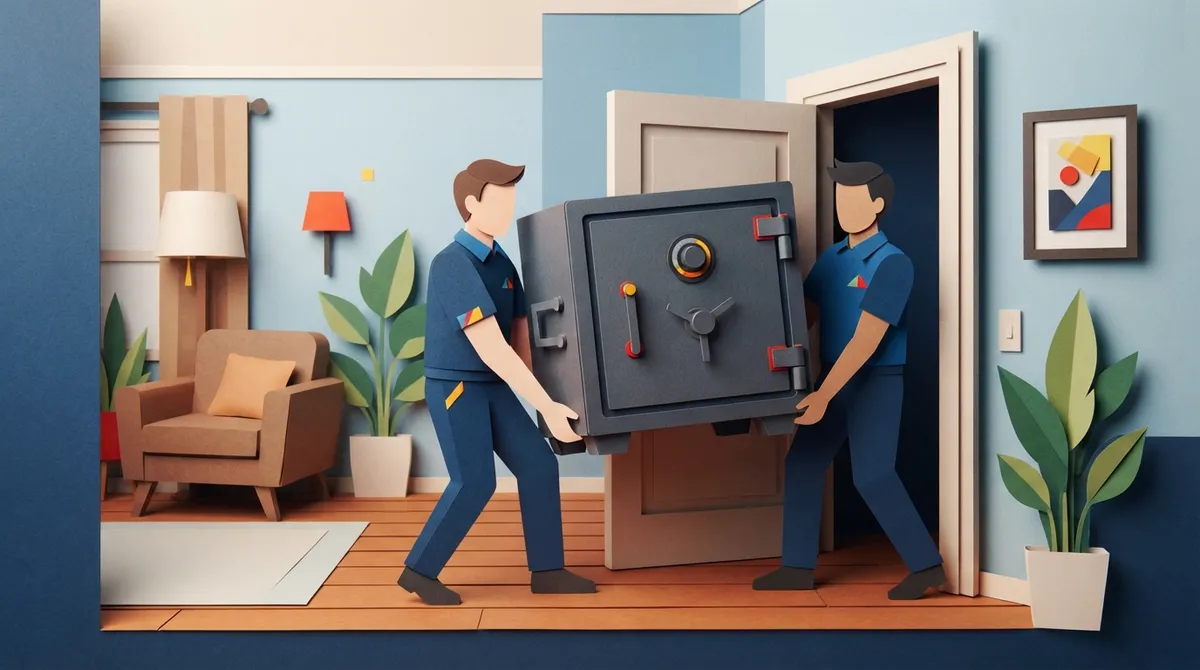
That's why home safe movers exist. These are moving pros who plan and carry out the relocation of heavy, bulky residential safes using the right gear, a trained crew, and a route-specific safety plan. A safe move is not an ordinary furniture lift, and it shouldn't be treated like one.
Whether you're a Polk County homeowner moving across Lakeland, a family leaving a big estate, or a retiree settling into a smaller place, this guide walks you through what matters. We'll cover prep, pricing, insurance, and the questions to ask before you book. Think of it as a friendly chat with someone who has seen a few safes go up stairs.
1. Know What "Home Safe Movers" Actually Means
In the moving world, home safe movers are professionals equipped to relocate residential safes. That includes gun safes, fire safes, and large floor or wall safes. They are different from a buddy with a pickup truck and a strap.
A good crew brings specialty equipment, extra hands, and a plan. They think about the safe's weight, its size, and where it needs to end up. If you want a deeper look at how pros approach this work, check out our guide on how to move a safe or vault safely in Lakeland.
The key takeaway? Safe moving is a skill. Treat it like one.
2. Understand Why Weight Is Only Part of the Story
Yes, safes are heavy. But weight is just one piece of the puzzle. Movers also look at the safe's dimensions, its center of gravity, and the path it has to travel.
Here are the factors that shape a safe-moving plan:
- Size and shape: Tall, narrow safes can tip. Wide, deep ones may not fit through doorways.
- Center of gravity: Many safes are top-heavy or back-heavy, which changes how they must be strapped and moved.
- Stairs and turns: Every step, landing, and tight corner adds risk.
- Thresholds and floors: A small lip at a door or a delicate tile floor needs extra care.
- Floor capacity: The destination floor must be able to hold the safe long term.
For context, general workplace safety guidance from OSHA's materials handling resources notes that lifting loads heavier than about 50 pounds raises injury risk and recommends mechanical aids or extra help. That is general guidance, not a safe-specific rule. Most safes weigh many times that, which is why pros use proper equipment.
3. Gather the Details Your Mover Will Ask For
The more you share upfront, the more accurate your quote will be. Movers often ask for specific details before they commit to a price or a plan.
Have these ready:
- The safe's make and model, or at least its approximate weight.
- Its measurements: height, width, and depth.
- Photos of the safe and where it sits now.
- A description of the route: stairs, hallways, doorways, elevators, and tight turns.
- Details about the destination, including which room and which floor.
Don't worry if you don't have every number. A friendly mover will help you figure out what's missing. It's much better to share too much than to surprise a crew on moving day.
4. Check Whether Regular Movers Can Do the Job
This is one of the most common questions people ask. Can regular movers move a gun safe, or do you need a specialty safe mover?
The honest answer: it depends on the company. Some movers do not accept safes at all. Others take them on only with advance notice, the right equipment, and enough crew members. That's why you should never assume a safe is included in a standard move.
Before booking, confirm the company:
- Accepts safes of your specific size and weight.
- Has suitable equipment and trained staff.
- Can handle your particular route.
At DynaMight Movers, we handle heavy lifting and specialty items as part of our residential moving services. If you want to learn more about how specialty work differs from a typical move, our post on why specialty item movers matter so much is a helpful read.
5. Learn What Equipment the Pros Use
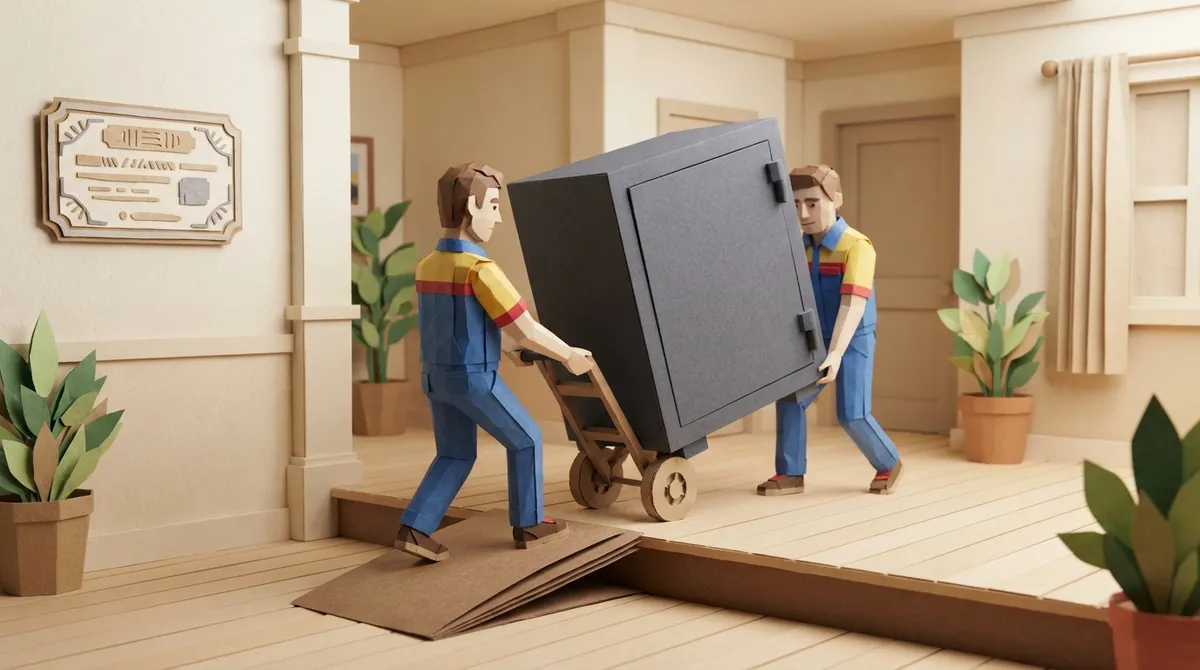
You've probably seen a safe moved with a regular furniture dolly and a prayer. Please don't try that at home. Professional crews use gear built for the job.
| Equipment | What It Does |
|---|---|
| Rated safe-moving dollies | Carry heavy loads within a tested capacity |
| Lifting equipment | Raises or lowers the safe without hand-lifting its full weight |
| Ramps | Help clear steps, curbs, and truck gates |
| Straps | Keep the safe secure and steady in transit |
| Floor protection | Shields tile, hardwood, and carpet from dents and scrapes |
| Extra crew members | Add control and balance on tricky sections |
One big rule: equipment must be used within its rated capacity. OSHA guidance warns against overloading material-handling equipment, and a good crew follows that rule every time.
6. Prepare Your Safe Before Moving Day
A little prep goes a long way. Here's a simple checklist to follow:
- Empty the safe. A safe should generally be emptied before moving. Remove loose contents so nothing shifts, spills, or gets damaged.
- Remove shelves and drawers where practical. This cuts weight and prevents rattling.
- Secure the door. Follow the manufacturer's instructions for keeping the door closed during transport.
- Ask about locking. Procedures vary by model and company, so ask your mover whether the safe should be locked, unlocked, or otherwise prepared.
- Take photos. Document the safe's condition before the crew arrives.
Keep valuables, cash, jewelry, and important papers with you rather than in the moving truck. It's a simple step that gives you peace of mind.
7. Prep Your Home and Clear the Path
Your mover will do the heavy lifting, but you can make their job safer and smoother. A clear route is a safe route.
- Remove rugs, décor, and furniture from hallways and doorways.
- Open doors fully and secure them so they don't swing.
- Keep kids and pets in another room during the move.
- Let your crew know about delicate flooring, tight turns, or steep approaches.
- Tell them about any rules at either property, such as HOA or apartment restrictions.
If you're moving into a high-end apartment, check elevator rules ahead of time. Our apartment moving guide for Polk County covers what to ask your building manager before moving day.
8. Ask How Stairs, Basements, and Upper Floors Are Handled
"How do movers get a heavy safe down stairs?" is a question we hear a lot. The short answer is: carefully, slowly, and with the right tools.
Stairs are where most safe-moving trouble happens. Crews often use ramps, stair-climbing equipment, and extra people to control the load. They may also pad railings and walls and set up spotters at the top and bottom.
Moving a safe to a basement or another floor is possible in many cases, but it needs a plan. Be upfront about:
- The number of steps and how steep they are.
- Whether the staircase turns or has a landing.
- Whether the destination floor can support the weight.
Some situations may be too risky for certain safes. A trustworthy mover will tell you so, rather than push ahead and hope for the best.
9. Get a Written Estimate and Understand the Price
So, how much does it cost to move a home safe? Here's the straight answer: it varies. No reliable, industry-wide average price exists, because quotes depend on the safe's size and weight, the route, the equipment needed, and the mover.
What you can control is clarity. Ask for a written estimate and confirm these points:
| Question to Ask | Why It Matters |
|---|---|
| Is the safe included in the move or priced separately? | Avoids a surprise line item |
| Are there access-related fees for stairs or long carries? | Stairs and tight routes can change the price |
| How many crew members will be assigned? | More crew often means safer handling |
| Is special equipment included? | Some gear may be billed separately |
Transparent pricing is a big deal. If you want to understand how quotes are built, read how moving company quotes really work in 2026. And if you're ready to start, you can get a free estimate with no obligation.
10. Sort Out Insurance and Valuation Coverage
This is the part people skip, and it's the part that matters most if something goes wrong. Always ask how valuation or insurance applies to your safe and what's inside it.
Moving coverage commonly concerns the item itself. It may not cover cash, jewelry, firearms, or other contents. Terms, exclusions, and liability limits depend on your contract and applicable law, so read the fine print.
Smart steps to take:
- Ask for coverage terms in writing.
- Find out what is and isn't covered, especially for contents.
- Discuss special coverage if your safe or its contents are high value.
- Document the safe's condition with dated photos before the move.
Always confirm that your mover is licensed and insured. Our tips on how to verify licensed and insured movers before booking make that easy. You may also want to review facts about mover responsibility for damage so you know what to expect.
Why You Shouldn't Try a DIY Safe Move
We get it. Hiring help costs money, and a few friends with strong backs can feel like enough. But a safe is not a couch.
Heavy safes shift suddenly, tip without warning, and can seriously injure people nearby. OSHA guidance recommends mechanical aids for heavy loads and seeking help for bulky or unsafe-to-handle objects. Improvised equipment and household helpers are a risky combination.
Think about what's at stake: your floors, your stairs, your doorframes, and most of all, your family and friends. If you want to weigh your options, our comparison of DIY vs. specialty item movers applies just as well to safes as it does to pianos.
Who Benefits Most From Professional Safe Movers?
Almost anyone with a safe will feel better having a pro on the job. But a few groups really see the value:
- Retirees: Moving into a smaller home is stressful enough. Heavy lifting should be someone else's job.
- Family estate owners: Large homes often come with large safes and tricky layouts.
- Luxury homeowners and apartment residents: Expensive flooring and strict building rules call for extra care.
- Long-distance movers: A safe adds weight and complexity to any farther move, so planning ahead is key.
If you're also moving other bulky items, bundling them into one plan can save time. Our guide to things heavy item movers wish you knew is a great companion read.
Ready to Move Your Safe the Safe Way?
Moving a safe doesn't have to be scary. With honest details, a clear route, a prepared safe, a written estimate, and the right coverage, you can handle it with confidence. Remember, home safe movers are about more than muscle. They bring planning, equipment, and care.
DynaMight Movers is a licensed and insured moving company serving Lakeland, Winter Haven, Davenport, Dover, and the rest of Polk County. We offer transparent pricing and handle heavy lifting and specialty items with care. You can see what neighbors say by visiting DynaMight Movers on Google, and you can learn more about the area on this Polk County, Florida overview.
Have a safe that needs a safe journey? Get your free, no-obligation estimate today, or call us at (866) 349-7719. We'd love to help you move with zero stress.
FAQs
Q: How much does it cost to have a home safe moved?
A: It really depends on the safe's size and weight, the route, the equipment needed, and the mover you choose. There's no reliable industry-wide average, so the best move is to share photos and measurements and ask for a written estimate. At DynaMight Movers, we're happy to give you a free, no-obligation quote.
Q: Should I empty or unlock my safe before movers arrive?
A: In general, yes, you should empty your safe so nothing shifts or gets damaged. Whether it should be locked, unlocked, or otherwise prepared depends on the model and the moving company, so ask your mover ahead of time. Keep cash, jewelry, and important papers with you instead of on the truck.
Q: Will moving insurance cover my safe and the valuables inside it?
A: Coverage often applies to the safe itself, but it may not cover contents like cash, jewelry, or firearms. Terms and limits depend on your contract and applicable law. Ask for coverage details in writing and take dated photos of your safe before the move.
Q: Can movers relocate a safe to another floor or a basement?
A: Often they can, but it takes a plan. Your mover will want to know about stairs, turns, and whether the destination floor can handle the weight. If a route is too risky, a good crew will tell you honestly and suggest a safer option.
Q: What information should I give to get an accurate safe-moving quote?
A: Share the safe's make and model or approximate weight, its measurements, and a few photos. Also describe the route at both homes, including stairs, narrow hallways, elevators, and any restrictions. The more detail you give, the fewer surprises on moving day.