
Key Takeaways
- Grand pianos are hard to move because of their size, weight (often 500 to 1,200+ pounds), and fragile legs, pedals, and finish, so professional crews are usually safer and cheaper than DIY.
- Ask every mover directly whether they remove the legs and pedal lyre, and whether that is included in the quote, since partial disassembly is sometimes billed as an extra fee.
- Get a written, itemized quote based on your actual piano and route, and ask about stair surcharges, disassembly fees, and waiting or storage charges before booking.
- Verify grand piano experience by asking how many grands the crew has moved, how many movers will come, and whether they use a piano board, padding, straps, and a liftgate.
- Confirm the coverage terms in writing: whether cargo protection pays for repair, replacement, or only limited carrier liability, plus any exclusions, deductibles, and workers' compensation.
- After the move, inspect the piano for damage while the crew is still present, document issues with photos, and schedule a tuning with a qualified technician once the piano has settled.
A grand piano is more than furniture. It is a family treasure, a work of craft, and often the heart of the living room. It is also awkward, heavy, and surprisingly delicate. Moving one is not a weekend project for you and a few friends with a borrowed dolly.
That is where grand piano movers come in. These are trained crews who use the right boards, padding, and techniques to get your instrument from one room to another without a scratch. Whether you are crossing Lakeland, heading to a new home in Winter Haven, or relocating out of state, the right team makes all the difference.
In this guide, we share 10 friendly, practical tips to help you hire well, prepare smartly, and feel calm on moving day. We will cover costs, coverage, prep work, and what to do after the piano arrives. Grab a cup of coffee and let us walk through it together.
1. Understand Why Grand Pianos Are So Hard to Move
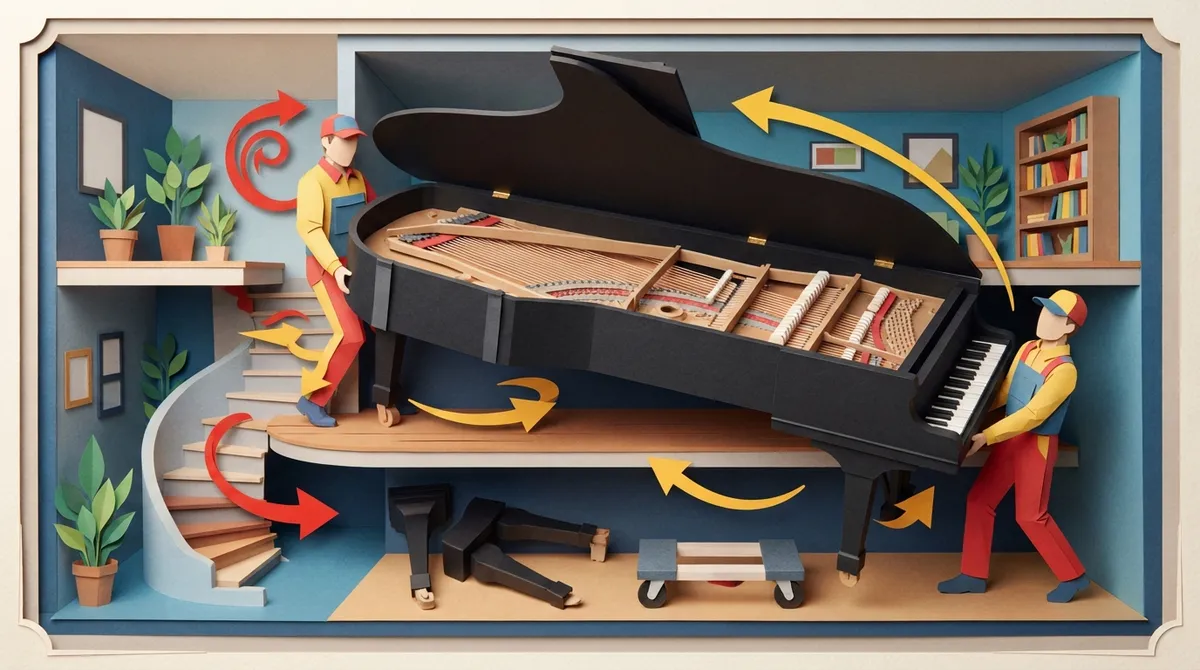
Grand pianos are tricky for a few simple reasons. They are large, heavy, and shaped in a way that makes them hard to grip. The legs and pedal assembly stick out and can snap under the wrong pressure. The finish scratches easily, too.
Weight varies a lot by model. Some six-foot grands are cited at roughly 500 to 700 pounds, while some concert grands can top 1,200 pounds. Those are broad examples, not rules for every piano. Always check your make and model instead of guessing.
- Size: The long, curved body is hard to turn in hallways.
- Weight balance: Most of the weight sits in the body, not the legs.
- Delicate parts: Legs, pedals, and the lid can break or crack.
- Fine finish: Gloss and wood surfaces mark easily.
Because of all this, hiring grand piano movers is usually safer and cheaper than risking a repair bill. If you want a deeper look at the basics, our guide on how to move a piano safely without damaging it is a great companion read.

2. Know How Professional Grand Piano Movers Work
It helps to picture the process before moving day. Pros follow a clear routine, and knowing it makes you a more confident customer. Here is the typical flow:
- Assessment: The crew reviews your piano and the route. They may ask for photos or visit in person.
- Route check: They look at doorways, hallways, stairs, elevators, turns, and parking.
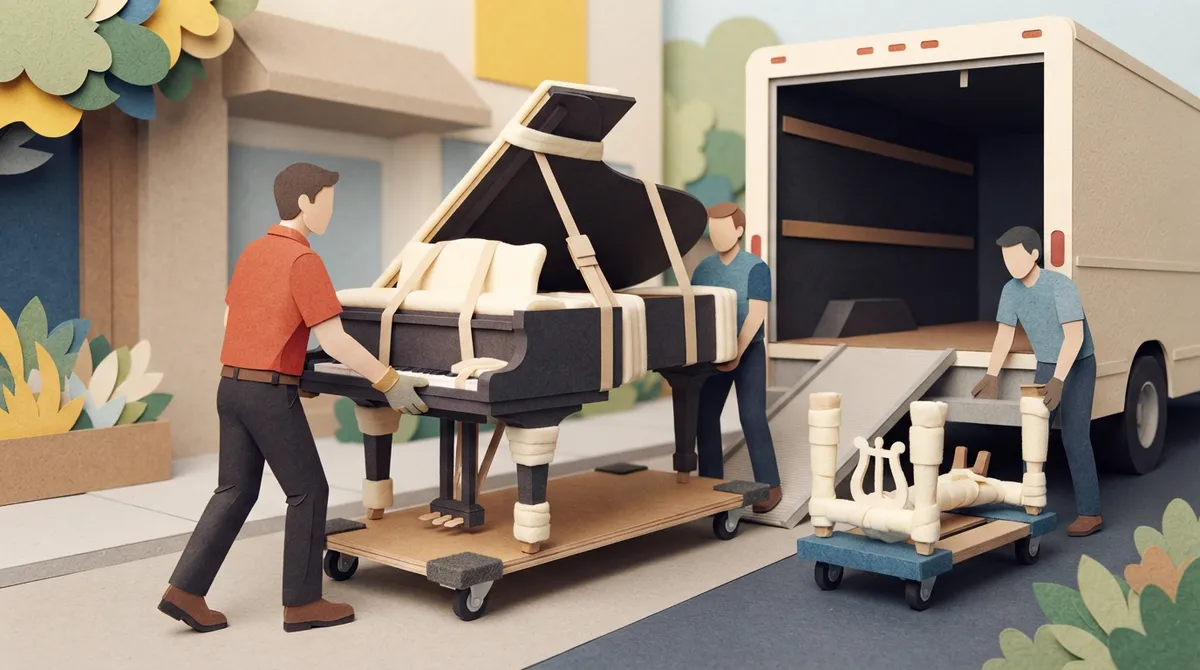
- Disassembly: Legs, the pedal lyre, and sometimes the lid or music rack are removed and wrapped separately.
- Securing: The piano is tipped onto a padded piano board or skid and strapped down tight.
- Moving: The crew uses dollies, straps, and ramps to roll it out safely.
- Transport: The piano rides in a padded truck, often with a liftgate.
- Reassembly: At the new home, the legs and pedals go back on, and the piano is set in place.
Skilled crews make this look easy. That is the point. The calm, careful pace you see on moving day comes from training and the right tools.
3. Ask Whether the Movers Will Take the Legs Off
This is one of the most common questions we hear. For many grand piano moves, the answer is yes. Removing the legs and pedal assembly lets the crew set the piano on a board and keep the weight low and stable.
Each component is padded and protected so nothing gets bent or lost. Some crews also remove the lid or music rack for extra safety. Never try this yourself without training. A wrong move can drop the piano or damage the instrument for good.
When you call for quotes, ask directly: Do you remove the legs and lyre? Is that included in the price? Some companies treat partial disassembly as an extra fee, so it is worth clarifying up front.
4. Get a Written, Itemized Quote
Price is the big question for most people. Published estimates from consumer and mover sources range from several hundred dollars for some local grand piano moves to over $1,000 for tough access or longer distances. There is no standard national rate, so a quote based on your actual piano and route is far more useful than a generic range.
Here is what usually shapes the final number:
| Cost Factor | Why It Matters |
|---|---|
| Piano size and value | Bigger, heavier, or more valuable pianos need more care and crew |
| Distance | Longer trips mean more time, fuel, and risk |
| Stairs and access | Steps, tight turns, and narrow doors add labor |
| Disassembly | Removing and reattaching parts takes skill and time |
| Waiting or storage | Delays and short-term storage may add charges |
| Special transport | Cranes, lifts, or extra equipment raise the price |
One consumer source reports stair surcharges of roughly $5 to $10 per step, or up to about $100 per flight, and partial disassembly fees near $100 to $200. Treat these as examples, not guarantees. Always ask for the full picture in writing.
If you are comparing budgets across services, our tips on how movers charge in 2026 can help you read a quote like a pro.
5. Verify Experience Before You Book
Not every mover is a piano mover. A crew that handles couches all day may not be ready for a grand. Before you commit, ask a few direct questions:
- How many grand pianos has your crew moved?
- How many movers will come, and have they trained on pianos?
- Do you use a piano board, padding, straps, and a liftgate?
- Can you share references or reviews?
A confident team will answer without hesitation. If someone gets vague, that is your cue to keep looking. For more on this, check out our advice on choosing specialty item movers you can trust.
6. Check Licensing, Insurance, and Coverage
This tip protects your wallet and your peace of mind. Your piano may be worth thousands, so you want real coverage, not just a hopeful handshake. Ask about:
- Licensing where applicable
- Cargo coverage or valuation options
- Workers' compensation for the crew
- Exclusions and deductibles
Get the terms in writing. Confirm whether the protection covers repair, replacement, or only limited carrier liability. Those are very different outcomes if something goes wrong.
DynaMight Movers is a licensed and insured company serving Polk County, so these questions have clear answers when you talk with our team. To learn what to look for in any mover, see our guide on 9 ways to spot licensed and insured movers in Polk County.
7. Prepare Your Home Before the Crew Arrives
A little prep goes a long way. The smoother the path, the safer the move. Here is a simple checklist to follow:
- Clear the route. Move rugs, shoes, toys, and small furniture out of the way.
- Measure access points. Check doorways, hallways, and stairwells at both homes.
- Protect floors and walls. Point out delicate wood, tile, or tight corners to the crew.
- Arrange loading access. Reserve an elevator or parking space if you live in an apartment or community.
- Keep kids and pets away. A heavy instrument on wheels is no place for curious helpers.
- Empty the bench and lid. Remove sheet music, metronomes, and decor from the top.
Please do not try to lift or take apart a grand piano yourself. It takes training, the right equipment, and a coordinated crew. Your back, your floors, and your piano will thank you.
8. Plan for Stairs, Tight Spaces, and Special Homes
Many Florida homes have grand entries, but others have narrow halls, steps, or tight turns. Luxury apartments may add elevator reservations and building rules. Large estates can have long routes and multiple levels.
Tell your mover about every challenge up front. Photos help a lot. A good crew can plan around stairs and corners, but surprises on moving day cost time and money. If you are moving into a high-end building, ask whether a certificate of insurance or elevator booking is required.
Moving a few rooms away in the same house? Our tips on furniture rearranging during a move can help you plan placement before the piano rolls in.
9. Choose the Right Placement at the New Home
Where your piano lives matters almost as much as how it gets there. Pianos like steady conditions. Temperature and humidity swings can affect the wood, strings, and tuning.
When picking a spot, keep these ideas in mind:
- Avoid direct sunlight, which can fade the finish.
- Stay away from vents, radiators, and exterior doors.
- Choose a sturdy floor that can handle the weight.
- Leave a little space from the wall for sound and airflow.
Decide on the final spot before moving day. It saves the crew from moving the piano twice, and it saves you from a sore, stressful afternoon of second-guessing.
10. Inspect, Document, and Schedule a Tuning After the Move
Once the piano is in place, take a few minutes to look it over. Check the finish, legs, pedals, and lid while the crew is still there. If you spot damage, document it with photos and tell the mover right away.
Then give the piano time to settle. Moving changes the environment, and that can affect tuning. How long to wait depends on the instrument and the conditions, so ask a qualified piano technician instead of assuming a fixed number of weeks. A tuning after the move helps your piano sound its best in its new home.
A short follow-up checklist:
- Inspect the piano and nearby walls and floors.
- Photograph any issues and report them promptly.
- Keep the room's temperature and humidity steady.
- Book a tuning with a trusted technician.
Why Local Grand Piano Movers Are Worth It
Hiring local pros means faster scheduling, familiar roads, and a team that understands Central Florida homes. Polk County has a mix of newer builds, older bungalows, and large estates, and each one brings its own access puzzles.
If you are weighing options, you can see what neighbors say by reading reviews and visiting DynaMight Movers on Google. Real feedback from nearby customers tells you a lot about how a crew treats a home and its belongings. For a closer look at piano-specific advice, our post on 12 piano movers Lakeland tips that save your piano goes even deeper.
For extra background on safe lifting and moving practices, the OSHA ergonomics resources are a helpful read. If you want to confirm a mover's federal registration, the FMCSA Protect Your Move site explains your rights. And for general guidance on caring for your instrument, the Piano Technicians Guild is a trusted place to find qualified technicians.
Ready to Move Your Grand Piano with Confidence?
Moving a grand piano does not have to be scary. With the right crew, a clear quote, and a little prep, you can protect your instrument and enjoy the day. Ask about experience, confirm coverage, clear the path, and plan for a tuning afterward. Those simple steps cover most of what matters.
DynaMight Movers handles heavy lifting and specialty items with care, transparent pricing, and no surprises. Whether you are moving across town or across the state, we are happy to help. Get a free estimate today, or call us at (866) 349-7719 to talk through your move with a friendly team that treats your piano like our own.
FAQs
Q: How much does it cost to hire grand piano movers?
A: Published estimates range from several hundred dollars for some local grand piano moves to over $1,000 for tough access or longer distances. Your final price depends on the piano's size, stairs, distance, and any disassembly. The best move is to ask for a written, itemized quote based on your actual piano and route.
Q: Do grand piano movers take the legs off?
A: In many cases, yes. Trained crews remove and separately wrap the legs and pedal lyre, then secure the piano on a padded board. Always ask whether this is included in your quote, since some companies charge extra for partial disassembly.
Q: How many movers does it take to move a grand piano?
A: The exact number depends on the piano's weight and your route, but it takes a trained crew, not just one or two helpers. Because some grands weigh well over 500 pounds, ask your mover how many people they will send and what equipment they use. A confident company will happily explain its plan.
Q: Should I have my piano tuned after it has been moved?
A: Often it is a good idea, since changes in temperature and humidity can affect tuning. How long to wait depends on the instrument and conditions, so ask a qualified piano technician for advice instead of guessing. A tuning helps your piano sound its best in its new home.
Q: What coverage should I ask piano movers about?
A: Ask about cargo coverage or valuation options, workers' compensation, and any exclusions or deductibles. Get the terms in writing and confirm whether the coverage pays for repair, replacement, or only limited carrier liability. This protects both you and your piano if something goes wrong.